
FREE: 10 Must-Know Tomato Growing Tips Get The Guide
Read our affiliate disclosure here.
Tomato Planting Checklist For Beginners
(and Experienced
Gardeners, Too)
Since 2010, Tomato Dirt has garnered 4.8+ million views, making it the web’s leading online source for growing tomatoes in the home garden. Award-winning writer and Tomato Dirt owner Kathy Widenhouse has helped thousands of home gardeners grow healthier tomatoes. Be one of them when you get Tomato Dirt’s Growing Guide here.
Posted 4.7.26
Nothing beats the burst of flavor of your first sun-ripened tomato, picked straight off your own vines. Planting and growing tomatoes is one of the most rewarding experiences a home gardener can have.
The good news? Tomatoes are one of the most beginner-friendly crops you can grow.
But success starts before you even set the plant into the soil. Many new gardeners struggle not because tomatoes are difficult, but because they miss a few important steps early on. A simple checklist helps you plant confidently and avoid common mistakes.
Use this tomato planting checklist for beginners – and even if you’ve got some experience – to give your plants the best possible start.
Before you leave ...
Get your free copy of "10 Must-Know Tomato Growing Tips." This 20-page guide is filled with tips you need to know to have a successful tomato crop, whether you’re a beginning or experienced gardener.
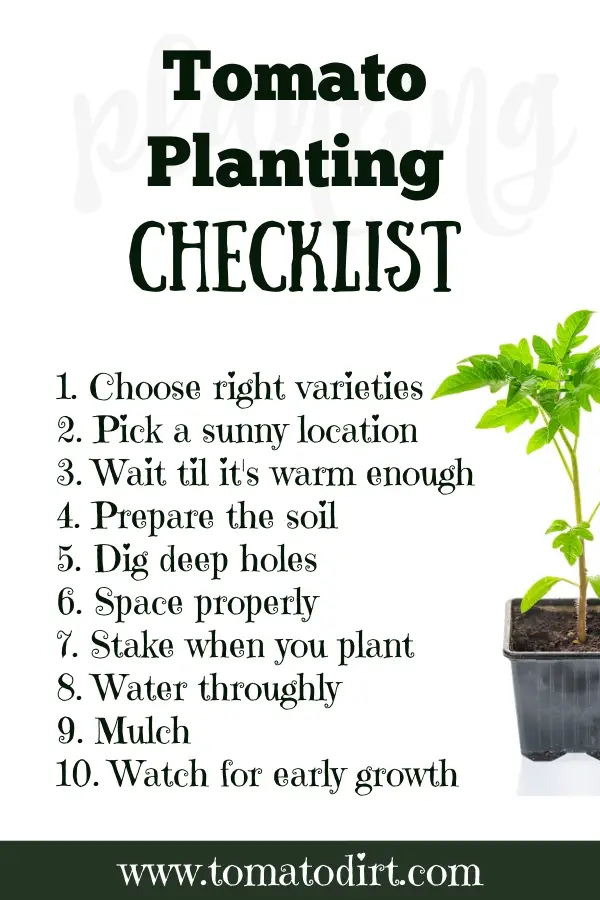
Tomato planting checklist for beginners (experienced gardeners
use it, too)
1. Choose the right tomato variety
Before planting, take a moment to choose a tomato variety that fits your climate, garden space, and goals. The choices can be overwhelming. There are an estimated 25,000 tomato varieties.
There are two main types of tomatoes:
- Determinate tomatoes grow to a certain height and stop. They produce most of their fruit at once (ideal if you want to can or preserve tomatoes) and are good for containers and small gardens, because of their limited growth habit.
- Indeterminate tomatoes continue growing and producing all season – until frost – and yield continuous, larger harvests. Indeterminates need strong support structures, like stakes, cages, or trellises.
If you’re just starting out with growing tomatoes, choose a variety known for its reliability and disease resistance, such as:
- Roma (determinate)
- Celebrity (determinate)
- Better Boy (indeterminate)
- Early Girl (indeterminate)
If you're growing in pots or small spaces, look for varieties labeled “patio” or “container” tomatoes – typically determinate, more compact bush varieties.
2. Pick a sunny planting location
Tomatoes love sunlight – with good reason. Plants must transition from seed to full-grown fruit-producing machines in just a few weeks, so they must grow fast. More sunlight means stronger plants and better fruit production.
Choose a spot that receives at least 6–8 hours of direct sun each day. Take a day or two to follow light patterns. When evaluating a planting spot, ask:
- Does this area get morning sun? Not a problem … unless there’s no afternoon sun, either.
- Is it shaded by buildings or trees all or part of the day?
- Will taller plants block sunlight later in the season?
If sunlight is limited, consider growing tomatoes in containers that can be moved during the season.
3. Wait to plant until the weather is warm enough
Tomatoes are warm-season plants and do not tolerate frost. Planting too early is one of the most common beginner mistakes. You can avoid that boo-boo when you make sure …
- The last frost date in your area has passed
- Night temperatures stay above 50°F (10°C)
- Soil temperature is at least 60°F (16°C)
If your seedlings were grown indoors or purchased from a nursery, take time to harden them off before planting – that is, gradually expose them to outdoor conditions for 7–10 days so they can adjust to sunlight, wind, and cooler temperatures.
4. Prepare the soil
Tomatoes grow best in loose, well-draining soil rich in organic matter. Before planting, improve your soil with:
- Compost
- Aged manure
- Organic garden soil mix
Avoid planting tomatoes in heavy clay soil that stays soggy, which can lead to root problems.
You should also check that the soil drains well. If water pools after rain, consider planting tomatoes in:
- Raised beds
- Large containers
- Mounded rows
Good soil preparation gives tomato plants a strong foundation for the entire season.
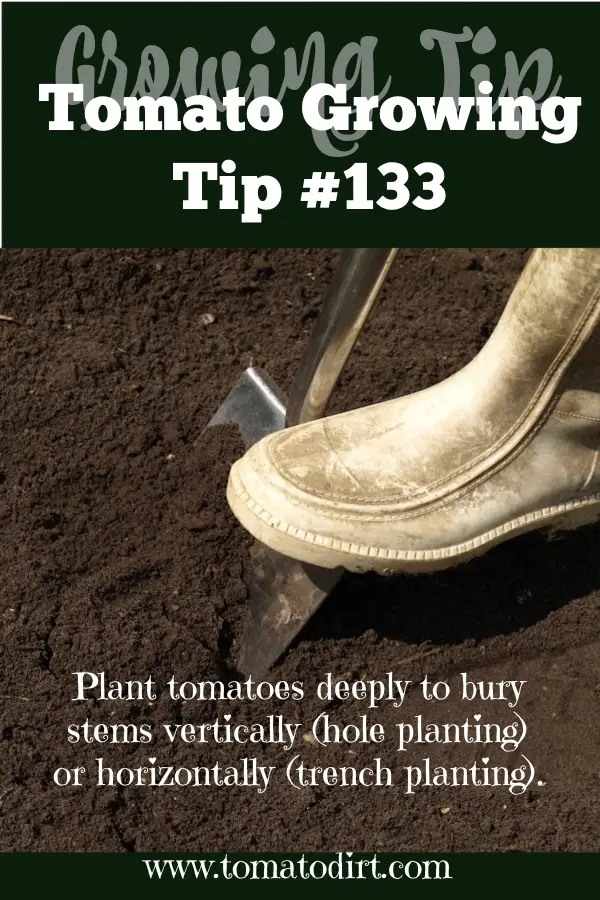
5. Dig deep holes
Tomatoes have a special advantage over most plants: their stems can grow roots.
That means you can plant them deeper than they were growing in their original container. In other words, you can bury the bottom third of the plant or even half of the stem.
Try one of these two planting methods:
- Deep planting: Dig a deep hole and bury part of the stem vertically.
- Trench planting: Lay the plant sideways in a shallow trench and gently curve the top upward.
Both methods allow the buried stem to grow additional roots, creating a stronger and more drought-resistant plant.
6. Space plants properly
Proper spacing helps prevent disease and allows good air circulation. Try these general spacing guidelines:
- Garden beds: 18–24 inches apart
- Rows: 3–4 feet apart
- Containers: One plant per pot (minimum 5 gallons)
Overcrowded tomato plants compete for sunlight and airflow, which increases the risk of fungal diseases later in the season. When in doubt, give your tomato plants more space rather than less.
7. Install staking when you plant
Tomato plants need support as they grow - particularly indeterminates, which can get to 6-10 feet high or more. Otherwise, plants sprawl. Supporting plants early helps prevent broken stems and keeps fruit off the ground.
The best time to install supports is right when you plant. Wait too long, and your plants start to send out roots – and you’ll damage their new root systems when you drive stakes or cage legs into the ground.
You can choose the support system that works best for you – each has advantages.
8. Water plants thoroughly
After planting, water your tomatoes deeply to help settle the soil around the roots.
A good first watering should:
- Fully soak the root area
- Eliminate air pockets in the soil
- Help the plant recover from transplanting
During the growing season, tomatoes prefer deep, consistent watering rather than frequent shallow watering. A simple rule of thumb is 1–2 inches of water per week, depending on weather conditions.
Container plants may require more frequent watering, especially during hot summer weather.
9. Add mulch around plants
Mulch is one of the simplest ways to keep tomato plants healthy. Mulching helps the soil to retain moisture (important when midsummer days get hot), reduces weeds, and prevents soil from splashing onto leaves and spreading diseases.
After planting, spread 2–3 inches of mulch around the base of each plant. Good mulch options include:
- Straw
- Shredded leaves
- Grass clippings
- Compost
As an added benefit, mulch from these organic sources breaks down over winter and improves your garden soil.
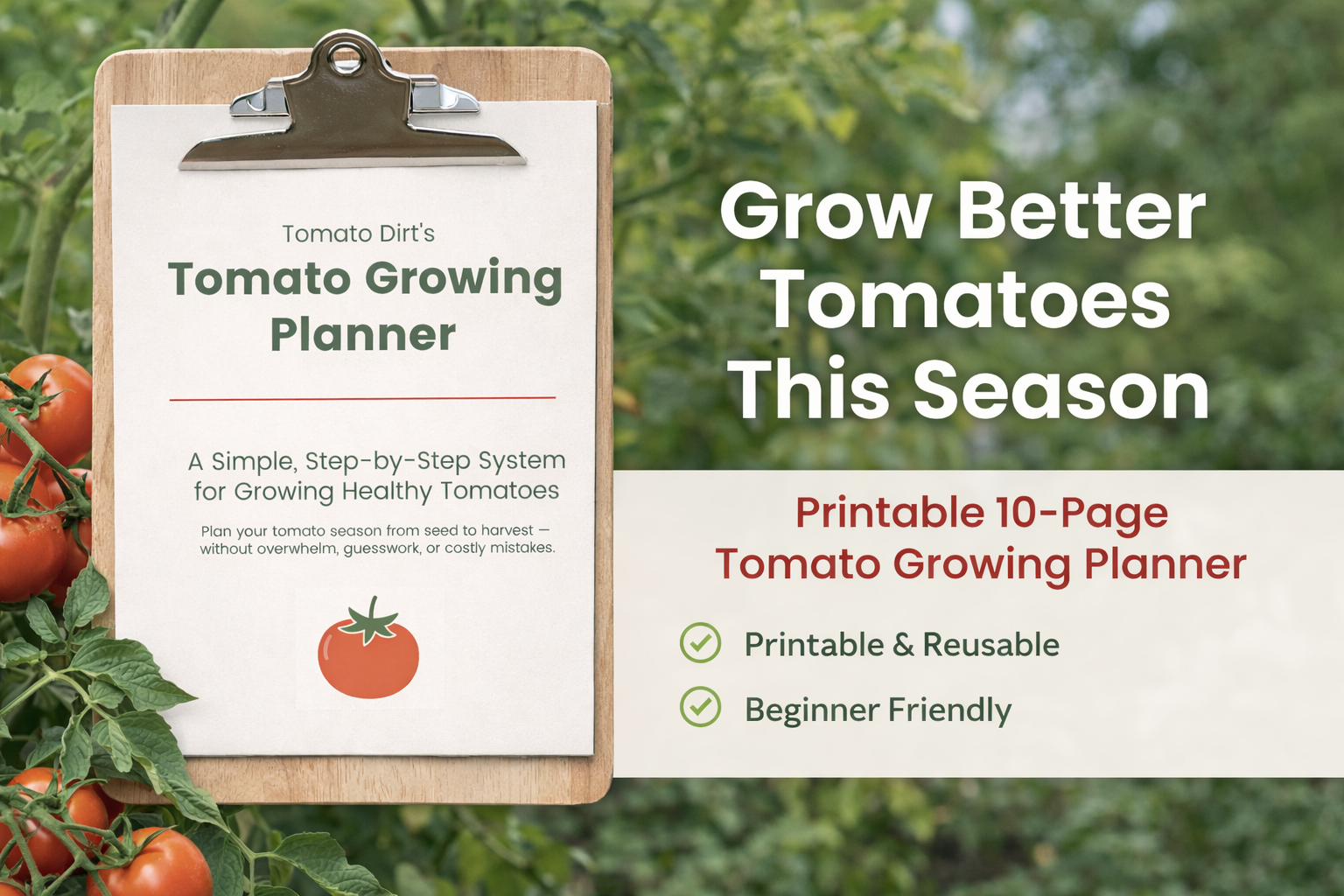


Get your crop off to a good start by using this Tomato Growing Planner.
10. Watch for early growth (and problems)
During the first few weeks after planting, focus on helping plants establish strong roots.
Look for signs of healthy growth, such as:
- New leaves forming
- Upright stems
- Steady plant growth
And be on the lookout for damping off (where plants wilt or droop over and stems look pinched off at the soil line) and for chewed leaves – a sign that the tomato cutworm has been snacking on your plants early in the season.
It’s normal for tomatoes to experience a short adjustment period after transplanting. But avoid heavy fertilizing right away. Too much fertilizer early can cause plants to grow lots of leaves but fewer tomatoes. Once plants are established, you can begin regular feeding if needed.
Final thoughts
Growing tomatoes doesn’t require years of gardening experience. With the right preparation and a simple checklist, even beginners can grow healthy plants and enjoy a productive harvest.
Start with good soil, plenty of sunlight, and proper planting techniques. Then let nature do the rest.
Before long, you’ll be picking fresh tomatoes from your own garden—and wondering why you didn’t start growing them sooner.
And once you’ve planted your tomatoes this season, ask yourself one more helpful question:
What notes can you record this year that will make next year’s tomato harvest even better?
More Tomato Planting Tips
How to Plant a Tomato Plant: A Step-By-Step Guide ...
Row Planting vs Square Foot Gardening for Tomatoes: Which Is Better?
What’s the Best Soil for Tomato Plants?
When to Plant Tomatoes: A Helpful Guide ...
Tomato transplanting mistakes to avoid when setting out plants ...
What’s the Best Spacing for Planting Tomatoes?
How to harden off tomato plants to prepare them for the home garden…
Get more tomato planting tips on our Pinterest board...
Return from Tomato Planting Checklist for Beginners to Tomato Dirt home
As an Amazon Associate and Rakuten Advertising affiliate I earn from qualifying purchases.
SHARE THIS PAGE:
