
FREE: 10 Must-Know Tomato Growing Tips Get The Guide
Read our affiliate disclosure here.
Row Planting vs Square Foot Gardening for Tomatoes: Which
Is Better?
Since 2010, Tomato Dirt has garnered 4.8+ million views, making it the web’s leading online source for growing tomatoes in the home garden. Award-winning writer and Tomato Dirt owner Kathy Widenhouse has helped thousands of home gardeners grow healthier tomatoes. Be one of them when you get Tomato Dirt’s Growing Guide here.
Posted 4.7.26
Row planting vs square foot gardening for tomatoes: it’s not just about your garden layout.
If you’ve ever stood in your garden wondering, “Am I spacing these right?” or “Is there a better way to do this?”— you’re not alone.
Here’s the dirt: Neat rows or a tight, efficient grid are pleasing to the eye … but your tomato garden layout affects your crop, too. Row planting vs square foot gardening for tomatoes impacts
- Your gardening workload throughout the season
- Your plants’ health – whether they thrive or struggle
- Your crop’s productivity
You can have confidence in choosing the best method for your space. In this guide, we’ll break down row planting vs square foot gardening for tomatoes, so you can confidently choose the best method for your garden space.
But first …
Before you leave ...
Get your free copy of "10 Must-Know Tomato Growing Tips." This 20-page guide is filled with tips you need to know to have a successful tomato crop, whether you’re a beginning or experienced gardener.
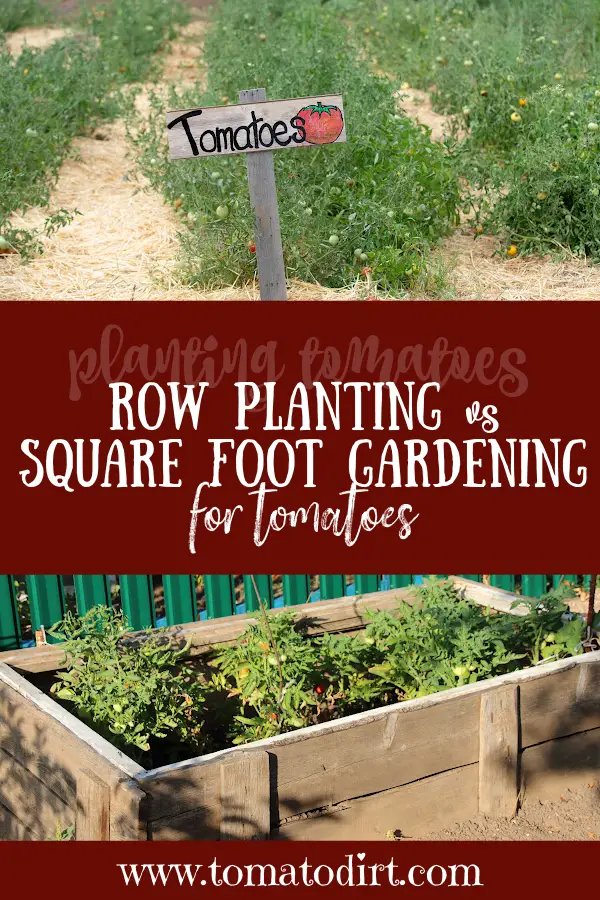
What is row planting?
In row planting, crops are set out in straight lines. It’s the traditional planting method used for in-ground vegetable gardens and farms. For you, that means …
- Tomatoes are planted in straight lines.
- Wide walking paths separate your rows.
- In-ground gardens are typically laid out in rows.
Typical row spacing for tomatoes guidelines recommend …
- 18–36 inches between plants
- 3–4 feet between rows
When you plant in rows, you have easy access to your plants on both sides. You give them good airflow. Plus, if your vegetable garden includes other crops in addition to tomatoes, you can plant them in rows and keep the layout simple.
What is square foot gardening (grid planting)?
Square foot gardening uses a grid system – plants are set out in a square pattern, like a checkerboard. It’s most common in raised beds or small, defined garden plots.
- Your garden is divided into 1-foot squares.
- Each square holds a specific number of plants.
- Tomatoes are typically planted 1 per square (or 1 per 2 squares for larger varieties). Spacing is tighter but evenly distributed – plants are set 18-24 inches apart in all four directions.
Square foot gardening maximizes space and efficiency.
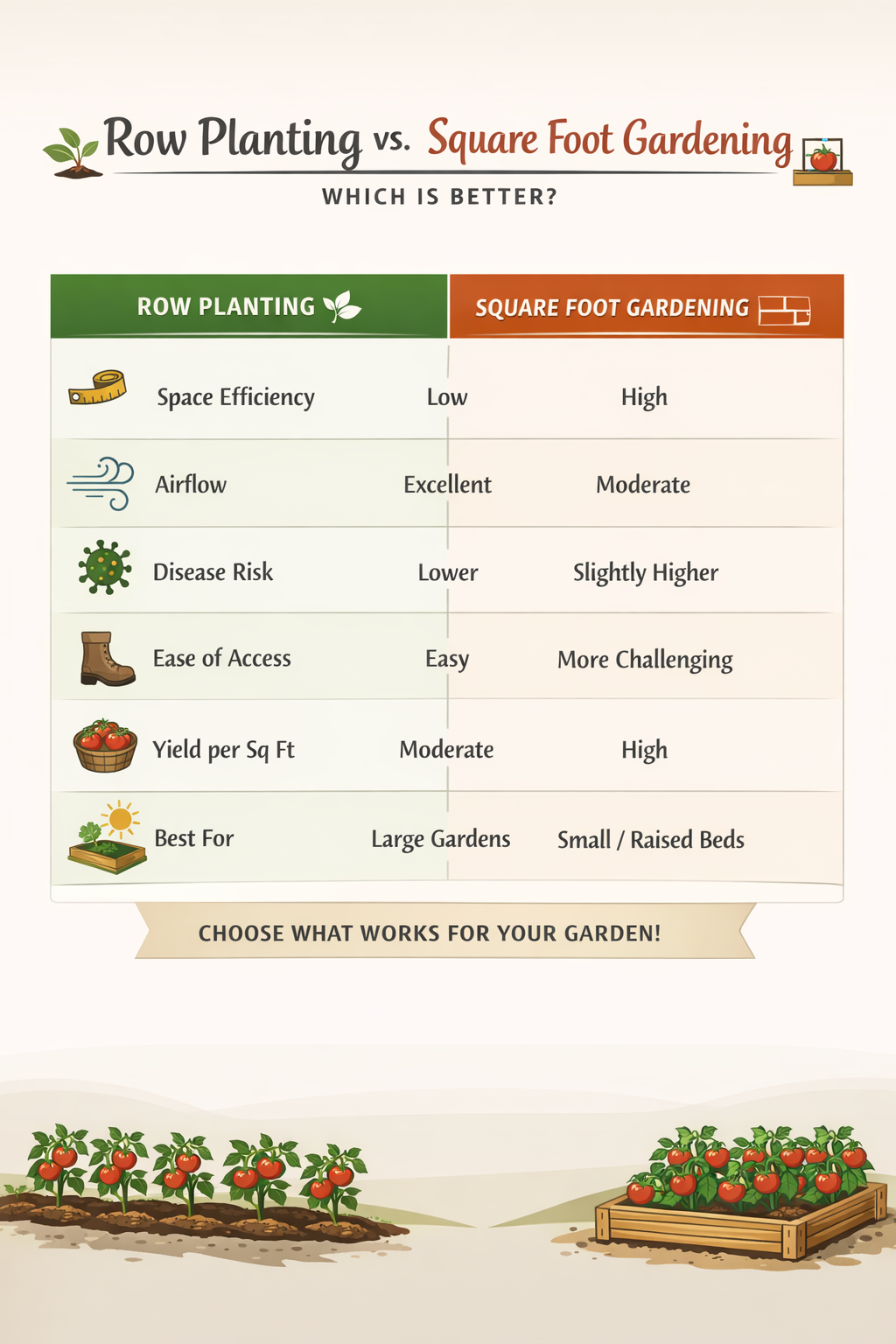
Main differences in row planting vs square foot gardening
for tomatoes
1. Tomato spacing: rows vs square foot gardening
One of the biggest differences in these planting methods is the spacing of your plants.
- Plants are spread out horizontally.
- Roots have more individual space.
- Plants have less competition for nutrients.
In square foot gardening:
- Plants are evenly spaced in all directions.
- Roots share space more intensively.
- Your soil must be rich and well-maintained to accommodate the plants’ close proximity to each other.
Key tip: Square foot gardening compresses space, so your soil quality matters more.
2. Yield: Which method produces more tomatoes?
This is the big question.
Square foot gardening wins for yield per square foot.
- More plants in less space means more fruit.
- Small backyards or raised bed gardens can produce bumper crops if managed well.
- Square-foot planting is ideal for urban gardeners who want to produce quality fruit in a small space.
Row planting wins for plant size and stability.
- Your individual plants will grow larger in rows than in a grid.
- Rows provide better airflow, which means fewer diseases.
- Rows are more forgiving if conditions aren’t perfect.
Bottom line:
- Small space → Square foot gardening
- Large space → Row planting
3. Airflow: The hidden factor most gardeners miss
Tomatoes are highly susceptible to fungal diseases like early blight, late blight, and Septoria leaf spot – especially if your plants contract these diseases one season. The fungi overwinter in the soil. They’re eager to re-emerge in next year’s plants if you don’t rotate crops or practice good planting hygiene.
Row planting provides …
- Better airflow between plants
- Space for leaves to dry faster after rain
- Lower humidity around foliage
Square foot gardening means …
- Tighter spacing, which leads to reduced airflow
- Moisture can linger longer around tomato leaves and stems
- Disease can spread faster if it starts
This matters especially in humid regions. If you live in a hot, humid climate, row planting often gives you a major advantage.
4. Watering, pruning, and harvesting
Row planting makes it …
- Easy for you to walk between plants
- Simple to install drip irrigation or soaker hoses
- Easier pruning and harvesting because you can reach plants on both sides
Square foot gardening means …
- It’s harder to reach middle plants or stems that are not on the grid’s borders
- A bit of extra planning (like access paths or stepping stones)
- Crowding as plants mature … which is manageable if you can bend, stretch, and reach
Given a choice, beginners usually find row planting easier to manage because you’ll have easier access to your plants. However, square-foot planting typically means fewer plants ... which means less time to prune, stake, water, and pick.
Best tomato types: Row planting vs square foot gardening
Best tomato varieties for row planting
- Indeterminate (vining) tomatoes, which continue to put out stems and leaves until frost.
- Large heirloom varieties, which appreciate the extra room to breathe. Heirloom tomatoes are more susceptible to diseases than hybrids, since many hybrids are bred for disease resistance.
- Plants that need staking or trellising. You can give them extra room by helping them grow up as well as out.
Best tomato varieties for square foot gardening
- Determinate (bush) tomatoes – they reach a certain size, produce the bulk of their crop within a couple of weeks, and then peter out.
- Patio or dwarf varieties, which are bred for smaller spaces.
- Compact hybrids. Their heightened disease resistance can sustain less airflow.
Match your variety to your method, and you’ll have a better crop!
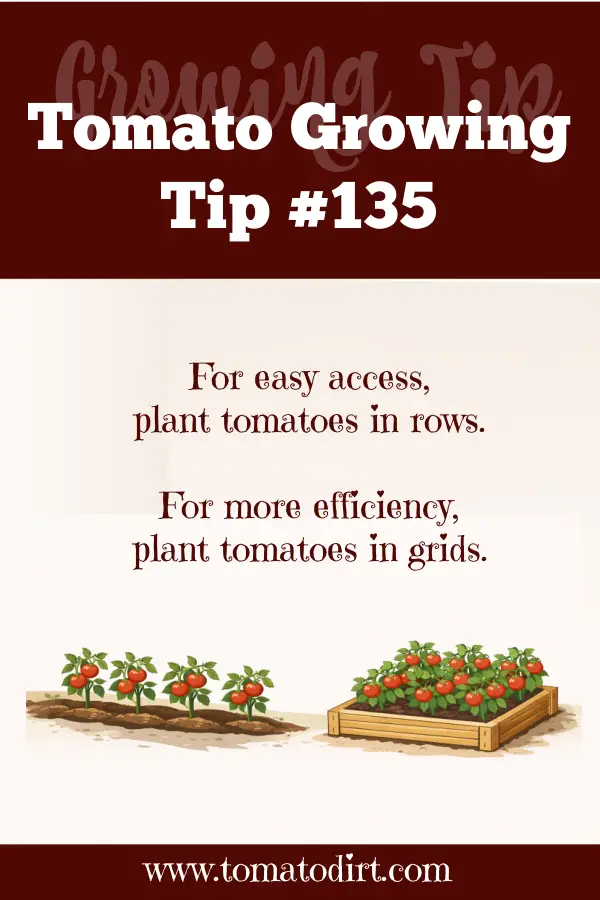


When should you choose row planting?
Plant tomatoes in rows if you …
- Have a larger garden space
- Want easy access and maintenance to your plants
- Live in a humid climate
- Grow large, sprawling tomato plants
When should you choose square foot gardening?
Choose square foot gardening for your tomatoes if you:
- Have limited space or raised beds.
- Want to maximize yield per square foot.
- Prefer a structured, organized layout.
- Are growing compact or bush varieties.
Extra tip: Choosing your planting layout is not just
about space …
It’s about soil, too. Here’s something most guides don’t tell you: Square foot gardening only works well if your soil is excellent. Since your tomato plants are closer together …
- Nutrients get used faster
- Water drains differently
- Soil health becomes critical
If your soil is average or inconsistent, row planting is more forgiving.
Plan your tomato season from start to finish with this unique planner.
Can you combine both row planting vs square foot
gardening for tomatoes?
Yes—and this is often the best solution. Many gardeners use rows for large indeterminate tomatoes and square-foot sections for smaller plants. This hybrid approach gives you efficiency and airflow. You’ll get higher yields from both sets of plants. And your tomato crop will be much easier to maintain!
FAQ: Row vs square foot gardening for tomatoes
Q. Is square foot gardening better than rows for tomatoes?
It depends on your space. Square-foot gardening is better for small spaces, while rows are better for airflow and ease of care.
Q. How many tomato plants per square foot?
Typically, 1 plant per square foot -- though larger varieties may need more space.
Q. Do tomatoes grow better in rows?
They often grow larger and healthier in rows due to better airflow and reduced disease pressure.
Q. Which method is best for beginners?
Row planting is usually easier for beginners because it’s simpler to manage and maintain
Which is better: Row planting vs square foot gardening
for tomatoes?
There’s no one-size-fits-all answer—but here’s a simple way to decide:
- Want maximum production in a small space? Want to be efficient and reduce wasted nutrients? → Go with square foot gardening
- Want healthier plants with less maintenance? Have plenty of space? → Go with row planting
If you can, try both. One season of experimenting will teach you more than any guide ever could.
Your next step before setting out your tomato plants
Before you plant, ask yourself:
- How much space do I have?
- How much time do I want to spend maintaining plants?
- Do I want maximum yield—or maximum simplicity?
Answer those questions, and you’ll know how to plant your tomatoes for the healthiest plants and biggest crop.
More on Planting Tomatoes
10 Ways to Get the Most From Your Garden Space ...
3 types of planting in rows for your vegetable garden ...
How to plan a garden layout for growing vegetables and tomatoes ...
Should You Use A Garden Planner For Growing Tomatoes?
Starting a Raised Bed Vegetable Garden FAQs ...
How To Start a Vegetable Garden: 10 Tips For Beginner Gardeners ...
What Type of Vegetable Garden Is Best for You?
See more tips on our Planting Tomatoes Pinterest board...
Return from Row Planting Vs Square Foot Gardening For Tomatoes
to Tomato Dirt home
As an Amazon Associate and Rakuten Advertising affiliate I earn from qualifying purchases.
SHARE THIS PAGE:
