
The Most Common Tomato Problems
And How To Prevent Them
Since 2010, Tomato Dirt has garnered 4.8+ million views, making it the web’s leading online source for growing tomatoes in the home garden. Award-winning writer and Tomato Dirt owner Kathy Widenhouse has helped thousands of home gardeners grow healthier tomatoes. Be one of them when you get Tomato Dirt’s Growing Guide here.
Updated 5.3.26
Even the most diligent gardener can’t control tomato problems in the garden! While healthy tomato plants don’t always start, stay, or end that way, problems needn’t be a death sentence for plants. Most can be halted or reversed.
Healthy tomato plants have:
- Green and evenly-colored leaves
- Strong, green stems
- Firm fruit with a smooth color
If you check plants each day, you’ll discover and identify problems at their onset. Then you treat them quickly and successfully. You simply need to know what to look for.
Before you leave ...

Get your free copy of "10 Must-Know Tomato Growing Tips." This 20-page guide is filled with tips you need to know to have a successful tomato crop, whether you’re a beginning or experienced gardener.
How to identify tomato problems
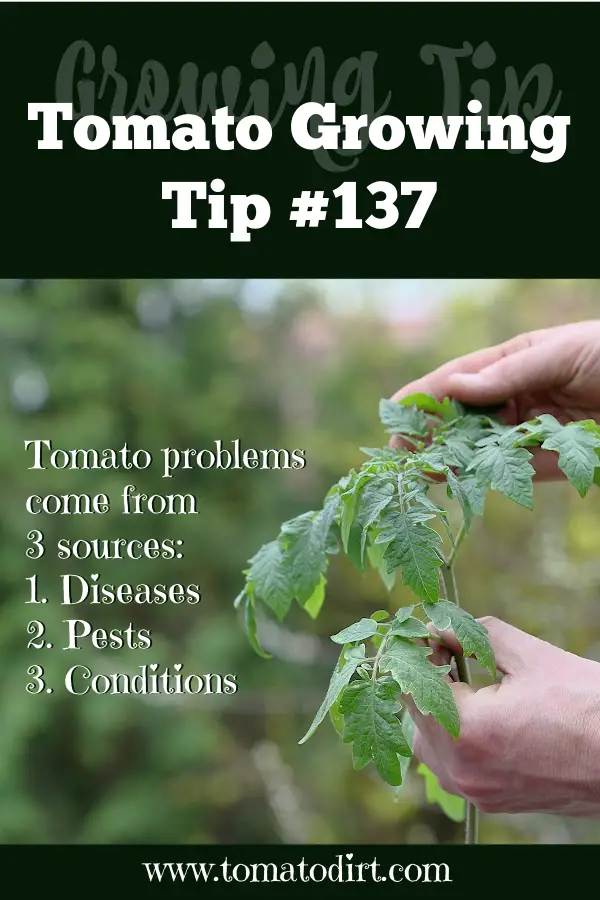
There are 3 sources of tomato problems:
- Tomato diseases
- Tomato pests
- Tomato growing conditions
We will address those one by one. But first, let’s save you some time and cover the most common tomato problems. Here’s the dirt.
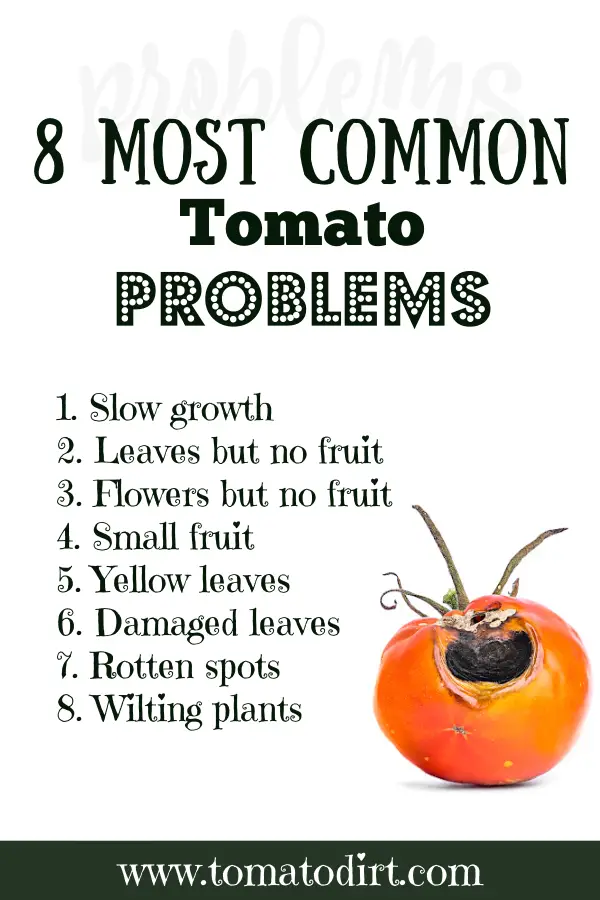
The 8 most common tomato problems
1. Slow or stunted growth in your
tomatoes
Your plants stop growing upwards, produce very few leaves, or stay exceptionally small for an extended period – often leading to a "napping" or dormant state.
Slow growth in tomatoes isn’t just a cosmetic issue. Stunted plants are a symptom, not the core problem. It’s your plant’s way of signaling that something is off—usually with nutrients, watering, soil conditions, or temperature.
Tomatoes have a limited growing window. When a tomato plant grows slowly, it takes longer to flower and produce fruit, which can lead to a smaller harvest or tomatoes that ripen too late in the season. On top of that, weak growth often means fewer leaves and a smaller root system, so the plant can’t generate enough energy or support healthy fruit production.
Possible causes of slow growth
- The air or the soil are too cold.
- The soil is of poor quality or lacks nutrients.
- The plant’s roots are too cramped – particularly true for your container tomatoes, where the pot is too small.
Quick fixes
- Wait for warmer weather (above 60°F consistently) before planting – or if your plants are already in the ground, then be patient.
- Add nutrient-rich soil or compost to the plant – work in about 2-3 inches to the base of the plant.
- Upgrade to a larger container (at least 5 gallons).
2. Lots of leaves, no tomatoes
A tomato plant with lush green leaves but no blossoms or fruit is telling you something important: it’s putting all its energy into growth instead of reproduction. Excess foliage defeats the whole purpose of growing those luscious orbs! Tomatoes are grown for their fruit, so if the plant isn’t flowering and setting fruit, you end up with a big, healthy-looking plant that produces little to nothing.
Too many leaves is a sign something’s off – most often too much nitrogen, not enough sunlight, or stress from heat or inconsistent watering. Excess leaf growth can also shade flowers and reduce pollination, making it even harder for fruit to form. Lots of leaves with no tomatoes means the plant is thriving in the wrong way. Correct the cause, and your harvest can go from disappointing to delightful.
Possible causes of leafing but no fruiting
- Too much nitrogen fertilizer, which promotes foliage growth.
- Not enough sunlight, which reduces pollination.
Quick fixes
- Switch to a low-nitrogen or balanced fertilizer with adequate phosphorus and potassium formulated for tomatoes. Add compost to the soil, too.
- Make sure your plants get 6–8+ hours of direct sun daily. For instance, consider moving tomatoes in pots to a sunnier area.
Fix your tomato problems fast with this Quick Fix Cheat Sheet.
3. Flowers, but no fruit
Got blossoms but no tomatoes? Each flower on your plant is supposed to become a tomato. If they don’t, your plants are missing out on pollination or fruit set, and you’re losing a tidy bit of potential harvest. Blossoms drop off without forming fruit, you end up with little to show for an otherwise healthy-looking plant.
Flowers without fruit are a tip-off that your plant is stressed. It could be temperatures that are too hot or too cold … inconsistent watering … low pollination (especially in still air) … nutrient imbalances. The plant is trying to produce, but something is interrupting the process. Your job is to identify the interruption and reverse it.
Possible causes of no fruit
- Extreme temperatures
- Poor pollination
Quick fixes
- The ideal temperature for growing tomatoes is 65–85°F. When the weather is too hot, provide shade, particularly in midday. If it’s too cold, cover plants to give them warmth.
- Gently shake plants or tap flowers to help pollination
- Attract pollinators by planting flowers near your tomato patch.
Monitor your rainfall and supplement it with drip watering so your plants get 1-2 inches of water a week. Avoid overwatering by planting tomatoes in raised beds or elevated mounds to help drainage.
4. Small tomatoes (or too few
tomatoes)
Small tomatoes—or getting only a few tomatoes—might seem like a minor issue, but for a home gardener, it usually signals that something isn’t quite right with the plant or its growing conditions.
The exceptions to the size issue are cherry tomatoes or small tomato varieties.
But low yield and stunted fruit? Your plant is putting in the effort to grow, but something is holding back fruit development. The good news is this: You can figure out what’s holding back your harvest and then make changes to help your plant along.
- First, tomato plants are naturally wired to produce a good number of properly sized fruits. When the tomatoes are small or scarce, it often points to problems like inconsistent watering, poor pollination, nutrient imbalances (too much nitrogen, not enough phosphorus or potassium), or limited sunlight. In other words
- Second, it’s a problem because it reduces your harvest and the overall reward of gardening. Most home gardeners grow tomatoes for fresh eating, preserving, or sharing. Fewer or undersized fruits mean less yield, less flavor payoff, and more time spent caring for a plant that isn’t delivering what it should. It can also be frustrating, especially if the plant looks healthy otherwise.
Possible causes of stunted fruit
- Inconsistent watering. Tomatoes get stressed when they don’t get predictable amounts to drink. When the soil swings from very dry to very wet the plants have to constantly adjust, rather than pouring its energy into steady growth and fruit production. Water moves nutrients from the soil to the plant. So uneven watering means nutrients like potassium – key for fruit development – don’t get absorbed efficiently.
- Nutrient deficiency, which fuels plant and fruit production.
- Limited sunlight. Sunlight drives photosynthesis, which is how tomato plants make sugars (food) in their leaves.
- Overcrowding. Tight spacing means plants must compete for sun, water, and nutrients. And there’s less airflow, which makes it easier for diseases to flourish and weaken your plants.
Quick fixes
- Water deeply and consistently. It’s best to give tomatoes a good soak a couple of times a week rather than a superficial mist every day. And keep an eye on rainfall. Don’t overwater when Mother Nature provides the water your plants need.
- Feed regularly with a balanced tomato fertilizer. Create a tomato feeding schedule and stick with it.
- Space plants appropriately – at least 24 inches apart in the garden.
- Prune and stake plants. Get rid of unproductive suckers. And allow plants to grow vertically so that light and air can get to leaves and stems.
5. Yellow leaves
Healthy green leaves contain chlorophyll, which drives photosynthesis. When leaves turn yellow, the plant can’t make as much energy. Less energy leads to slower growth, fewer flowers, and ultimately fewer or smaller tomatoes.
Possible causes of yellowing leaves
- Overwatering: too much water suffocates the plant’s roots.
- Underwatering: too little water prevents nutrient uptake.
- Nutrient deficiencies: lack of nitrogen makes older leaves turn pale yellow. Lack of magnesium or iron leads to yellowing between leaf veins.
- Poor drainage: Compacted soil means roots struggle to function as they should.
- Diseases: Early blight, fusarium wilt, and verticillium wilt cause yellowing leaves.
- Pests: Aphids and whiteflies suck sap from leaves, which drains nutrients and causes leaves to yellow.
Quick fixes
- Check the soil before watering (don’t guess!) and employ a consistent watering schedule for your tomato plants.
- Ensure good drainage in your tomato patch.
- Add balanced tomato fertilizer at regular intervals.
- Check yellowed leaves for dark spots on older leaves (early blight), yellowing on one side of the plant (fusarium wilt), or yellowing from the bottom up (verticillium wilt) – and treat with copper fungicide.
- Check the undersides of tomato leaves for aphids and whiteflies. Spray affected plants with insecticidal soap or Neem oil.
6. Holes or damage in leaves
Damaged tomato leaves aren’t just a cosmetic issue. Leaves act like solar panels for your plant, capturing sunlight to make energy. When a plant is defoliated, it produces less energy and struggles to survive.
Nearly all leaf damage is caused by pests.
Possible causes of leaf damage
- Tomato hornworms and tobacco hornworm: Attach to leaf undersides and strip the plant.
- Spider mites: Suck out juices from leaves, leaving tiny white and yellow spots and holes.
- Beetles: Flea beetles (leave round holes), blister beetles (overall damage), Colorado potato beetle (eat leaf matter but leave the veins)
- Slugs and snails: Consume leaves beginning at the outer edges. Look for a trail of mucus.
Quick fixes
- Inspect leaves (especially undersides) to identify intruders.
- Remove pests by hand – particularly hornworms, beetles, slugs, and snails.
- Use natural controls where appropriate, like Neem oil and insecticidal soap.
- Set out traps.
7. Tomatoes rotting on the bottom
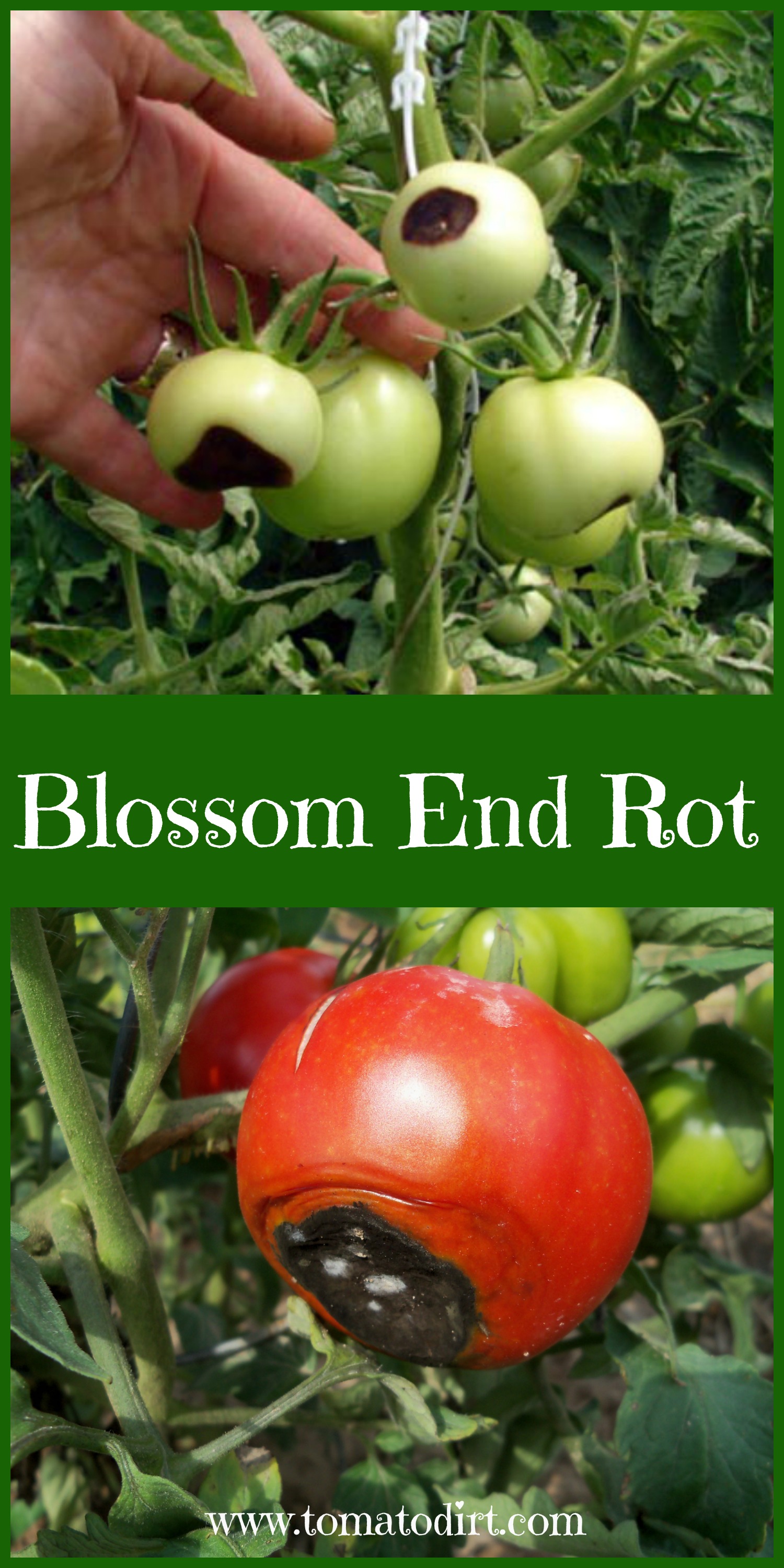
Blossom end rot (BER): It’s one of the most common tomato problems. The bottom side of the tomato (either a green or ripened one) develops a sunken, leathery dark brown or black spot. Gardeners most often notice BER when fruit is 1/3 to 1/2 its full size.
Possible causes
Calcium imbalance: A tomato’s cells need calcium to grow. Calcium acts like glue in cells – it binds them together.
Tomatoes absorb calcium through water, but calcium is slow-moving. So if a tomato grows quickly, or if other conditions slow water absorption, then calcium doesn’t have enough time to travel through the whole piece of fruit.
Plants can’t absorb enough calcium, whether or not there’s enough in the soil.
A tomato’s tissues break down and leave the telltale damage on its bottom.
Quick fixes
- Keep a consistent watering schedule.
- Avoid letting the soil dry out completely. This way, water can continually move through the plant (and so can calcium).
- Add calcium to the soil, if needed – but fix watering first!
8. Wilting plants
Got a drooping tomato plant? It’s in stress.
Tomatoes rely on steady water movement to keep cells firm and transport nutrients from the roots to the leaves and developing fruit. When your plant wilts, its transportation system breaks down. Growth slows, and fruit development suffers.
Possible wilt causes
- Heat stress: The plant loses water faster than it can replace it, so leaves droop during the hottest part of the day – and recover in the cool of the evening.
- Underwatering: The plant doesn’t have enough moisture to stay upright and remains in persistent wilting until well-watered.
- Overwatering or poor drainage: Roots become oxygen-starved and can’t absorb water properly
- Root damage: Nematodes or other pests can nibble away underground and destroy the root system. Or your plant may suffer root damage from transplant shock.
- Diseases: Fusarium wilt and verticillium wilt prevent water from moving through the plant—even if the soil is moist—leading to ongoing wilting and eventual decline.
- Herbicide damage: Drifting from your own lawn treatments, neighbors' yards -- even herbicides overwintering in compost -- can cause wilting tomato leaves.
Quick fixes
- Water plants deeply in the mornings
- Mulch to retain moisture
- Check for signs of disease if wilting continues


Get the Quick Fix Cheat Sheet and fix your tomato problems FAST.
Symptoms to look for that indicate tomato problems
Use this checklist to monitor problems on three tomato parts: leaves, stems, and fruit.
Problems on leaves
- dark, gray, or white spots
- yellowed or mottled foliage
- curled leaves
- holes
- stripped foliage
- sticky dew
Problems on stems
- mushiness
- dark, gray, or discolored streaks
- holes
- sticky dew
- white mold
- stunted growth
Problems on fruit
- sunken or discolored spots
- misshapen fruit
- cracks
- holes
How to prevent problems
Take steps before, during, and after the growing season to prevent problems from creeping into your tomato crop.
Before the season
- Rotate your tomato crop from year to year. Many fungi over-winter in the soil. You can prevent infection in a new season by planting tomatoes in a different place than in the previous year.
- Choose disease-resistant tomato varieties. A variety may have been bred to be resistant to one or more diseases. Look for tomato disease-resistant codes on seed or seedling packets, specified by capital letters:
V=Verticillium Wilt
F=Fusarium Wilt
N=nematodes
A=Alternaria
T=Tobacco Mosaic Virus
St=Stemphylium (Gray Leaf Spot
TSWV=Tomato Spotted Wilt Virus
- Plant healthy seedlings. Grow your own tomato seeds, or buy tomato plants that are pest- and disease-free.
- Plant “good neighbors” – companion plants that repel pests and dispel disease
During the season
- Maintain a consistent watering schedule. Monitor rainfall and supplementing appropriately to provide 1-3 inches a week
- Water at the soil line. Avoid overhead watering, which can spread disease.
- Don’t over-water
- Mulch plants once they’re established – about 3- 5 weeks after setting them out in the garden
- Don’t let anyone smoke in the garden (tobacco refuse can spread tobacco mosaic virus)
After the season
- Clear tomato plant debris
- Destroy infected plants
Most tomato problems aren’t complicated—just overlooked
“Set it and forget it.” That doesn’t work with tomato plants.
Take the time to check your plants every day or two. This way, you’ll catch tomato problems issue early.
Then you can make a simple adjustment and your plants will bounce back fast … and give you that delicious, bountiful harvest until frost.
More about Tomato Problems
How to understand tomato disease resistance codes ...
Different kinds of tomato blight and how to tell them apart ...
Identifying tomato plant diseases: compare 5 kinds of tomato wilt ...
Herbicide Damage on Tomatoes: Spot It, Save Your Plants, Prevent It ...
How to choose and apply fungicide to tomato plants ...
Blossom end rot: how to identify, treat, and prevent it ...
Sunscald: why too much sun can be hazardous to tomatoes ...
Why a tomato cracks and what to do about it ...
How to identify and control phosphorus deficiency in tomatoes ...
6 Kinds of Tomato Plant Leaf Curl and How to Treat Them ...
How to Identify These 13 Common Bugs on Tomato Plants ...
Aphids on tomato plants: how to identify and control them ...
Tomato worms-cutworms: keep them away with stem collars ...
Stink bugs: how to identify and control them on tomato plants ...
Tomato fruitworms: how to identify and control them ...
Return from Tomato Problems to Tomato Dirt home
As an Amazon Associate and Rakuten Advertising affiliate I earn from qualifying purchases.
SHARE THIS PAGE:
