
Pruning Tomato Plants:
Why, How, and When To Do It
Since 2010, Tomato Dirt has garnered 4.8+ million views, making it the web’s leading online source for growing tomatoes in the home garden. Award-winning writer and Tomato Dirt owner Kathy Widenhouse has helped thousands of home gardeners grow healthier tomatoes. Be one of them when you get Tomato Dirt’s Growing Guide here.
Updated 6.14.26
Pruning tomato plants can maximize the number, size, and flavor of your tomatoes. Warm up your pinching fingers and your garden clippers … and find out how a little trim can mean bigger, tastier fruit.
Before you leave ...

Get your free copy of "10 Must-Know Tomato Growing Tips." This 20-page guide is filled with tips you need to know to have a successful tomato crop, whether you’re a beginning or experienced gardener.

Why you might consider pruning tomato plants
Tomato plants grow side stems and suckers. During their first several weeks in the garden, before blossoms emerge, tomato plants put their energy into growing new leaves. Soon, extra branches emerge to hold more leaves.
A side stem grows directly off the main stem. Suckers are new branches that grow out of the tomato’s main stem, just above a leaf branch or side stem (in the “crotch”). Side stems and suckers absorb much of your tomato plant’s growing resources … resources that can be funneled into fruit.
Plus, all that growth keeps going. Tomatoes are energy factories fueled by sunlight. As tomato plants get bigger, their leaves produce even more energy. That’s why they continue to put out stems and suckers throughout the season.
Suckers that emerge in mid to late season are nearly always weak, produce inferior fruit, and drain away energy from the main stem. Also, suckers near the bottom of the plant are stronger than those near the top because the plant’s sugar concentration decreases up the height of the plant.
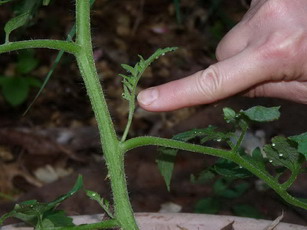
Why pinch off or prune suckers?
There are several good reasons pruning tomato suckers can help your plants.
Earlier production. If you let a sucker grow, it will become a full-blown stem and develop its own blossoms. Extra stems divert energy from the main plant’s fruit production. When you prune suckers, plants invest less energy in producing extra branches and leaves and more energy in fruit, producing an earlier crop.
Larger, healthier fruit. Overgrowth means leaves get less sunlight. Unpruned, unstaked tomato plants get weighed down. When you prune suckers, more leaves are exposed to sunlight and can make energy for the plant. Plants direct energy to existing branches and blossoms, producing larger fruit.
Disease prevention. If unsupported, unpruned tomato plants spread into a horizontal position on the ground. Water splashes up on leaves, spreading fungi and bacteria. Plants become more susceptible to diseases like leaf spot and tomato rot. When you prune suckers, leaves stay drier, and diseases don’t spread as easily.
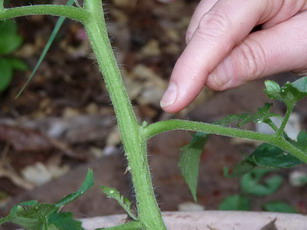
How to pinch off a sucker: “simple pruning”
Pruning tomato sucker shoots when they are young and tender is better than waiting until the sucker is mature and strong. Carefully grasp the base of the sucker between the thumb and forefinger. Pinch it or bend the sucker back and forth gently until it snaps. This technique is called “simple pruning.”
Use your fingers to pinch young suckers rather than clippers or a knife. Pinched wounds will heal quickly and are less disease-prone on young plants. When stems become older and tougher you may need to use garden clippers rather than fingers on older plants. Disinfect your tool to prevent an infection to the tomato plant.
(Check out other ways to prune tomato plants.)


How to prune leaf stems
Leaf branches (leaf stems) are different than suckers. Take a look at some basic tomato plant anatomy:
- Tomato main stem: the plant's central stem, which grows upward.
- Leaf branch (leaf stem): a branch growing out from the main stem.
- Side branch (sucker): a small shoot growing in the angle where the leaf branch meets the main stem.
Should you prune leaf branches?
Tomato Dirt best tip: To grow the strongest tomato plant possible, prune leaf branches (leaf stems) below the first fruit cluster.
When to prune tomato plants
- Start pruning after the first flower cluster appears.
- Prune every 1–2 weeks during peak growth.
- Prune tomato plants in the morning on a dry day so the cuts heal quickly.
- About a month before your first expected frost, pinch off the growing tips so the plant focuses on ripening existing tomatoes instead of making new flowers.
When to prune the lower leaves
As a tomato plant matures, its lower leaves begin to yellow. Pinch or prune yellowed leaves to prevent disease, improve the tomato plant’s appearance, and help the plant keep its energy focused on fruit production.
Top cautions when you're pruning tomato plants
- Don’t over-prune in hot climates. If you grow tomatoes in an area that is hot, be careful not to get too scissors-happy. Extra leaves and branches provide shade for the interior portions of the plant – and the fruit. Too much sunlight or steady, intense sunlight can lead tomatoes to develop sunscald.
- Go easy on pruning
determinate varieties. Determinate tomatoes set the bulk
of their crop at one time. Each plant will produce a limited number of fruit
before ceasing production. Avoid pruning tomato determinate varieties or pinch
back only suckers that appear below the first flower cluster. Otherwise, you
will reduce your yield.
Indeterminates, on the other hand, will continue to grow and set fruit until frost. Pruning tomato suckers on indeterminates helps produce healthier, tastier, more abundant fruit.
Practical tip: pruning and staking go hand in hand
When a tomato plant is nicely pruned and staked well, its leaf tips are open to the sun and are able to conduct photosynthesis without excess stress. Because the plant doesn’t have to work extra hard to make sugar, energy produced by the leaves invested in developing strong, flavorful, healthy tomatoes. (Learn more about staking tomatoes.)
Should I prune my tomato plants …
or not?
Pruning is usually beneficial for indeterminate tomatoes (the tall, vining types that produce fruit all season). Your plants will benefit from …
- Better air circulation, which can reduce diseases.
- Easier staking and harvesting.
- Larger tomatoes because the plant puts more energy into fewer stems.
- Faster ripening in some cases.
Don't prune if...
- You want the highest total yield rather than the largest fruits.
- You live in a very hot climate where leaves protect fruit from sunscald.
- You're growing determinate tomatoes, which naturally stop growing at a certain size.
How
many home gardeners solve the pruning question
Here’s a good middle-ground approach to pruning tomato plants – especially if you’re a beginning gardener.
- Remove all leaves touching the soil.
- Remove yellow, diseased, or damaged leaves.
- Pinch out a few suckers near the bottom of the plant.
- Leave most of the upper growth alone.
A simple rule for pruning tomato plants
Prune for plant health, not perfection. Remove lower leaves and problem growth, but don't feel obligated to remove every sucker you see.
Tomatoes require only sun, water, and nutrients to grow. Pruning enhances production – more tomatoes, bigger tomatoes, and more flavorful tomatoes.
Which is what we all want, right?
More on pruning tomatoes and growing tomato plants
Pruning tomato plants: different methods to try ...
7 tomato pruning mistakes to avoid ...
Tips for Topping a Tomato Plant to Extend Harvest ...
How to Choose Garden Clippers for Pruning Tomatoes ...
How to stake and tie tomatoes for support ...
Best tomato growing tips: readers share their favorites ...
Why staking tomatoes produces a bigger harvest ...
Growing tomatoes: top 4 areas of tomato care ...
More tomato pruning tips on our Pruning Tomatoes Pinterest board...
Return from Pruning Tomato Plants to Tomato Dirt home
As an Amazon Associate and Rakuten Advertising affiliate I earn from qualifying purchases.
SHARE THIS PAGE:
