
What Is Damping Off in Tomatoes
and Tomato Seedlings?
Since 2010, Tomato Dirt has garnered 4.8+ million views, making it the web’s leading online source for growing tomatoes in the home garden. Award-winning writer and Tomato Dirt owner Kathy Widenhouse has helped thousands of home gardeners grow healthier tomatoes. Be one of them when you get Tomato Dirt’s Growing Guide here.
Updated 4.21.26
One morning, your tomato seedlings look perfectly healthy. The next, they’re collapsing. You wonder …
- Why are my tomato seedlings falling over at the soil line?
- Why do some tomato seedlings die after germination?
- Why do my tomato seedlings look cut off at the base?
Answer: You’re likely dealing with damping off.
This frustrating problem shows up fast: seedlings sprout, seem fine, and then suddenly wilt, topple, or die.
Your once-promising plants struggle to survive.
The good news? If you understand what’s happening—and how to prevent damping off when starting tomato seeds or setting out tomato seedlings in the garden —you can protect your seedlings and keep them growing strong instead of watching them fall over overnight.
Before you leave ...

Get your free copy of "10 Must-Know Tomato Growing Tips." This 20-page guide is filled with tips you need to know to have a successful tomato crop, whether you’re a beginning or experienced gardener.
What is
damping off in tomatoes?
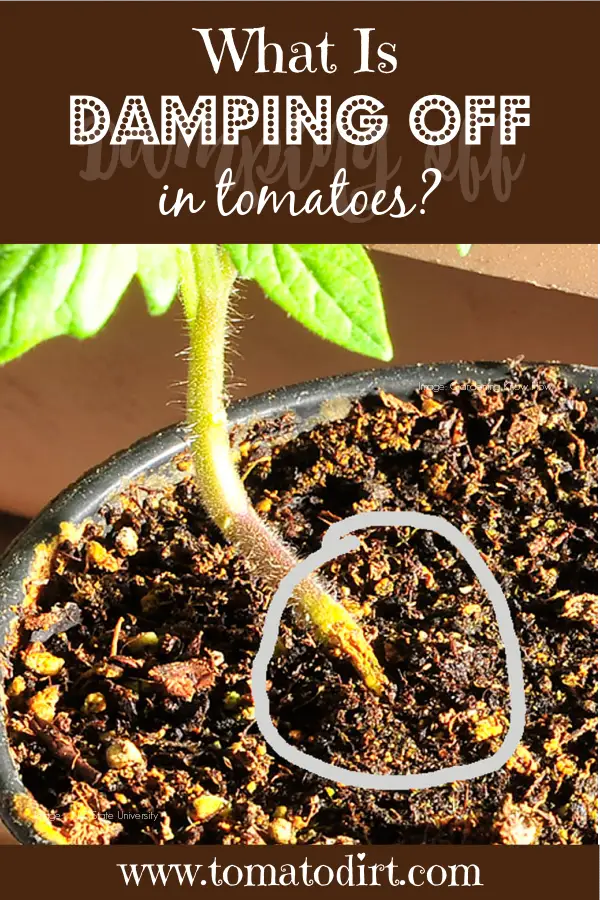
Damping off is a generic term for a group of common (but deadly) seedling diseases.
It’s caused by several different fungi (primarily species of Pythium, Rhizoctonia, Fusarium, and Phytophthora) that attack tomato seeds, tender stems, and roots at or just below the soil line. Since these fungi affect tomato seeds and seedlings shortly after they sprout, young seedlings or plants are most susceptible to damping off.
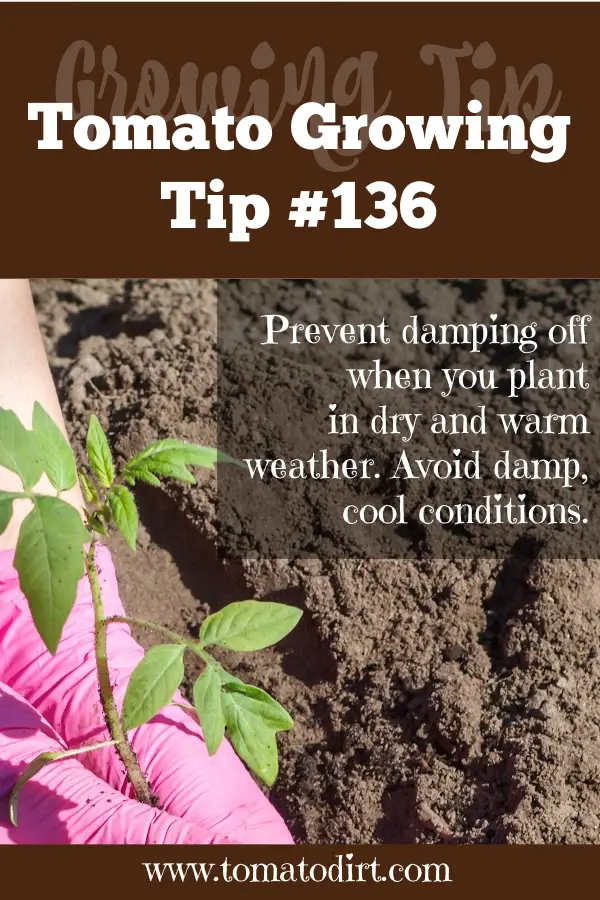
Tomato plants and seedlings are most affected when your conditions are humid, especially if the soil is cold and wet. The fungi thrive in the cool and damp—especially when plants are overcrowded, and there's poor air circulation.
Although fungi live in the soil and water, spores spread through the air and can move quickly from one seed tray or garden row to another. Affected plants appear as if they have been cut off at the base.
An epidemic of damping off disease can be a disastrous way to begin a new tomato season. Once damping off takes hold, it spreads quickly and can wipe out entire batches of seedlings ... making prevention the most effective way to manage it.
What does damping off look like in tomatoes?
Maybe you’ve noticed disappointing signs that your tomato plants aren’t healthy … but you don’t know these are damping off symptoms. Here’s how to tell if your seedlings are affected:
- Your tomato seedlings are dying after sprouting normally.
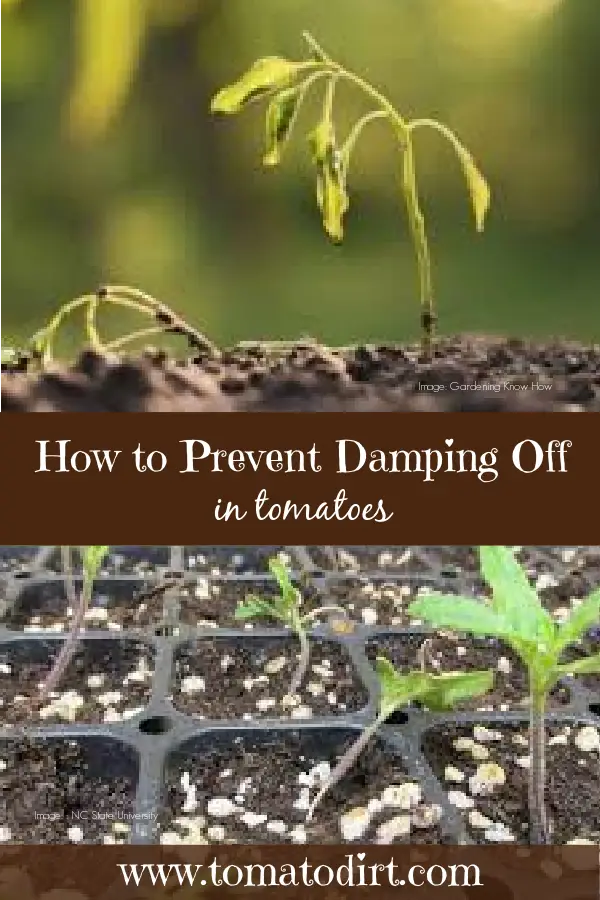
- Your tomato seedlings are falling over at the soil line.
- Your tomato seedlings look cut off at the base of the stem.
- Your tomato plants wilt, droop over, or wither away, and die.
- Your tomato seedlings and the soil surface nearby display a white mold-like growth.
Two kinds of damping-off
There are two types of damping off: pre-emergent and post-emergent.
Pre-emergent damping-off: seeds rot in the soil or seedlings decay before they push through the soil
Post-emergent damping-off: seedlings sprout, but then pale, curl, wilt, or collapse at the soil line. The stem is water-soaked and turns gray, brown or black before disintegrating.
What causes damping off in
tomatoes?
A nasty group of soilborne pathogens—primarily species of Pythium, Rhizoctonia, Fusarium, and Phytophthora—infect seeds and young seedlings during the earliest stages of development. These fungi persist in soil, organic debris, or contaminated containers. They get active under favorable conditions.
Their favorite situation is plenty of soil moisture, low to moderate temperatures, poor aeration, and high humidity. That’s when they multiply and move around to create havoc in your tomato plants. Overcrowding gives them free rein.
And they work together.
To get technical about it, damping off is not caused by a single pathogen but by a combination of these microbes. These bad boys produce enzymes that degrade cell walls. That gets in the way of water and nutrients getting to all parts of the new plant. As a result, your precious seedlings lose structural integrity – they literally “fall apart” because they can’t get food and water.
Can you save seedlings with
damping off?
The honest answer: usually, no. Once a tomato seedling shows classic signs—like a pinched, water-soaked stem and falling over at the soil line—the damage is already too severe for that plant to recover. Damping off moves quickly, cutting off the seedling’s ability to take up water and nutrients, so revival isn’t realistic.
However, all is not lost. You can often save the rest of your seedlings if you act fast. Remove and discard any affected plants immediately.
- Let the soil surface dry out.
- Improve air circulation (a small fan helps).
- Avoid overwatering.
- Try switching your seedlings to fresh, sterile soil … a different area of your garden … or containers to stop the spread.
So while you typically can’t save the individual seedlings that are already collapsing, you can step in early to protect the healthy ones and prevent the problem from wiping out your entire tray.
Can a plant survive damping off?
In most cases, no—a plant can’t survive damping off once symptoms appear. When you see a seedling with a thin, pinched, or water-soaked stem that’s starting to fall over at the soil line, the infection has already damaged the tissue beyond repair. The plant can no longer move water and nutrients properly, so it crumples and dies quickly.
There is a tiny exception: if the plant hasn’t actually collapsed yet and only shows very early signs of stress, you might be able to slow or stop the spread by drying out the soil, improving airflow, and removing nearby affected seedlings.
Recovery will defy the odds. The real focus with damping off isn’t saving infected plants—it’s protecting the healthy ones before they’re affected.
How to prevent damping off in tomatoes and tomato seedlings
- Use sterile containers. If you are re-using last year’s flats, be sure to wash them thoroughly and rinse them in a bleach solution before planting.
- Start tomato seeds in a sterile potting medium. Damping-off fungi flourish unhygienic conditions. Soil-less potting mix provides a healthier environment and eliminates potential pathogens from the start. (Read more about sterile growing mediums and find inexpensive seed starting mix to buy.)
- Avoid overly damp conditions. Many new gardeners start tomato seeds in damp basements – a perfect breeding ground for damping-off fungi. Choose a seed-starting area with good circulation. You can even run an electric fan in the growing area to keep the air moving.
- Maintain a steady temperature. Drafty, cool conditions encourage damping-off.
- Sprinkle soil surfaces. Spread a thin layer of sand, perlite, or sphagnum peat moss -- or cinnamon-- on the surface of the potting mix or garden soil to discourage fungi and bacteria.
- Water from the bottom.
- Work for a low pH. As the potting mix or garden soil pH rises, so does a tomato plant’s susceptibility to damping off. Commercially-prepared germination mixes have an average pH around 5.5, while tap water tends to be alkaline. As you water the seed pots and your seedlings with tap water, the pH in your pots gradually increases. Simultaneously, so will the plants’ susceptibility to damping-off diseases. Know the pH of your tap water.
- Use a preventative fungicide. Water potting mix, soil, and seeds with soluble copper spray.
- Separate infected plants. Damping-off disease spreads quickly from one plant or seed tray to another. Monitor new seedlings carefully. At the first sign of damping-off, move affected plants away from healthy ones.


What to do if your plants are affected by damping off
Dispose and destroy plants immediately. Avoid placing debris in the compost pile, since damping off fungi live in soil and will overwinter, ready to attack your new tomato seedlings next year. If tomatoes had not yet been set in the garden, disinfect or discard containers.
Damping off in tomatoes FAQs:
Frequently Asked Questions
Q: How can I stop damping off in tomato
seedlings fast?
- Act quickly by removing any affected seedlings.
- Then, let the soil surface dry out and improve airflow with a small fan.
- Reduce watering immediately and make sure your seedlings have plenty of light and space.
These steps can slow or stop the spread to healthy plants.
Q: How can I treat damping off naturally in tomatoes?
There’s no true cure once it starts.
However, you can manage damping off naturally by making sure the surface of the soil remains dry – especially when temps are cool. Plus, do all you can to get air flowing around your seedlings – particularly by using a small fan. You can lightly dust the soil surface with cinnamon or water plants with chamomile tea – both are mild antifungal aids. Prevention is the best treatment!
Q: What should I do after damping off kills
seedlings?
- Discard all affected seedlings. Don't put them on the compost pile, because the fungi will simply perpetuate there. It's best to destroy them.
- Avoid reusing the soil.
- Clean your containers thoroughly, switch to fresh sterile seed-starting mix, and adjust your watering and airflow practices before replanting.
Q: What’s the best soil mix to prevent
damping off in tomatoes?
Use a sterile, well-draining seed-starting mix—typically peat or coco coir blended with perlite or vermiculite. Avoid heavy garden soil, which holds too much moisture and may harbor pathogens.
Q: What are the best watering tips to prevent
damping off in seedlings?
- Water from the bottom when possible.
- Keep the soil moist but never soggy.
- Allow the top layer to dry slightly between waterings.
Consistency is key—overwatering is the most common trigger for damping off in tomatoes.
Q: What's the difference between damping off and
transplant shock in tomatoes?
Without soil testing, you cannot document the true difference. However, you can make an educated guess from symptoms.
Damping off causes seedlings to collapse at the soil line. It often appears suddenly. Transplant shock, on the other hand, causes wilting or slowed growth after moving plants but doesn’t involve stem rot or collapse.
Q: Is damping off more common with seedlings in peat pellets
or potting soil?
It can occur in both, but peat pellets are slightly more prone if they stay overly wet and lack airflow. That’s because pellets are so concentrated. That said, any medium can develop damping off if moisture and conditions are poorly managed.
Q: What’s the best temperature to prevent
damping off in tomatoes?
Tomato seedlings do best in warm conditions—generally around 65–75°F. Cooler, damp environments encourage the pathogens that cause damping off.
Q: Does cinnamon stop damping off in
tomatoes?
Cinnamon has mild antifungal properties and may help slow surface fungal growth, but it won’t cure damping off. Use it preventively. Sprinkle some cinnamon on the surface of your soil when you plant tomato seeds or seedlings. And make sure you follow proper watering and airflow practices.
You can prevent damping off in tomatoes and
seedlings
Damping off in tomatoes can feel like a sudden setback, but it’s really a signal to fine-tune your seed-starting setup.
One final tip many gardeners overlook: don’t cover your seed trays with humidity domes longer than necessary. And don’t plant tomato plants in cool, wet conditions. Either scenario means moisture gets trapped and fosters the perfect environment for damping off to take hold.
But not for you! Think of prevention as your best tool.
Now you know the triggers: excess moisture, poor airflow, and cool conditions. Stay one step ahead of those risk factors ... and you can grow strong, healthy tomato seedlings with confidence.
More on Planting and Growing Tomatoes
How to grow tomatoes from seeds -- is it really that hard?
Tomato growing tips for seeds ...
What tomato seedlings need after they germinate ...
What seed starting mix ingredients are important ...
What potting mix to use when starting tomato seeds ...
Get more tomato planting tips on our Pinterest board...
Return from Damping Off Disease in Tomatoes to Tomato Dirt home
As an Amazon Associate and Rakuten Advertising affiliate I earn from qualifying purchases.
SHARE THIS PAGE:
