
What You Need To Know About Growing Tomatoes in Raised Beds: FAQs
Since 2010, Tomato Dirt has garnered 4.8+ million views, making it the web’s leading online source for growing tomatoes in the home garden. Award-winning writer and Tomato Dirt owner Kathy Widenhouse has helped thousands of home gardeners grow healthier tomatoes. Be one of them when you get Tomato Dirt’s Growing Guide here.
Updated 2.10.26
Growing tomatoes in raised beds is one of the easiest and most practical approaches to gardening.
You don’t need to be a master builder or even handy with tools in order to set up raised beds, either. Reliable vendors can help provide affordable components, simple setup instructions, and know-how (including Burpee).
Before you leave ...
Get your free copy of "10 Must-Know Tomato Growing Tips." This 20-page guide is filled with tips you need to know to have a successful tomato crop, whether you’re a beginning or experienced gardener.
Beyond the practicalities of getting your raised beds in place, tomatoes and raised beds are a perfect match. Knowing how to use them together makes all the difference.
If you’re new to growing tomatoes or new to raised gardening – or if you simply want to know more – here are some clear, practical answers without the overwhelm. These raised-bed tomato FAQs cover the basics, the common mistakes, and the little details that help tomatoes thrive. But first …
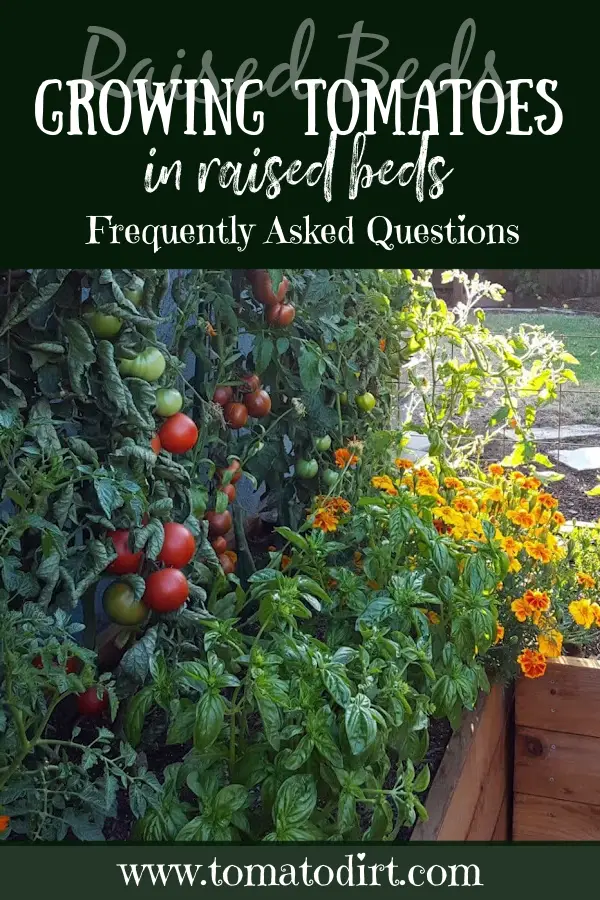
What are the advantages of growing tomatoes in raised beds?
Drainage. Beds are set higher. Water drains out more easily.
Yield. In a raised bed, you can grow your plants closer together, producing more tomatoes for your space.
Convenience. Higher beds mean you don’t have to bend over as much to work the soil. You can even build elevated beds that make it easy to work on beds if you find it especially difficult to lean over.
Soil quality. Adding compost, top soil, and fertilizers to the garden bed (not the paths) mean a nutrient-rich home for your tomatoes. This saves resources and concentrates them where they will be best used. You’ll also walk on paths between beds and prevent garden soil from becoming compacted.
Plant health. If a fungus or other disease overtakes your tomatoes, you can replace the soil in the following year – a step that would be impractical and cost-prohibitive in a regular garden.
Pest prevention. Slugs find it harder to infest tomato plants grown in raised beds.
Neatness. Raised beds are contained areas which are easy to maintain.
(These Frequently Asked Questions about raised beds may help, too.)
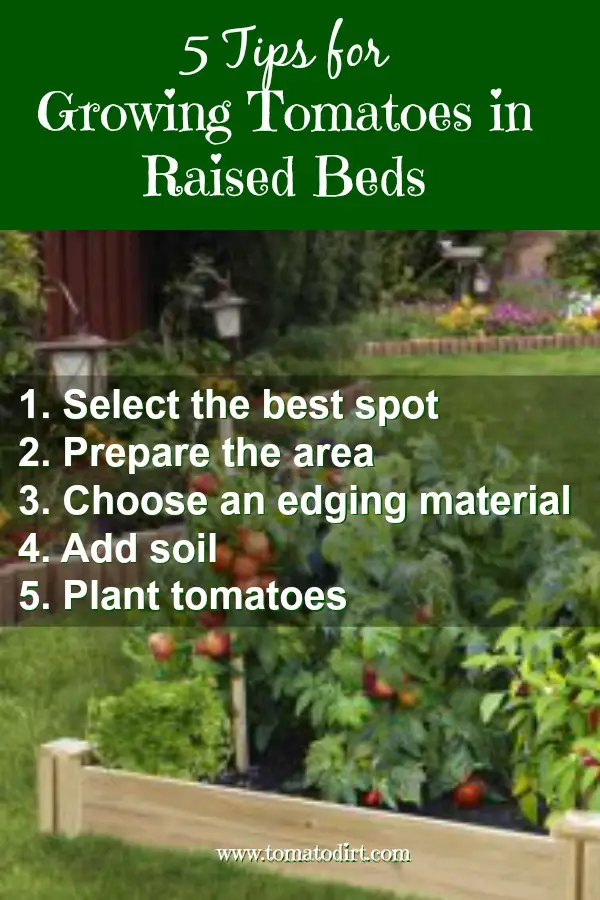
How to get started with tomatoes in raised beds
1. Select the best spot
The best raised bed sites for tomatoes are level, well-draining, and close to a water source. Choose a spot that receives at least eight hours of direct sun daily.
2. Prepare the soil
Create an outline of your raised bed with string, garden hose, or even flour. Measure the area. Then work the soil. Tomatoes are deep drinkers. Roots of plants in a raised bed will need to penetrate the soil below. Most vegetables grow beautifully in 12-inch deep beds, but deeper is better with tomatoes. Prepare the site by removing sod. Use a tiller, spade, or pitchfork to turn and loosen the soil at least 12 inches deep.
3. Choose an edging material
Select an edging material that is long-lasting so you can grow tomatoes year after year. Choose from all kinds of edging materials. (See this quick tutorial on the four main kinds of materials used to make raised beds: plastic, recycled composite, galvanized steel, and wood - and what materials to avoid, too.)
4. Fill the beds
After you install the edging material, line the bottom of the raised bed with chicken wire or hardware cloth to keep out gophers, moles, and other tunneling pests.
To determine the volume of soil needed to check your raised bed, measure its length, width, and height in feet, and multiply those numbers together. The result will be the number of required cubic feet. Combine topsoil and organic matter (shredded leaves, compost, well-rotted manure, kelp) in the raised bed. Use a spade to mix components well. Rake the surface smoothly.
5. Plant your tomatoes in your raised beds
Follow regular tomato planting steps.
More FAQs about growing tomatoes in raised beds
Q. What’s the best soil for tomatoes in raised beds?
Tomatoes love loose, rich, well-draining soil—and raised beds make this easier than almost any other setup. A simple, beginner-friendly raised bed soil mix looks like this:
- About 60% high-quality garden soil or topsoil
- About 30–40% compost
- A little aeration material (like aged bark fines or perlite). Think of raised bed soil as a living pantry for your tomatoes—it should hold moisture, but never feel soggy.
Why this works:
- Tomatoes have deep, fast-growing roots
- Compost provides steady nutrients
- Loose soil prevents water from pooling around roots
If you want an easy shortcut: many gardeners use a “raised bed soil” blend and then mix in extra compost before planting tomatoes.
Avoid:
- Straight bagged potting soil. It’s too fluffy and dries out fast.
- Heavy clay soil with no compost. Raised beds need good drainage. Clay soil holds moisture too well.
- Old, depleted soil that's reused year after year without refreshing
Q. How wide
should I make my bed?
Make sure you can reach the center of the bed from either side – usually no more than 4 feet wide. This way you will be able to reach in and cultivate the plants easily.
One common mistake is to build raised beds too closely together. When paths are too narrow, then when plants grow in, there is no place to walk! If you’re building more than one bed, set them far enough part enough to get your wheelbarrow through (usually 30 inches, but measure your wheelbarrow to make sure!)
Q. What’s the best spacing for tomatoes in raised beds?
Spacing is one of the biggest raised-bed tomato mistakes—and one of the easiest to fix. Spacing matters in raised beds because it allows for better airflow, which leads to fewer diseases. Plus, with adequate spacing, it’s easier for you to water plants at the soil line. Roots can grow more deeply. That means less competition for nutrients and stronger plants.
Here are general spacing guidelines for growing tomatoes in raised beds:
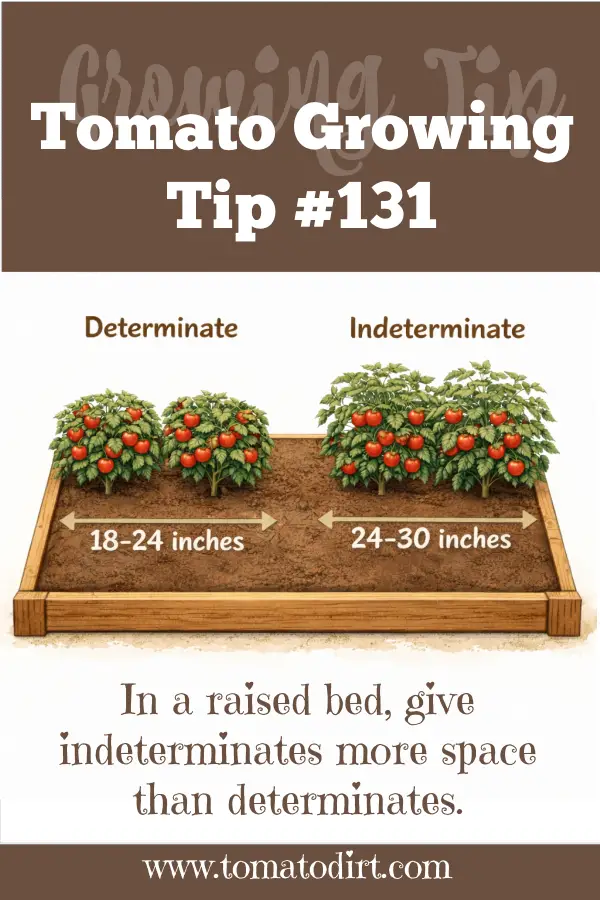
- Determinate tomatoes: 18–24 inches apart
- Indeterminate tomatoes: 24–30 inches apart
Yes, that may feel like a lot of space. And yes, new gardeners almost always want to squeeze in more plants. But here’s the dirt: In raised beds, fewer tomato plants almost always outperform crowded ones.
Q. What’s a
good tomato raised bed layout?
A good layout balances three things: sun, airflow, and access. Try these simple, beginner-approved layouts.
- Single-row layout: one row of tomatoes down the center of the bed. This is best for narrow beds (2–3 feet wide) because it’s easiest to water, prune, and harvest.
- Zigzag layout: plants are staggered instead of placed straight across. Zigzagging works well in wider beds (4 feet) because it improves airflow without wasting space.
- Tomatoes in the back, short crops in front. Plant tomatoes on the north or back side and basil, lettuce, or flowers in front. You’ll prevent shading smaller plants. Avoid placing tomatoes right up against the very edge of the raised bed unless you’re using sturdy support—they get heavy fast.
Q. What’s
the best depth for a tomato raised bed?
For tomatoes, deeper is always better, but you don’t need anything extreme. Tomatoes develop extensive roots, especially in loose raised-bed soil. More depth means they’ll resist drought better and experience less stress during the heat.
- Minimum depth: 12 inches (workable, but not ideal)
- Better depth: 16–18 inches (great root space) – and better yet, 18–24 inches (excellent for indeterminate tomatoes)
Special note: If your bed is on native soil (not concrete), roots will grow beyond the bed—so depth plus good soil underneath is a bonus.
Q. What are
some raised-bed tomato ideas?
Try these tips to make growing tomatoes in raised beds even more productive and attractive.
- Pair tomatoes and basil together – they are classic companion plants.
- Plant one cherry tomato plant per corner of a square bed.
- Plant tomatoes with marigolds or nasturtiums, and you’ll confuse pests.
- Dedicate one raised bed to tomatoes each year and rotate it to reduce diseases.
- Design your raised beds specifically to support tomatoes with built-in trellises, cattle panel arches between beds, or wooden frames that double as support posts.
- Raised beds aren’t just containers—they’re systems. Design them to make tomato care easier, not harder – and appealing to the eye, too.
Q. How
should I provide support for tomatoes in raised beds?
Tomatoes need support early. Don’t wait until they flop! Raised beds actually make support easier because the soil is loose and workable.
Best support options for raised beds are …
- Tomato cages – sturdy ones, not flimsy conical wire cages
- Single stakes, especially for determinate varieties
- Trellises attached to the bed or string trellis systems for indeterminate tomatoes
Key tips:
- Install support at planting time
- Choose support based on tomato type
- Make sure supports are anchored deeply
Q. What do I
need to know about watering tomatoes in raised beds?
This is where raised beds behave differently from in-ground gardens. Raised beds drain faster and soil warms more quickly. Tomatoes need water more often in raised beds than in your garden plot.
- Water deeply, not lightly.
- Water 2–3 times per week, more during hot weather.
- Aim for the soil—not the leaves – to avoid spreading diseases.
- Mulch heavily to slow evaporation.
- Keep moisture consistent. Check soil moisture 2–3 inches below the surface.
- Inconsistent watering leads to cracked tomatoes, blossom-end rot, and stressed plants. Consistency matters more than frequency.
Q. Can I
grow tomatoes in the same raised bed every year?
You can—but it’s not ideal if you want consistently healthy plants. Tomatoes are heavy feeders and are prone to soil-borne diseases. Growing them in the same spot year after year increases the risk of depleted nutrients, repeated disease, and lower yields over time.
Here are your raised bed best practices:
- Rotate tomatoes to a different bed every year if possible.
- Wait 2–3 years before planting tomatoes (or peppers, eggplant, potatoes) in the same bed again.
- Regardless of whether or not you can rotate, remove all old plant debris and refresh the soil heavily with compost each season. Rotation helps—but good soil care can still carry you a long way.
- Choose disease-resistant varieties.
Q. Do raised
beds need fertilizer for tomatoes?
Yes, almost always. Raised beds drain well, which is great for tomatoes—but it also means nutrients wash out faster than in-ground soil.
Tomatoes need nitrogen early for leaf growth, phosphorus for roots and flowers, and potassium for fruit development. Use a specially formulated tomato fertilizer. And try this:
- Mix compost into the bed before planting.
- Use a balanced organic fertilizer at planting time.
- Feed again once flowering begins.
- Avoid overdoing nitrogen once plants are established —lush leaves with no tomatoes are a classic sign.
- Think of fertilizer as support, not a rescue plan.
Q. Should I
prune tomatoes in raised beds?
In raised beds, pruning helps reduce disease pressure and improve air circulation. Plus, it makes watering easier. But you should prune depending on the type of tomato.
- For indeterminate tomatoes, light pruning is helpful. Removing lower leaves improves airflow, and pruning suckers can keep plants manageable.
- For determinate tomatoes, only minimal pruning is needed. Remove damaged or diseased leaves.


Q. How many
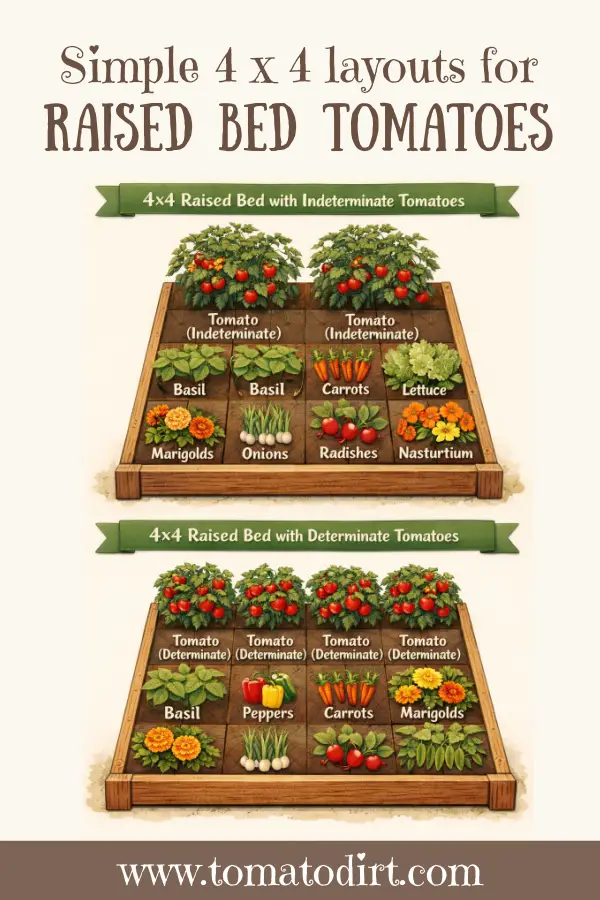
tomato plants fit in a 4×4 raised bed?
This is one of the most common tomato gardening questions—and the answer surprises people. Tomato Dirt recommends...
2 indeterminate tomatoes or 3–4 determinate tomatoes per 4 x 4 raised bed.
Why not more?
- Tomatoes grow wide and tall.
- Crowding increases disease risk.
- Fewer plants = healthier plants = more tomatoes.
If you’re unsure, plant fewer. You can always add herbs or greens around them. Or plant a second crop of tomatoes if your plants don’t excel.
Q. Are
raised beds better for tomatoes than in-ground gardens?
In many cases, yes—especially for beginner gardeners. Raised beds offer better drainage, warmer soil in spring, fewer soil compaction issues, and easier soil control.
They’re especially helpful if your native soil is clay-heavy, rocky, or poorly-draining – because you can correct those challenges when building your bed and adding soil.
That said, tomatoes can grow beautifully in the ground, too. Raised beds just remove a lot of early hurdles.
Q. Can I
grow indeterminate tomatoes in raised beds?
Absolutely—and many gardeners do. Indeterminate tomatoes thrive in raised beds because:
- Roots grow easily in loose soil
- Drainage prevents root stress
- Beds support sturdy trellising
Just be sure to provide strong, tall support. Space plants generously and keep them pruned enough to manage size. Raised beds actually make indeterminate tomatoes easier to control than cramped in-ground rows.
Q. What’s
the best mulch for tomatoes in raised beds?
Mulch is especially important in raised beds because they dry out faster. Mulch helps to retain moisture in the soil, prevent soil splash (thereby reducing diseases), and moderate soil temperature.
Great mulch options for growing tomatoes in raised beds:
- Straw (seed-free)
- Shredded leaves
- Untreated grass clippings (thin layers)
- Compost
Apply mulch once the soil has warmed and plants are established. Aim for 2–3 inches deep, keeping it a little away from the stem.
Q. How do I
prevent diseases in raised-bed tomatoes?
Raised beds reduce disease risk—but they don’t eliminate it. Most tomato diseases aren’t caused by “doing something wrong”—they’re environmental. Prevention beats treatment every time. The best ways to prevent diseases in raised beds are to …
- Space plants properly
- Water at the soil level
- Mulch to prevent soil splash
- Prune lower leaves
- Choose disease-resistant varieties
- Remove diseased leaves promptly
Healthy soil and airflow are your best defenses.
Q. Can I
grow tomatoes in shallow raised beds?
If by shallow you mean 8-10 inches deep – yes, you can grow tomatoes, but there are limitations.
Shallow beds work best for determinate or patio varieties. They require more frequent watering. And they’ll do even better if there’s quality soil underneath the bed. For best results growing tomatoes in shallow raised beds …
- Aim for 12–18 inches of depth
- Choose compact varieties
- Mulch well
- If your bed sits on open ground, tomato roots will grow deeper than the bed itself, which helps.
Q. Should I
line my raised bed before planting tomatoes?
Do not line raised beds with plastic or landscape fabric. These products restrict drainage and root growth.
You can use hardware cloth to block burrowing animals. Cardboard on the bottom of a raised bed can reduce grass or weeds. Plus, it breaks down naturally.
Tomatoes love deep, unrestricted soil—let them grow down, not stop short.
A final
thought for growing tomatoes in raised beds
Raised beds don’t make tomato growing foolproof—but they make it simpler, cleaner, and more forgiving.
If you ...
- Use good soil
- Give tomatoes space
- Support them early
- Water consistently
…you’re already doing most things right.
Everything else is just fine-tuning—and that comes with experience, one tomato at a time.
More about Vegetable Gardening in Raised Beds
Starting a Raised Bed Vegetable Garden FAQs ...
Materials for Your Raised Garden Bed: a primer ...
8 Low Cost Raised Garden Beds You Can DIY ...
16 Cost-Saving Tips for Do-It-Yourself Raised Garden Beds ...
What to Put on Bottom of Raised Garden Bed ...
7 Benefits of Raised Beds for Gardening ...
6 Tips for Growing Tomatoes In Raised Garden Beds ...
Why Tomatoes Are One of the Easiest Vegetables to Grow ...
8 Guidelines for Growing Raised Bed Tomatoes ...
Raised Bed Gardening ideas on our Pinterest board ...
Return from Tomatoes in Raised Beds to Tomato Dirt home
As an Amazon Associate and Rakuten Advertising affiliate I earn from qualifying purchases.
SHARE THIS PAGE:
