
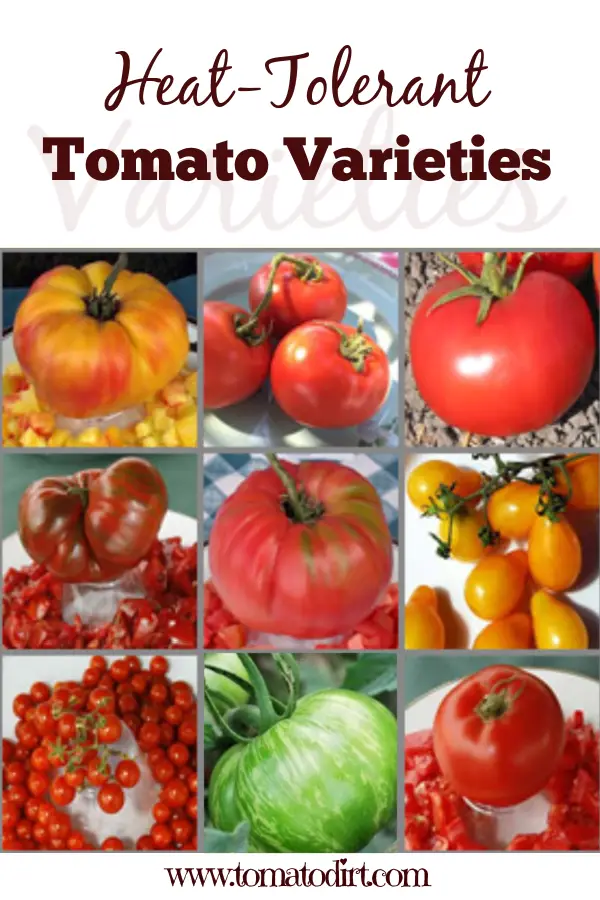
Heat-Tolerant Tomato Varieties
Since 2010, Tomato Dirt has garnered 4.8+ million views, making it the web’s leading online source for growing tomatoes in the home garden. Award-winning writer and Tomato Dirt owner Kathy Widenhouse has helped thousands of home gardeners grow healthier tomatoes. Be one of them when you get Tomato Dirt’s Growing Guide here.
Updated 1.27.26
Gardeners in the south or in hot regions may want to consider planting heat-tolerant tomato varieties.
“I grow mostly heirloom varieties for my first crop here in AZ, and hybrid tomatoes (or common tomatoes) for my second crop because the season is shorter. What are some of the best varieties I can choose for my second crop?”
Harlan D., Oro Valley, AZ
Good question, Harlan!
Choosing an appropriate variety for your growing conditions is key to successful tomato gardening. It’s possible to have an excellent crop in a hot climate when you select heat-tolerant tomato varieties.
But first …
Before you leave ...

Get your free copy of "10 Must-Know Tomato Growing Tips." This 20-page guide is filled with tips you need to know to have a successful tomato crop, whether you’re a beginning or experienced gardener.
Can tomatoes handle 100-degree F weather?
Tomato plants can survive 100°F temperatures. Their leaves may droop midday, but they recover at night. But producing fruit is a problem. Fruit set often stops above 85°F during the day (and especially if nights stay above 75°F) because pollen is less viable. Blossoms drop. Flowers fall off instead of turning into tomatoes. Growth slows. The plant focuses on self-preservation, not fruit.
However, heat-tolerant varieties can continue setting fruit into the mid-90s°F and sometimes near 100°F—especially if nights cool down. If you get hot temperatures in your growing season, read on.
What exactly are
heat-resistant tomato varieties?
Tomatoes love heat. Some more than others.
Heat-resistant tomato varieties are known to continue setting fruit and producing well even when temperatures climb — especially useful if you garden in hot summer climates where many tomatoes struggle to fruit above the mid-90°F (35°C) range.
Who should
plant heat-tolerant tomato varieties?
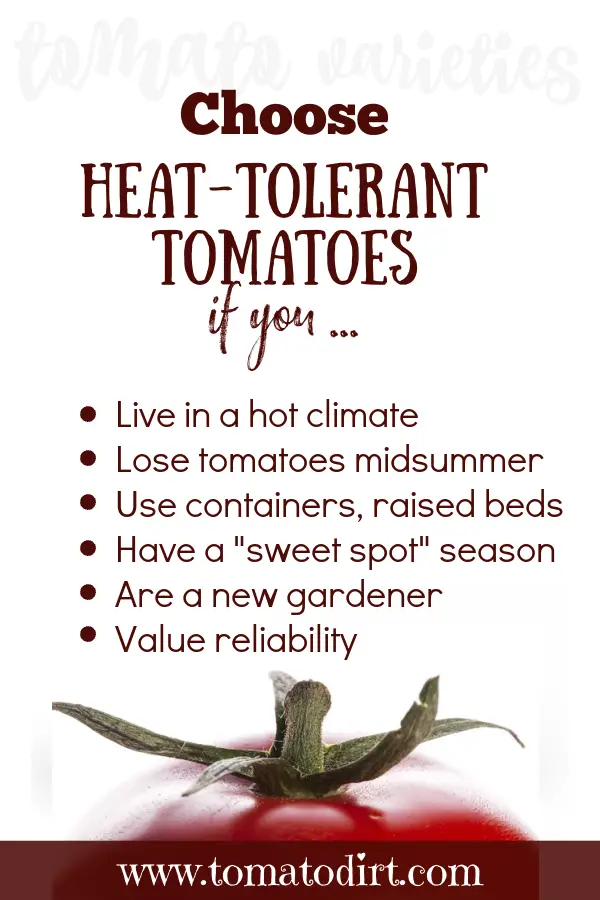
Heat-tolerant tomatoes aren’t for everyone—but they’re a game-changer for the right growers, like …
- Gardeners in hot climates. If your summer daytime temps regularly hit 90°F+ (and especially if nights stay warm), you’re the prime candidate for choosing heat-resistant tomato varieties. In these conditions, standard tomato varieties often flower but don’t set fruit. Heat-tolerant varieties are bred to push through that.
- Gardeners who lose tomatoes mid-summer. If your tomatoes look great in spring… then stall, drop blossoms, or quit producing in July and August, heat-tolerant varieties are for you. They’re designed to keep setting fruit when others give up.
- Container and raised bed gardeners. Pots and raised beds heat up faster than in-ground soil. Heat-tolerant tomatoes handle hot roots and reflective heat better than traditional varieties.
- Gardeners with short “sweet spot” seasons. If you only get a brief window between “too cool” and “way too hot,” heat-resistant tomatoes help your plants set fruit earlier and continue producing longer into extreme heat. Plus, you’ll avoid the mid-season production gap.
- Beginner gardeners in warm areas. New gardeners often think they’re doing something wrong when tomatoes won’t fruit in the heat. But heat-resistant tomato varieties are forgiving, which makes them ideal for beginners in warm climates.
- Gardeners who value reliability. If your priority is consistent harvests, fewer dropped flowers, and predictable yields, then heat-tolerant tomatoes beat many finicky heirlooms in hot weather.
If heat regularly limits your tomato harvest, heat-tolerant varieties aren’t optional—they’re strategic.
Who doesn’t
really need to choose heat-resistant tomato varieties?
- Gardeners in mild summer climates (coastal or northern regions)
- Gardeners who mainly grow tomatoes in cool seasons
- Gardeners who prefer flavor-first heirlooms and don’t experience heat-related blossom drop
How do you
choose heat-resistant tomato varieties?
Choosing heat-resistant tomato varieties isn’t about grabbing anything labeled “summer tomato.” It’s about matching the plant to your kind of heat.
Before looking at varieties, answer this:
- Do you hit 90–95°F occasionally … or 95–105°F regularly?
- Do your nights cool down below 75°F … or stay hot?
Why this matters:
- Hot days + cool nights = more varieties will work
- Hot days + hot nights = you need true heat-set tomatoes
If you want to choose heat-tolerant tomato varieties, then …
- Look for “heat-set” or “high-temperature fruit set” on the label.
- Check where the variety was developed. If it was bred in the southeast US, southwest US, or the Mediterranean, then it’s a good gamble.
- Don’t confuse heat-resistance with disease-resistance. A tomato can be disease-resistant and still fail completely in the heat.
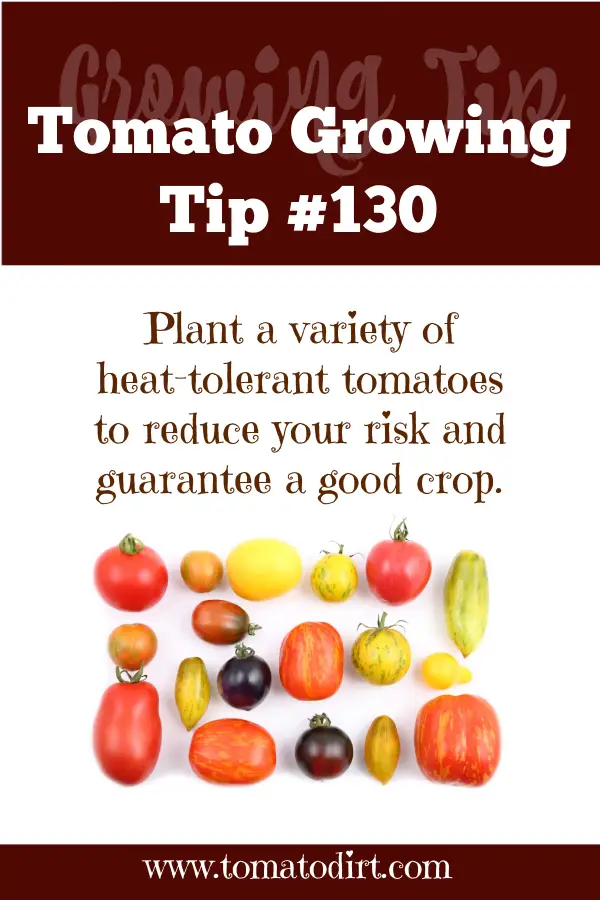
Top tip: Plant more than one heat-resistant variety, such as 1 true heat-set hybrid, 1 heat-tolerant cherry tomato, and 1 heat-tolerant medium slicer. This limits your risk and helps guarantee you’ll have a summer tomato crop.


Heat-Tolerant Tomato Varieties: Hybrids
Here are some of the best heat-resistant hybrid tomato varieties that gardeners and growers recommend for hot summer conditions — especially in places where temperatures regularly hit the 90s and above:
- Heat Master: Sets fruit reliably when temperatures climb. Big fruit, disease resistance, good in high heat.
- Solar Fire: Excellent at 100-105°F (38-40°C). Early and reliable. Maintains fruit set better than many standard varieties.
- Phoenix: Developed specifically for hot climates; strong heat set and good yields. Works well in deep heat and hotter regions.
- Heat Wave II: A hybrid that tolerates temperature spikes into the mid-90s while still producing medium fruit.
- Sunmaster / Sun Leaper / Summer Set: Group of hybrids bred for heat tolerance with reliable fruit production in warm conditions.
- Florida 91: A hybrid with heat and humidity tolerance, useful in warm southern climates.
Other hybrid tomato varieties with good heat tolerance:
- Big Beef: A vigor-packed hybrid that, while not heat-set like others, tends to keep producing better than many in warm conditions.
- Bella Rosa: Listed by growers as more tolerant of warmer weather and good producer in heat.
- Early Girl: Not marketed strictly for heat, but performs well in warm, dry climates and produces early, which helps avoid the worst heat.
Heat-Tolerant Tomato Varieties: Heirlooms
Many heat-tolerant heirlooms trace their origins to hot areas or have long records in Southern gardens, which suggests better adaptation. These varieties often have medium−sized or elongated fruit that sets more readily than beefsteak varieties.
- Arkansas Traveler: A favorite for hot and humid climates with steady fruit set and crack resistance.
- Super Sioux / Sioux: Well-suited to hot, dry conditions and fruitful even when many heirlooms stall.
- Black Krim: A flavorful heirloom that gardeners report keeps producing through high heat.
- Thessaloniki: A Mediterranean heirloom historically grown in heat; reputed to be tough and reliable in very warm climates.
- Homestead 24 / Homestead: Traditional heirloom that handles summer heat and humidity better than many large slicers.
Other heirloom tomatoes with good heat performance
- Green Zebra: bright, tangy fruit and good heat adaptability.
- San Marzano: classic Italian paste type that generally performs well in warm climates.
- Eva Purple Ball: mentioned as a heat-friendly heirloom choice.
- Tropic, Neptune, Illinois Beauty, Quarter Century, and Hazelfield Farm — additional heirlooms noted for growing well in warm conditions.
Heat-Tolerant Tomato Varieties: Cherry Tomatoes
- Chadwick Cherry: One of the most heat-tolerant cherries, reported to set fruit even above 110°F (43°C) and produce abundant clusters of flavorful tomatoes.
- Matt’s Wild Cherry: A Mexican heirloom that performs well even in hot weather and continues producing throughout summer.
- Sun Gold/ Sun Sugar: Sweet golden-orange cherries that are productive and crack-resistant in heat.
- Sweet 100 / Sweet Million: Highly prolific indeterminate cherries that keep setting fruit through warm conditions; Sweet Million has added disease resistance.
- Black Cherry: Dark-skinned cherries with rich flavor and good heat tolerance.
- Yellow Pear: Productive heirloom with mild, sweet flavor and good performance in warmth.
- Small Fry: A small cherry tomato noted for continuing to set fruit even during the hottest parts of the season.
Other small tomato varieties with good heat performance
- Roma / Paste types (like Principe Borghese): Frequently cited as good for hot climates because they handle stress and have concentrated flavor, making them ideal for sauces.
- Cherry and currant types: Smaller fruit producers keep setting fruit through heat and dry spells. some varieties like Coyote are even reported to thrive in extreme heat and drought.
Heat-tolerant
tomato varieties FAQs
What are the
most drought-resistant tomatoes?
Drought-tolerant tomatoes usually have deeper, more efficient root systems that reach water farther down in the soil. Their leaves are smaller and thicker, which reduces water loss. And they’ve got a lower transplant shock and stress response, so they keep fruiting longer in dry spells. Among the most proven drought-tolerant tomato varieties include …
- Arkansas Traveler: Known for handling both heat and drought while producing medium-sized, flavorful fruit.
- Thessaloniki (Greek tomato): A Mediterranean heirloom adapted to hot, dry climates with reliable yields.
- Super Sioux / Sioux: Excellent choice for hot, dry conditions and sustained production.
- Early Girl: Performs well in hot, dry weather and ripens early, helping it avoid the driest part of the season.
Are
beefsteak tomatoes heat-tolerant?
Short answer: mostly
no.
Beefsteak tomatoes are not naturally heat-tolerant and they’re usually the first to struggle when temperatures climb. Beefsteaks have everything working against them in hot weather:
- Large flowers + heavy pollen needs → heat damages pollen easily
- Big fruit size → requires ideal conditions to set
- Longer time to maturity → more exposure to heat stress
Once daytime temps rise above 90°F (and especially if nights stay above 75°F), beefsteaks commonly drop blossoms, stop setting fruit, and produce fewer tomatoes. Plants may look healthy, but you won’t see many tomatoes.
A few hybrids are more heat-tolerant than classic beefsteaks, but even these have limits:
- Heatmaster: One of the better performers among large-fruited types
- Solar Fire: Often described as beefsteak-like; sets fruit better in high heat
- Florida 91: Bred for hot, humid conditions (still not true extreme heat)
What is the
most heat-resistant tomato?
- Solar Fire and BHN 968 are among the most heat-tolerant in formal trials.
- Heatmaster and Phoenix are garden favorites in hot zones.
- Cherry types like Chadwick Cherry and Coyote often succeed where larger types of tomatoes fail.
Top tips for growing heat-resistant tomatoes successfully
- Heat tolerance does not equal full immunity from high temperatures. Even heat-tolerant types struggle if nights are very warm – tomatoes prefer cooler nights for fruit set.
- Parthenocarpic varieties like Siletz – tomato plants that can produce fertilization – can set fruit without pollination when heat prevents pollen from working.
- By growing several heat-resistant tomato varieties in a season (early and later) , you can spread your harvest and increase chances of production through heatwaves.
- If you live in a hot, humid climate, check in with your local gardening extension. They can recommend to you the most heat-tolerant tomato varieties for your area!
Tomato varieties lists
What are the Easiest Tomatoes to Grow?
Tomatoes for the south: best varieties to grow in hot, humid climates...
Best tomatoes for hot, dry climates ...
Most popular tomato varieties for the home garden ...
All-America selections: most respected tomato varieties ...
Cool tolerant tomato varieties ...
Best tomatoes for cold climates ...
Most blight-resistant tomato varieties ...
Best tomato varieties for drying ...
Fall tomato varieties ...
Indoor tomato varieties ...
Tomato varieties for large containers ...
Tomato varieties for small containers ...
Tomato varieties for hanging pots ...
Understanding tomato varieties
How to understand the way tomato varieties are classified ...
Heirloom tomatoes vs. hybrids – what is the difference?
Best tomato varieties to grow: readers share favorites ...
Return from Heat-Tolerant Tomato Varieties to Tomato Dirt home
As an Amazon Associate and Rakuten Advertising affiliate I earn from qualifying purchases.
SHARE THIS PAGE:
