
FREE: 10 Must-Know Tomato Growing Tips Get The Guide
Read our affiliate disclosure here.
10 Ways to Get the Most From Your Garden Space
Since 2010, Tomato Dirt has garnered 4.8+ million views, making it the web’s leading online source for growing tomatoes in the home garden. Award-winning writer and Tomato Dirt owner Kathy Widenhouse has helped thousands of home gardeners grow healthier tomatoes. Be one of them when you get Tomato Dirt’s Growing Guide here.
Posted 4.7.26
“I wish I had more garden space!”
It’s a common refrain, particularly for those of us who have caught the gardening bug – and those who are gardening with limited room.
- We want to try different crops.
- We want to fill more raised beds.
- We want our harvests to be so thick that our freezers and shelves are overflowing and our neighbors say, “You’ve given me plenty,” so we are forced to cart our produce to the food bank.
Here’s the good news: You can plant and pick much more produce simply by using a better strategy with the garden space you already have.
No, you needn’t just cram in more plants.
Instead, use these gardener-tested ways to make every square foot count.
Before you leave ...
Get your free copy of "10 Must-Know Tomato Growing Tips." This 20-page guide is filled with tips you need to know to have a successful tomato crop, whether you’re a beginning or experienced gardener.
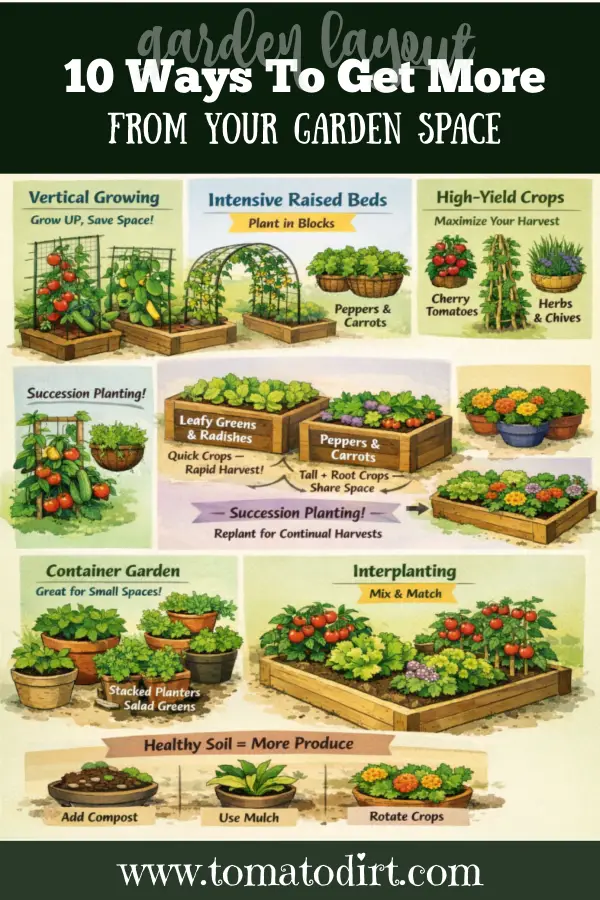
Get more from your garden space with these 10 tips
1. Grow up, not just out
Vertical growing instantly multiplies usable space.
- Use trellises, cages, arches, or fences for tomatoes, beans, peas, cucumbers, and squash
- Train vining crops instead of letting them sprawl
- Hang baskets for herbs, strawberries, or trailing greens
Bonus: better airflow = fewer diseases.
2. Plant intensively (but thoughtfully)
Instead of wide rows, plant in blocks or grids.
- Space plants at their recommended mature size, not extra wide “just in case”
- Concentrated planting shades the soil, reduces weeds, and keeps moisture in
- Square-foot gardening is a great framework for this approach
3. Succession plant all season long
An empty garden plot can’t grow food … just weeds.
- Replant a new crop as soon as another finishes
- Follow fast growers (radishes, lettuce, spinach) with slower summer crops (beans, tomatoes, corn, and squash)
- Tuck fall crops in while summer plants are still producing
Tip: A single bed can grow three or more harvests per year.
4. Choose high-yield, space-efficient crops
Some plants produce more return per square foot than others. High-yield winners are:
- Leafy greens (cut-and-come-again harvesting)
- Herbs (especially perennials like chives, thyme, oregano)
- Cherry tomatoes
- Pole beans (more vertical yield than bush types)
5. Interplant compatible crops
Mix companion plants that help each other.
- Plant fast crops (lettuce, radishes) between slower growers (tomatoes, peppers)
- Tuck herbs around vegetables to deter pests and attract pollinators
- Use flowers like marigolds, nasturtiums, and calendula for beauty and function
6. Grow in containers where ground space is limited
Containers expand your garden footprint.
- Use patios, balconies, steps, driveways, porches, and sunny doorways
- Try dwarf or compact varieties bred for containers
- Stack containers or use tiered planters for herbs and greens
7. Keep soil healthy and productive
Healthy soil supports denser planting – and more frequent planting.
- Add compost not only at the beginning of the season, but throughout
- Mulch to retain moisture and suppress weeds
- Rotate crops each season to avoid nutrient depletion
8. Focus on what you actually eat
The most productive garden grows what gets used.
- Prioritize your favorite vegetables and herbs
- Skip space-hog crops you don’t love. If you don’t eat much butternut squash, don’t plant it
- Grow small amounts of many things instead of large quantities of one. The exception: if you plan to can, freeze, or preserve a particular crop (like tomatoes), then make room for it
9. Use season extenders
Stretch your space and your growing window.
- Cold frames, row covers, or low tunnels allow you to plant before the growing season actually starts and continue beyond the last frost date
- Start your garden earlier in spring and grow later into fall
- Overwinter hardy greens in mild climates
10. Observe and adjust each season
Your garden is your best teacher.
- Keep a garden journal to track what thrived and what struggled this year. What gave you the biggest yield? Was there a reason a particular crop didn’t produce?
- Notice sun patterns, shade, and airflow so you can make changes for next year
- Remember to rotate plants
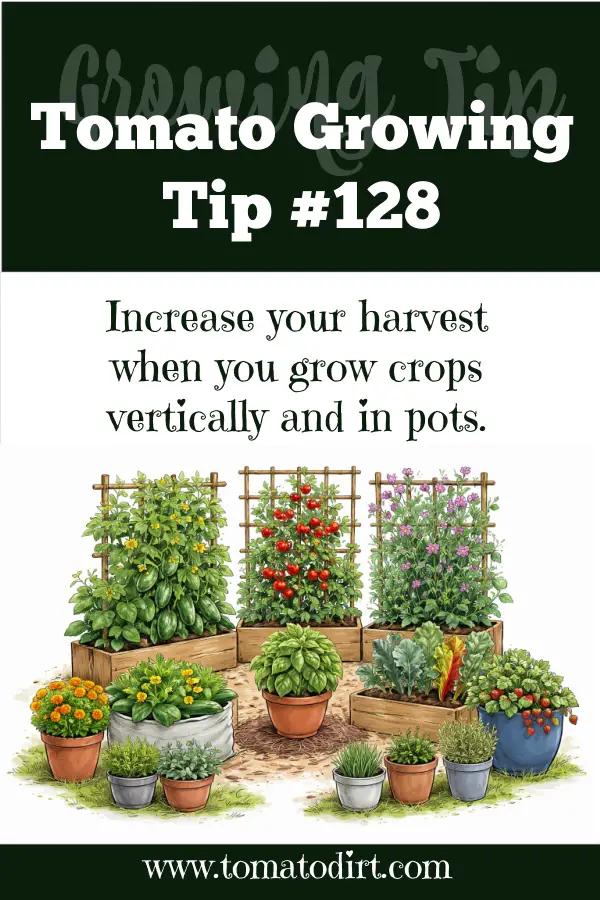


Use your garden space and it will reward you
The size of your garden space matters less than your strategy.
- Use your horizontal space (your garden plot and raised beds), but grow crops vertically, too – on trellises, hanging baskets, fences, and in containers.
- Keep your soil healthy with plenty of compost and organic matter so it can sustain deep planting and succession planting.
- Watch the calendar so you can plant multiple crops in the same garden space throughout the season.
Make a plan that allows you to use your garden space to the max – and you won’t say, “I wish I had more room for my garden!” again.
Because you’ll be too busy with your harvest.
More About Garden Planning and Garden Layouts
How To Start a Vegetable Garden: 10 Tips For Beginner Gardeners ...
18 Tips for Planning a Vegetable Garden (Even If It’s Winter) ...
Row Planting vs Square Foot Gardening for Tomatoes: Which Is Better?
Should You Use A Garden Planner For Growing Tomatoes?
How to pick the best home garden spot for growing tomatoes ...
How to plan a garden layout for growing vegetables and tomatoes ...
3 types of planting in rows for your vegetable garden ...
What Type of Vegetable Garden Is Best for You?
Spring Garden Clean Up: Get Your Garden Ready for the Season...
Garden layout ideas on our Pinterest board ...
Return from 10 Ways to Get the Most From Your Garden Space
to Tomato Dirt home
As an Amazon Associate and Rakuten Advertising affiliate I earn from qualifying purchases.
SHARE THIS PAGE:
FREE!
Tomato Dirt's 20-page
Tomato Growing Guide
Get yours here


Pro Series Cage - Silver, 3 Cages 40"

Pole Bean And Pea Tower, 1 Tower

XL Pro Series Cage - Green, 3 Cages

Pro Series Cage - Green, 3 Cages 48"
