
FREE: 10 Must-Know Tomato Growing Tips Get The Guide
Read our affiliate disclosure here.
Compost For Tomato Plants: Your Questions Answered
Since 2010, Tomato Dirt has garnered 4.8+ million views, making it the web’s leading online source for growing tomatoes in the home garden. Award-winning writer and Tomato Dirt owner Kathy Widenhouse has helped thousands of home gardeners grow healthier tomatoes. Be one of them when you get Tomato Dirt’s Growing Guide here.
Updated 9.18.26
Those gardeners who grow huge, healthy tomato plants … what’s their secret?
Surely, they’re not simply posting AI-generated images. You’ve struggled with weak vines and disappointing harvests, so you know firsthand that successful tomato growing comes with challenges.
The answer to a bumper crop often starts with the soil — and especially with compost.
Tomatoes are hungry plants. They need rich, living soil packed with organic matter, slow-release nutrients, and healthy microbes. That’s why compost for tomato plants is such a big deal among experienced gardeners.
But what type of compost should you use? Can you use too much compost? Is homemade compost better than store-bought? And what about mushroom compost, worm castings, or compost tea?
Let’s answer the most common questions you and other gardeners ask about tomato compost.
Before you leave ...
Get your free copy of "10 Must-Know Tomato Growing Tips." This 20-page guide is filled with tips you need to know to have a successful tomato crop, whether you’re a beginning or experienced gardener.
What is the best compost for tomato plants?
The best compost for tomatoes is rich and balanced. It’s made from a mixture of plant material, kitchen scraps, leaves, and well-aged organic matter.
Tomatoes love compost because it improves soil structure while slowly feeding the plant over time. Good compost helps soil hold moisture without becoming soggy, which is especially important for preventing stress and disease. A good compost for tomato plants should ...
- Drain well
- Hold moisture evenly
- Contain plenty of organic matter
- Support soil microbes
- Release nutrients slowly
- Smell earthy, not sour
In terms of brand or preference … many gardeners prefer organic compost for tomatoes because it improves the soil naturally instead of forcing fast growth the way some synthetic fertilizers do.
And tomatoes themselves aren’t usually picky about fancy compost brands. They care more about healthy soil biology and consistent nutrition. That’s good news for you because you can save a boatload of money and make your own.
Why do tomato plants love compost?
In nature, plants grow in soil filled with decaying organic matter. Compost recreates that natural environment by feeding the soil food web. When you add compost to tomatoes, you help …
- Improve root development
- Increase moisture retention
- Reduce soil compaction
- Encourage beneficial microbes
- Improve nutrient uptake
- Support stronger flowering and fruiting
Many gardeners notice healthier leaves, thicker stems, and better fruit production after adding compost regularly to their tomato plants.
Compost is especially helpful for raised bed tomatoes and container tomatoes because those growing spaces dry out and lose nutrients faster.
What type of compost should I use for tomatoes?
Several types of compost work well for tomato plants.
1. Homemade compost
Homemade compost is one of the best options because it contains diverse organic materials and beneficial microbes. A balanced homemade compost pile may include:
- Vegetable scraps
- Coffee grounds
- Dry leaves
- Grass clippings
- Crushed eggshells
- Shredded newspaper
- Plant debris
Many gardeners believe homemade compost creates healthier tomato plants because it develops living soil biology that commercial bagged products sometimes lack.
2. Worm castings for tomatoes
Worm castings are rich in nutrients, microbial life, and plant-available minerals. In tomatoes, worm castings can improve seedling growth, root strength, and fruit production.
You can mix worm castings into potting soil, raised bed soil, planting holes in your garden – even compost tea. A little goes a long way.
3. Mushroom compost
Is mushroom compost good for tomatoes? The answer is yes — in moderation.
Mushroom compost improves soil texture and adds organic matter, but it may contain higher salt levels than regular compost. Because of that, many gardeners mix it with other composts instead of using it alone.
Mushroom compost works especially well in heavy clay soils that need better drainage.
Download your Quick Fix Cheat Sheet to solve your tomato problems.
What is the best compost for tomatoes in pots?
Container tomatoes have different needs than tomatoes grown in the ground. They grow in an enclosed space. Their roots can fill the pot, but cannot grow beyond it.
That’s why the best compost for tomatoes in pots is usually a lightweight blend that drains well yet retains moisture. A common mix includes compost, coconut coir or peat moss, perlite, and worm castings.
Pure compost can become too dense in containers. It compacts. That leads to poor airflow around roots.
Tomatoes in containers also use nutrients quickly, so compost tea or additional organic fertilizer may help later in the season.
Can tomato plants grow in pure compost?
Technically yes, but it’s not the ideal environment.
Pure compost often holds too much moisture and may compact over time. Tomatoes prefer well-draining soil with plenty of air around the roots. Most gardeners get better results by mixing compost with garden soil, a raised bed mix, potting soil, coconut coir, and perlite.
Think of compost as a powerful soil amendment rather than the entire growing medium.


How much compost for tomato plants is enough?
This is one of the biggest questions gardeners ask. Too little compost can lead to weak growth. Too much compost, however, may create excessive leafy growth with fewer tomatoes. Balance matters.
For compost success, follow these general rules of thumb:
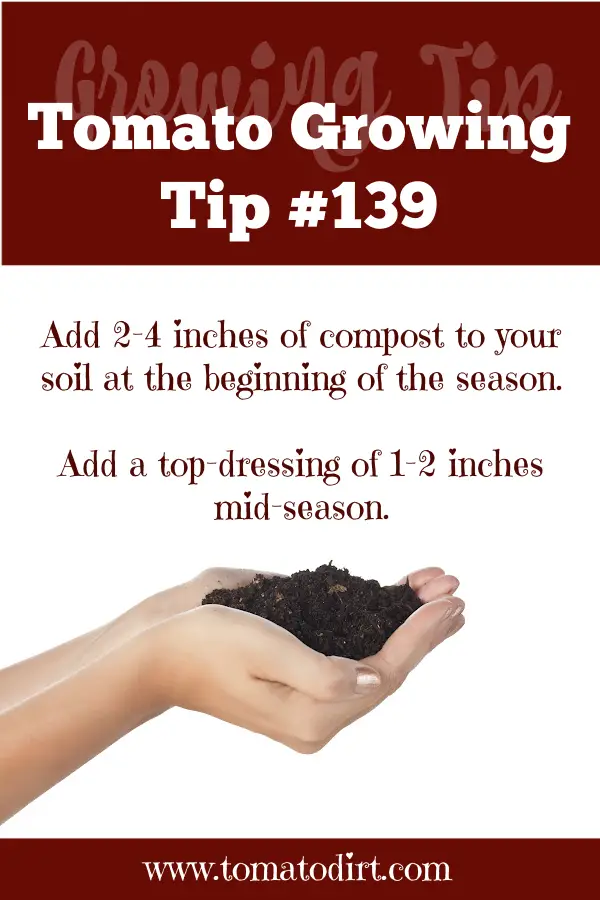
- Add 2–4 inches of compost to garden beds annually.
- Mix compost into the top several inches of soil.
- Add a few handfuls to planting holes.
- Refresh container tomatoes with a layer compost during mid-season.
Can you use too much compost for tomatoes?
Yes, surprisingly, you can. Excess compost …
- Holds too much water in the soil.
- Reduces airflow in between roots.
- Causes nutrient imbalances. Too much of one good thing isn’t good if another is cheated.
- Leads to excess nitrogen, which means you’ll get lots of foliage but fewer blossoms and fruit.
- Produces huge plants with fewer tomatoes.
Tomatoes need balanced nutrition. If your plants become giant and leafy but produce little fruit, excess nitrogen may be part of the problem … and too much compost may be the cause. This is why many experienced gardeners focus on cultivating healthy soil rather than simply adding more compost every time they fertilize.
Should I add compost when I plant tomatoes?
Absolutely. Adding compost when planting tomatoes gives young plants an excellent start. Plus, compost helps roots establish faster and improves moisture retention during hot weather.
Here’s a compost plan that many gardeners use successfully:
- Mix compost into the planting hole.
- Add worm castings during the season.
- Blend compost into raised bed soil.
- Top-dress both in-ground tomatoes and raised bed tomatoes with an inch or two of compost about halfway through the season.
What is compost tea?
Compost tea is a liquid made by steeping compost in water. Yes, it’s weaker than straight-up compost. Gardeners use compost tea to feed soil microbes and deliver a few extra nutrients beyond the regular fertilizing schedule.
Opinions vary about how valuable compost tea really is for tomato growth. Some gardeners swear by it. Others? Meh.
As for delivery, some spray compost tea on tomato leaves, while others pour it around the roots. Tomato Dirt’s view: always avoid water on foliage if you can.
Is compost better than fertilizer for tomatoes?
Compost and fertilizer have different functions.
- Compost improves the soil itself. Use it for long-term soil health.
- Fertilizer feeds the plant directly. Use it to provide targeted nutrients for your tomato plants.
Can you compost tomato plants?
Yes — but with caution. Don’t add diseased tomato plants to your compost pile. The compost pile may not get hot enough to destroy blight spores, fungi, and other pathogens during the off-season. In that case, when you add compost to your soil next season, you will be adding those nasties, too.
Tomato Dirt tip: If tomato plants suffer from severe blight or disease, avoid composting them altogether to reduce risk. Destroy or discard them instead.
Why is organic matter so important for tomatoes?
Tomatoes grow fast. They start as tiny seeds and then grow up to 15 feet tall, putting out dozens of fruit in just a couple of months. They need food to do so!
Tomatoes thrive in living soil that’s rich in decomposed organic material. Organic matter improves nearly everything in your tomato soil. It helps …
- Retain moisture
- Improve drainage
- Feed microbes
- Reduce compaction
- Buffer nutrients
- Support root growth
Work to build healthy soil over time, and your plants will reward you.
What are common compost mistakes with tomatoes?
1. Using fresh manure
When we moved into a horse community, manure was readily available. And we didn’t know any better, so we piled on the poop to our tomato plants.
No tomatoes that year.
Fresh manure burns plants and creates excess nitrogen problems. Always use aged manure or properly composted manure.
2. Overwatering compost-rich soil
Compost holds moisture well. Too much watering can lead to root stress, fungal disease, or cracking fruit.
3. Using dense compost in containers
Container tomatoes need airflow around the roots. Heavy compost alone compacts readily. Yellowing leaves are one of the first tip-offs. Your plants won’t be able to breathe … and they’ll “drown.”
What is the secret to growing great tomatoes with compost?
Consistency.
Healthy tomato gardening usually comes from:
- Improving soil gradually
- Adding organic matter regularly
- Feeding soil microbes
- Watering consistently
- Avoiding extremes
Tomatoes are heavy feeders, but they reward gardeners who focus on long-term soil health instead of quick fixes. Concentrate on building rich living soil that supports strong tomato growth naturally. Do that, and you’ll create a good environment for tomato plants that give you bigger harvests, healthier plants, and better-tasting tomatoes.
The best way to use compost for tomato plants
The best tomato growers think like soil builders first … and gardeners second. They add compost at the beginning of the season and in the right amounts.
Want great tomatoes? Start with great compost.
More on Fertilizing and Compost for Tomato Plants
What Nutrients Do Tomatoes Need?
Compost Ingredients: What to Put in Your Compost Pile ...
What’s the Best Tomato Fertilizing Schedule?
Kinds of tomato fertilizer ...
How to use tomato fertilizer to get the best tomato production...
Organic tomato fertilizer: advantages and disadvantages...
Composting basics to get you started ...
4 Types of Compost Bins: Which Is Best for You?
2 types of composting for the home gardener ...
How to Compost Tomato Plants ...
See more on our Fertilizing Tomatoes Pinterest board...
More composting tips on our Pinterest board ...
Return from Compost for Tomato Plants to Tomato Dirt home
As an Amazon Associate and Rakuten Advertising affiliate I earn from qualifying purchases.
SHARE THIS PAGE:
