
FREE: 10 Must-Know Tomato Growing Tips Get The Guide
Read our affiliate disclosure here.
Blossom End Rot: How to Identify, Treat, and Prevent It
Since 2010, Tomato Dirt has garnered 4.8+ million views, making it the web’s leading online source for growing tomatoes in the home garden. Award-winning writer and Tomato Dirt owner Kathy Widenhouse has helped thousands of home gardeners grow healthier tomatoes. Be one of them when you get Tomato Dirt’s Growing Guide here.
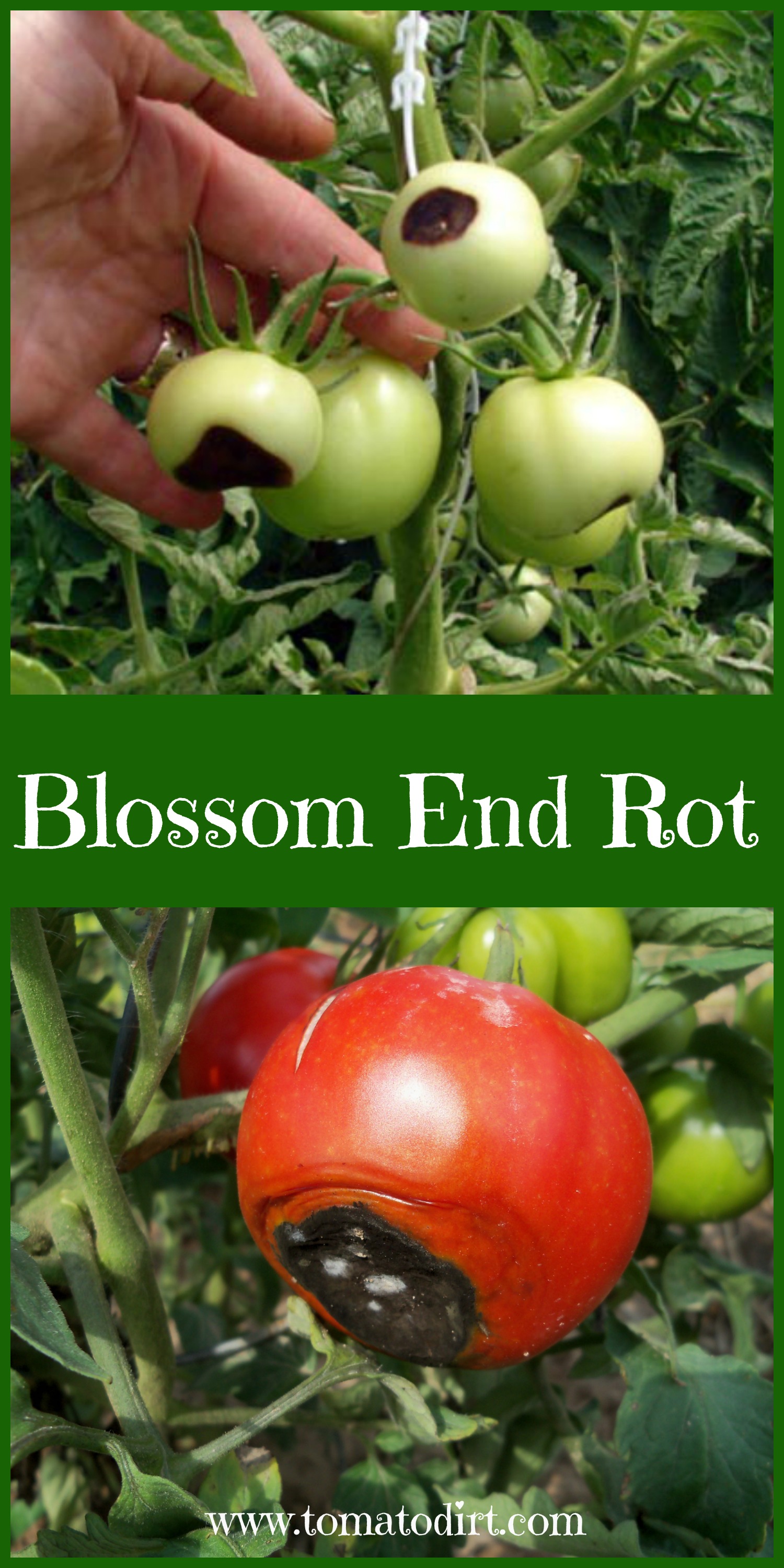
Blossom end rot is a common tomato problem associated with growing conditions. It affects tomato fruit. Stems and leaves show no symptoms.
Before you leave ...
Get your free copy of "10 Must-Know Tomato Growing Tips." This 20-page guide is filled with tips you need to know to have a successful tomato crop, whether you’re a beginning or experienced gardener.
What does blossom end rot (BER) look like?
The bottom side of the tomato (either a green or ripened one) develops a sunken, leathery dark brown or black spot. Gardeners most often notice BER when fruit is 1/3 to 1/2 its full size.
What causes it?

A calcium imbalance.
A tomato’s cells need calcium to grow. Calcium acts like glue in cells – it binds them together.
Tomatoes absorb calcium through water. But calcium isn’t fast-moving.
If a tomato grows quickly, or if other conditions slow water absorption, then calcium doesn’t have enough time to travel through the whole piece of fruit.
Plants can’t absorb enough calcium – whether or not there’s enough in the soil.
A tomato’s tissues break down and leave the telltale damage on its bottom.
Conditions that can slow water and/or calcium absorption can include:
- inconsistent watering
- root damage
- cold temperatures/cold soil
- excessive heat
- too much nitrogen in soil (lowers calcium uptake)
- large amount of salts in the soil (lowers the availability of calcium)
- markedly acidic or alkaline soil (pH imbalance prevents calcium absorption)
When does blossom end rot affect plants?
Different conditions allow tomatoes to develop BER
- when early to mid-season fruit develops, because soil is cooler and plants have fewer roots
- during fruit set, and tomatoes need calcium to bind together cells
- when watering is inconsistent
- when temperatures are excessive – either too cold or too hot – which interferes with water uptake
- when season starts out wet and turns dry during fruit set, just as tomatoes need calcium the most
- when plants are grown in cold, heavy soil which prevents roots from developing strong
- when soil has excessive salts, which reduce calcium availability
How can you control and treat blossom end rot?
Prevention is the most method of control (see below).
Blossom end rot cannot be reversed on a tomato once it’s set in, but you can take these steps to slow and halt it.
- Preserve affected plants by applying calcium immediately. You can use products specifically developed to treat, prevent, and slow blossom end rot in tomatoes like Tomato Rot-Stop Follow package directions for application. Or mix 1 tablespoon calcium chloride (sold commercially for other uses as de-icing salt or DampRid® Closet Freshener) in one gallon of water. Spray 2-3 times a week until blossom end rot is under control. Apply early in the morning when temperatures are cool. (Check out a good selection of garden sprayers here.)
- Pick affected fruit to reduce stress on the plant and allow it to direct its energy to other tomatoes.
- Cut out spots on harvested fruit and eat remainder. Blossom end rot does not make the rest of the tomato inedible. However, if tomatoes have been infected by fungi or mold, discard them.
How can you prevent blossom end rot?
There are lots of ways you can take precautions for next year's crop!
- Carefully harden off young seedlings gradually to protect them from extreme temperatures and conditions.
- Select a planting area with good drainage.
- Avoid setting out plants too early in the season, which can expose them to cold temperatures and cold soil. Allow soil to warm before planting.
- Work in plenty of compost and organic matter into the soil before planting, so that the plant’s root system has a better chance to grow strong and deep.
- Add quick-release lime when planting tomatoes so that there’s plenty of calcium in the soil and it’s absorbed quickly. Tomatoes grow best when the soil pH is about 6.5.
- Keep your tomatoes’ water supply even throughout the season so that calcium uptake is regular. Tomatoes need 1-3 inches of water a week. They perform best when watered deeply a couple of times a week rather than superficially every day.
- Mulch plants once established to maintain moisture levels.
- Once blossoms emerge, apply tomato fertilizer that is high in phosphorus (the second number in a fertilizer’s three-number series), like 4-12-4 or 5-20-5. Too much nitrogen (the first number) or large amounts of fresh manure can prevent calcium uptake.
- Cultivate carefully around tomato plants to avoid damaging root systems. Try not to dig more than an inch or two deep around plants.
Other facts about blossom end rot
Determinate tomato varieties are more prone to BER because they set fruit in a short period of time. Indeterminates and semi-determinates set fruit throughout the season, making it easier for plants to regulate calcium intake.
BER also affects eggplant, peppers, squash, and watermelon.
Tomato problems from growing conditions
Blossom drop – when tomatoes don’t set fruit ...
Why a tomato cracks and what to do about it ...
Sunscald: why too much sun can be hazardous to tomatoes ...
Are bumps on tomato stems harmful to plants?
Tomato Catfacing: How to Identify and Prevent It ...
How to identify tomato problems and prevent them ...
Tomato pests
The tomato hornworm: how to identify and control it ...
Tomato worms-cutworms: keep them away with stem collars ...
Stink bugs: how to identify and control them on tomato plants...
Tomato diseases
Different kinds of tomato blight and how to tell them apart ...
How to identify and treat Septoria leaf spot ...
More tomato problems
Problems on tomato leaves ...
Problems on tomato stems ...
See more examples of Blossom End Rot on our Pinterest Board.
Return from Blossom End Rot to Tomato Dirt home

As an Amazon Associate and Rakuten Advertising affiliate I earn from qualifying purchases.
SHARE THIS PAGE:
FREE! 10 Must-Know Tomato Growing Tips: 20-page guide
Get yours here:
New! Comments
Have your say about what you just read! Leave a comment in the box below.