How and When to Mulch Tomatoes
Since 2010, Tomato Dirt has garnered 4.8+ million views, making it the web’s leading online source for growing tomatoes in the home garden. Award-winning writer and Tomato Dirt owner Kathy Widenhouse has helped thousands of home gardeners grow healthier tomatoes. Be one of them when you get Tomato Dirt’s Growing Guide here.
Mulch is a covering placed over the soil around your tomatoes. It's key step to take in effective tomato care!
Before you leave ...
Get your free copy of "10 Must-Know Tomato Growing Tips." This 20-page guide is filled with tips you need to know to have a successful tomato crop, whether you’re a beginning or experienced gardener.
Benefits to mulching
- It keeps moisture in. A layer spread over bare soil allows the area to soak up more water. The outer layer dries faster than the soil below it. That reduces the rate of evaporation from the soil, plus it lets the soil to retain moisture for your tomato plants.
- It regulates soil temperature. In hot summer months, a layer helps keep the underlying soil cooler. In the fall when temperatures fall off, the layer around your tomato plants keep roots warm.
- It smothers weeds. Fewer weeds sprout because seeds are buried beneath the surface. And the weeds that sprout are weak and easy to pull.
- It prevents disease and fruit rot. A layer keeps water from splashing on the soil, absorbing bacteria and fungi, and bouncing up onto your plants. Likewise, when a tomato falls onto a layered area, it is less likely to rot quickly than if it falls onto soil.
- It improves the soil. Organic varieties can be turned into the soil at the end of the season.
Tomato Dirt Tip: Don’t mulch too early – wait a couple of weeks
Wait until the soil has warmed – about 3-5 weeks after setting plants in the garden. Tomatoes like heat.
The soil needs to heat up as much as possible before adding layers.
Too early in the season, the ground is still cool (especially in northern regions or where the temperatures dip at night).
Mulching traps in the cold. Do it early and you'll also delay blossoms, which delays fruit development, which leads to a later harvest.
Bottom line: wait or you’ll be waiting extra long to eat fresh tomatoes.


Kinds of mulch for best tomato care
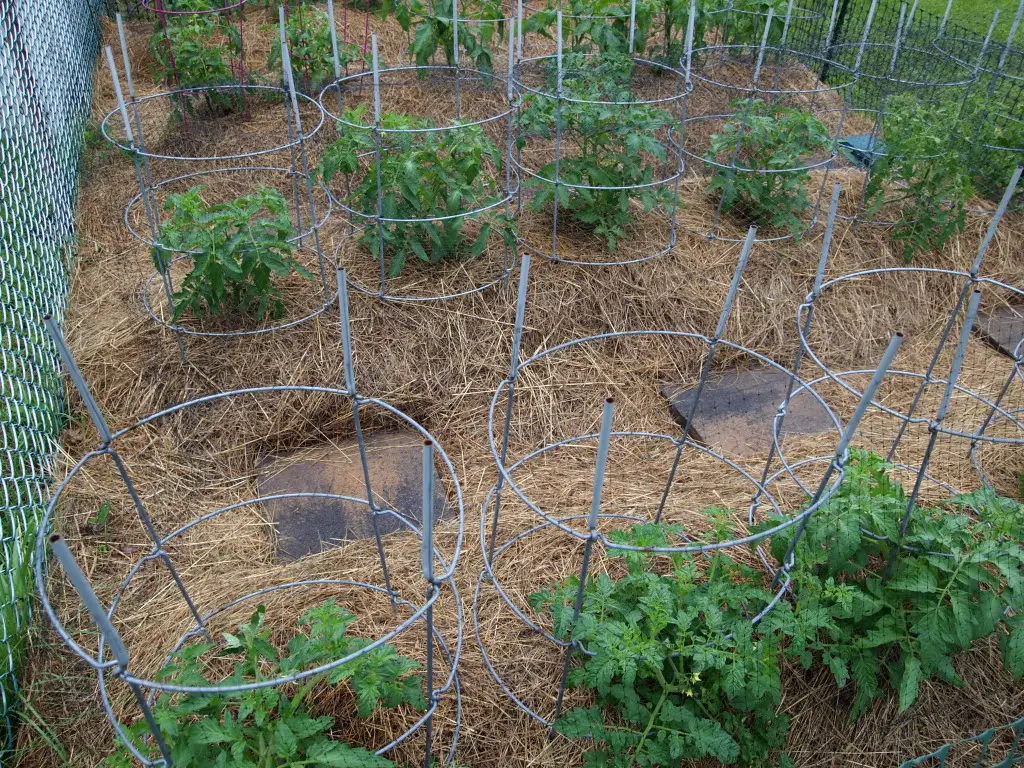
Organic varieties include shredded leaves, straw, grass clippings, compost, newspaper, biodegradable weed mats, shredded hardwood, sawdust, and wood chips. Organic mulch is good for the soil. As it decomposes, it adds organic material to your garden. Most are cheap or free. Take care to use grass clippings only when the yard has not been chemically treated.
Inorganic varieties for tomatoes include plastics and fabrics, such as Recycled Plastic Weedblock or various kinds of sheet plastics. They are sold in rolls at home improvement and garden centers or online.
Compare types to see what will work best for you. They each have advantages and disadvantages for your gardening situation. Read weed mat reviews for more information.
How to mulch tomato plants
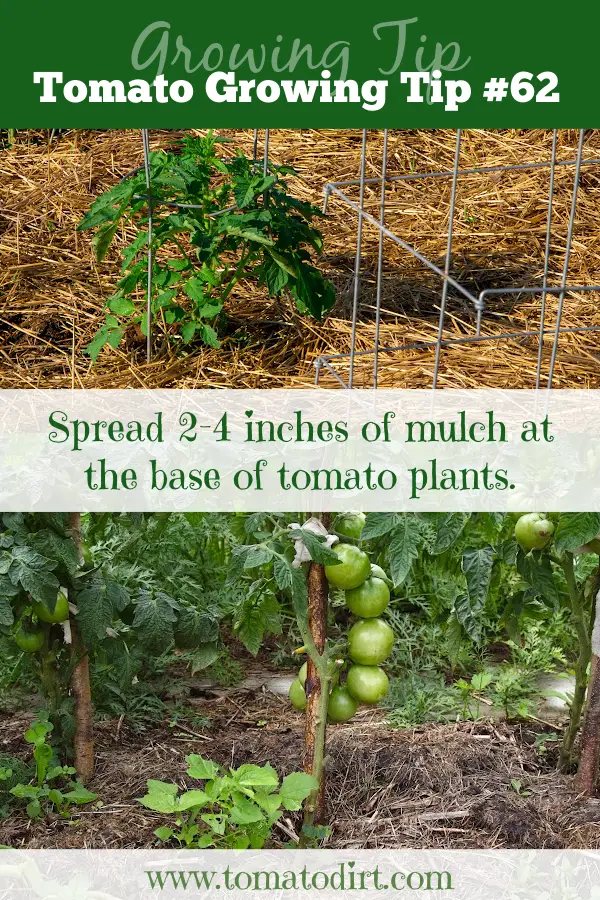
- Spread a 2-4-inch layer around your tomato plants
- Pull back the layer about 1-2” from around the tomato stem, forming a small well around the base of the plant. This prevents compaction around the stem, which could lead to stem rot. The well creates a natural dish to capture water for your plant.
- If you have plenty of extra, apply it in the rows between your tomatoes to keep weeds down.
- Water your tomato plants. Make sure the moisture has penetrated by testing it with your finger.
Have a favorite mulch for growing tomatoes? One that works well for you?
Tell us what you use to mulch your tomatoes why you like it. Other gardeners want to know so can grow great tomatoes, too!
What Others Readers Have Said About Mulch ...
Newspaper end rolls make the job much easier! 
We are trying to mulch most of our Community Garden with straw this year, but it is a daunting task. Some student volunteers from our high school helped …
Newspapers work for me as tomato mulch
I have used newspapers for several years now to mulch tomatoes.
After I plant the tomatoes, I dig ditches around the plants that are about foot or …
Grass clippings for mulch
Just make sure it comes from a fairly well-groomed lawn. If the grass or lawn weeds have gone to seed and you use it for mulch, guess what? More weeding. …
Municipal mulch
We live in Pulaski County, Arkansas. Pulaski County rents garden spots in a community garden and provides ground yard waste as free mulch. Also the City …
Coffee grounds are fantastic for tomatoes
This is our first real attempt at growing a garden. I skimmed an article that said to use coffee grounds. So, I've been putting out our daily coffee grounds …
Mulching with Live Oak leaves
I live in Zone 8 (South Mississippi) and usually try to get my first Early Girls (a 52-day indeterminate) planted by the second or third week in March. …
Mulchamania... Not rated yet
Lucky as an Irishman, I am. Lots of "mulch" near, as I have watched, observed, read and practiced what is preached of "mulchamania," most of my life. …
Pea straw is the way to go Not rated yet
I like to use pea straw about 2 inches thick to mulch tomatoes.
I find when I water my vegetables I can use the "jet" setting on the water nozzle and …
I use the free stuff! Not rated yet
At our local garbage dump and recycle center, in a separate section, the staff also mulch and compost wood (trees, branches, ground, and yard waste) and …
More on mulching tomatoes
What's the best mulch for growing tomatoes?
When to Mulch Tomatoes for Best Results...
Black plastic mulch for tomatoes ...
Review: red plastic mulch - does it really make a difference?
Review: Woven weed mats for growing tomatoes ...
Review: Biodegradable weed mats for growing tomatoes
More tips on our Mulching Tomatoes Pinterest board ...
More on growing tomatoes
Best tomato growing tips: readers share their favorites ...
How to buy tomato plants ...
How to harden off tomato plants to prepare them for the home garden
Planting tomatoes: top tips to help your new crop succeed ...
Pick the best home garden spot for growing tomato plants ...
Preparing your soil for planting tomatoes in the home garden
Protecting young tomato plants from frost and freezing ...
Watering tomatoes when planting and just afterwards ...
Tomato worms - cutworms: keep them away with ...
Planting tomato plants: Frequently Asked Questions (FAQs)...
Return from Mulch: A Key to Tomato Care to Tomato Dirt home
As an Amazon Associate and Rakuten Advertising affiliate I earn from qualifying purchases.
SHARE THIS PAGE:
FREE! 10 Must-Know Tomato Growing Tips: 20-page guide
Get yours here: