
Tomato Stakes: How to Give Support to Tomato Plants
Since 2010, Tomato Dirt has garnered 4.8+ million views, making it the web’s leading online source for growing tomatoes in the home garden. Award-winning writer and Tomato Dirt owner Kathy Widenhouse has helped thousands of home gardeners grow healthier tomatoes. Be one of them when you get Tomato Dirt’s Growing Guide here.
Updated 5.13.24
Tomatoes, particularly indeterminate varieties, may need tomato stakes. Plants can grow to be 5-8 feet high or taller. They have no natural way to hold themselves up. If left on their own, tomatoes will vine along the ground. Staking provides support. Determinate tomatoes may not need to be staked, especially bush varieties that mature at 3 to 4 feet or miniatures, which may top out at 24 inches.
The traditional one-stake method requires one post and several ties for each plant.
Before you leave ...
Get your free copy of "10 Must-Know Tomato Growing Tips." This 20-page guide is filled with tips you need to know to have a successful tomato crop, whether you’re a beginning or experienced gardener.
Advantages to the traditional one-stake method
- Minimum materials are needed: just stakes and ties.
- Upright growth means you can plant tomatoes closer together.
- When plant is properly pruned and tied, traditionally-staked tomatoes are accessible and easy to pick.
- Staked tomatoes tend to ripen sooner than un-staked plants.
- Stakes are re-usable.
Drawbacks to the traditional one-stake method
- Traditional staking can be time-consuming. Plants must be tied throughout the season. Pruning lessens the need for extra ties, but too much pruning may reduce size of crop.
- Excess pruning may mean plants are more susceptible to sunscald, blossom-end rot, and cracking.
- Tying may stress plants and cause branches to break.
How to stake and tie a tomato plant
What to use for tomato stakes
Nearly any wooden or metal post (or pole of any kind) will work as a stake, as long as it’s at least 5-6 feet tall – taller is preferable.
Wooden stakes should be at least 1” square to provide adequate support.
Metal stakes can be smaller in diameter.
Sections of concrete reinforcing rods (rebar) make excellent tomato stakes. Bamboo stalks work well.
Some gardeners even use over-sized tree branches.
Don’t use chemically treated wood for stakes, since chemicals will run off into the soil.
What you need to make tomato stakes
- Wood or metal stake, or pole of any kind – at least 5-6 feet tall
- Hammer or sledgehammer
- Ties (rope, string, nursery tape, or torn lengths of fabric such as old sheets), about 18-24” long
What to do
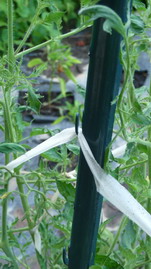
- Insert stake into the ground about 3-6 inches from the base of the tomato seedling, just after planting (to prevent root damage). Place stake on north side of plant so stake won’t shade the tomato. The stake should extend at least four feet high above the soil surface – preferably 7-8 feet since plants can grow to be quite tall.
- Wait to tie plants to stakes until first flowers appear. This encourages the main stem to grow strong.
- Tie branches to the stake for support. Use a length of string, rope, nursery tape, or a 1” wide piece of fabric. Loop the tie from the stake, around the stem or extended branch, and back to the stake. Tie in a square knot to secure. Make sure the tie allows some “give” room for the plant so branches can get larger as the season progresses. Tie branches to the stake opposite blossoms so that when fruit grows, it is not trapped between the stake and the tie.
- Check plants regularly – even daily – for new growth. Continue to tie center stem and branches every 18-24.”
(If you decide to use cages instead of stakes, check out different tomato cages to find the right ones for you and your garden.)
More on staking tomatoes
5 ways to stake tomatoes ...
How to build tomato cages for support ...
Review: Tomato Cages from Gardener's Supply ...
Homemade tomato cages for short season tomatoes ...
How to build a tomato trellis for staking tomatoes ...
3 Do-It-Yourself Tomato Trellis Ideas ...
Staking tomatoes: advantages and disadvantages ...
The perfect tomato staking tape ...
How to tie up tomato plants ...
Pruning tomato plants: how and when to do it ...
Get more ideas on our Staking Tomatoes Pinterest board ...
Return from Tomato Stakes: How to Stake and Tie Tomatoes to Tomato Dirt home
As an Amazon Associate and Rakuten Advertising affiliate I earn from qualifying purchases.
SHARE THIS PAGE:
FREE! 10 Must-Know Tomato Growing Tips: 20-page guide
Get yours here:
New! Comments
Have your say about what you just read! Leave a comment in the box below.