
Tomato Blight: How to Identify and Treat Early Blight in Tomatoes
Since 2010, Tomato Dirt has garnered 4.8+ million views, making it the web’s leading online source for growing tomatoes in the home garden. Award-winning writer and Tomato Dirt owner Kathy Widenhouse has helped thousands of home gardeners grow healthier tomatoes. Be one of them when you get Tomato Dirt’s Growing Guide here.
Updated 6.16.24
Tomato blight, in its different forms, is a disease that attacks a plant’s foliage, stems, and even fruit.
Early blight (one form of tomato blight) is caused by a fungus, Alternaria solani, which over-winters in the soil and infected plants. Affected plants underproduce. Leaves may drop, leaving fruit open to sunscald.
Before you leave ...
Get your free copy of "10 Must-Know Tomato Growing Tips." This 20-page guide is filled with tips you need to know to have a successful tomato crop, whether you’re a beginning or experienced gardener.
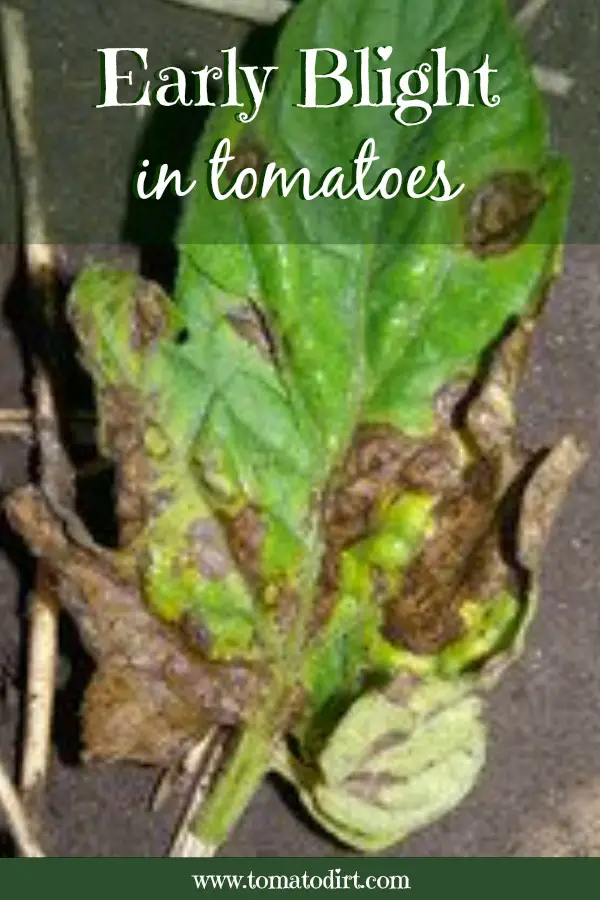

What does early blight look like?
Early blight’s Latin name is sometimes confused with a form of tomato rot, alternaria, a different tomato problem altogether.
To muddle matters further, early blight is occasionally mistaken for Septoria leaf spot because the two diseases infect tomatoes at the same time.
You'll recognize early blight by these characteristics:
Dark, concentric spots (brown to black), ¼ - ½” in diameter, form on lower leaves and stems. Early blight is marked by tell-tale rings.
Fruit can also be affected; spots often begin near stem of fruit
Lower leaves turn yellow and drop.
When does early blight affect plants?
- It's most evident during early- to mid-season
- It’s most common in humid weather
- It often strikes after a period of heavy rainfall
How do you control and treat early blight?
- The best control measure for tomato blight is prevention (see below).
- Remove and destroy infected leaves (be sure to wash your hands afterwards).
- Once blight is present and progresses, it becomes more resistant to biofungicide and fungicide. Treat it as soon as possible and on a schedule.
- Organic fungicides. Treat organically with copper spray, which you can purchase online, at the hardware store, or home improvement center. Follow label directions. You can apply until the leaves are dripping, once a week and after each rain. Or you can treat it naturally with a host of fungicides for tomatoes.
- Chemical fungicides. Some gardeners prefer chemical fungicides, the best of which for tomatoes is chlorothalonil (sold as Fungonil, Daconil, or under other brand names. Check labels. You may also choose Mancozeb or Maneb, although these have longer wait times before you can harvest tomatoes safely than does chlorothalonil.
Other diseases (such as late blight, Septoria leaf spot, and gray leaf spot) can also be controlled by these biofungicides and fungicides, so application is multi-purpose.
How do you prevent early blight?
- Rotate crops. Early blight remains active for a year. Spores can be dormant in the soil for several years.
- Plant disease-resistant hybrids to strengthen your plant’s chances of being blight-free.
- Plant tomatoes in a raised bed to improve drainage and prevent diseases from spreading.
- Give tomato plants extra space (more than 24 inches) to let air to move among leaves and keep them dry.
- Water the soil – not the plants – to prevent splashing. Avoid overhead watering.
- Mulch with black plastic or landscape fabric to prevent fungus from spreading up onto leaves.
- Stake tomato plants for better circulation.
- Remove and destroy affected plants at the end of the season.
Tomato problems from diseases
Different kinds of tomato blight and how to tell them apart ...
Fungicide for Tomatoes: A Primer ...
How to identify and treat late blight ...
How to identify and treat Septoria leaf spot ...
Tomato anthracnose: how to identify and treat it ...
How to identify and treat gray leaf spot ...
How to identify and treat fusarium wilt ...
How to identify and treat verticillium wilt ...
How to identify and treat bacterial wilt ...
How to identify and treat phosphorus deficiency in tomatoes ....
How to understand tomato disease resistance codes ...
Why Do Tomato Leaves Curl – and What To Do About It ...
How to choose a garden sprayer that is best for you ...
How to choose and apply fungicide to tomato plants ...
Learn more on our Tomato Diseases Pinterest board...
Tomato pests
Tomato hornworm: how to identify and control it ...
Tomato worms-cutworms: keep them away with stem collars ...
Stink bugs: how to identify and control them on tomato plants...
Tomato problems from growing conditions
Blossom Drop: why fruit doesn't set and what to do about it ...
Why a tomato cracks and what to do about it ...
Tomato sunscald: why too much sun can be hazardous to tomatoes...
Blossom end rot: how to identify, treat, and prevent it ...
Are bumps on tomato stems harmful to plants?
How to identify tomato problems and prevent them ...
Return from Tomato Blight: How to Identify and Treat Early Blight to Tomato Dirt home


As an Amazon Associate and Rakuten Advertising affiliate I earn from qualifying purchases.
SHARE THIS PAGE:
FREE! 10 Must-Know Tomato Growing Tips: 20-page guide
Get yours here:
New! Comments
Have your say about what you just read! Leave a comment in the box below.