FREE: 10 Must-Know Tomato Growing Tips Get The Guide
Read our affiliate disclosure here.
Shading Tomatoes: Reduce Their Stress, Keep Them Going in the Heat
Since 2010, Tomato Dirt has garnered 4.8+ million views, making it the web’s leading online source for growing tomatoes in the home garden. Award-winning writer and Tomato Dirt owner Kathy Widenhouse has helped thousands of home gardeners grow healthier tomatoes. Be one of them when you get Tomato Dirt’s Growing Guide here.
Shading tomatoes is a common practice among gardeners in very hot climates (for instance, in Florida, Texas, Arizona, Alabama, Georgia, and southern California in the U.S.). Providing shade is a helpful way to keep plants producing during the summer heat or at least help reduce their stress. This keeps tomato plants in better condition so that they perform better when temperatures level out or in the fall when cooler temperatures return.
Before you leave ...
Get your free copy of "10 Must-Know Tomato Growing Tips." This 20-page guide is filled with tips you need to know to have a successful tomato crop, whether you’re a beginning or experienced gardener.
Why should I shade my tomato plants?
Sometimes it just gets too hot and stays that way for too long. Your plants may need a little help to get through a heat wave or a long summer. Gardeners in the south (northern hemisphere) and north (southern hemisphere) have long known this. It’s not uncommon for those in hotter climates to shade tomatoes during the part of the day when sunlight is most intense – from about 10 AM to 2 PM.
What do I use to shade my tomatoes?

You can shade early season tomatoes and seedlings during a sudden heat wave simply by setting a folding chair over them.
Another trick to use, this one as plants grow and if you cage them, is to tuck tomato leaves inside cages rather than allowing them to grow outside the structures. This creates dense, protective layers of foliage, which reduce transpiration (loss of fluid) during a heat wave. Thicker foliage also prevents fruit from sunscald. You’ll want to tuck new branches and leaves every couple of days, as leaf stems can easily snap off once they've grown too long.
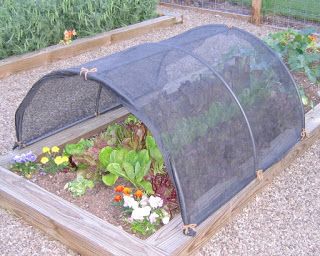
But most often, you’ll need a system for shading tomatoes during a heat wave, or regularly during midday (10 AM – 2 PM) in the height of mid-season and thereafter, because that’s when the sun is most intense and temperatures are highest. By mid-season tomato plants have been in the ground for a couple of months and are pretty big. To protect plants properly from the sun, you need both a shade cloth and a way to support it. The support mechanism will need to reach up high enough to allow the cloth to cover the plant top to bottom.
What kind of material should I use for shading tomatoes?
You can use many materials to shade plants. Some gardeners drape old sheets or burlap over supports. Some set lattice panels around tomato plants to diffuse light. These materials can keep some light off plants.
But material constructed specifically for shading tomatoes keeps a larger amount of UV rays at bay and works to keep plants cooler. Shade cloth is specially-developed fabric that is used in greenhouses, on patios, or in the garden to reduce the impact of light. It is either knitted or woven. Shade cloth is rated by a percentage figure, which indicates the amount of reduction in light it achieves. For instance, 50% shade cloth reduces the amount of light the plants receive by 50%. The cloth also achieves a reduction in temperature, usually about half the amount of light. 50% shade cloth will reduce heat by about 25%.
Woven shade cloth
Woven shade cloth is constructed from woven polypropylene. It is about 30% heavier than knitted, usually costs more, and lasts about 10-12 years. It looks plastic-like in appearance, with a distinct grid of horizontal and vertical lines. There are a variety of woven shade cloth weights and colors, some which offer up to 90% protection from UV rays.
Knitted shade cloth
Knitted shade cloth is made from knitted polyethylene and lasts 7-10 years. It looks and feels more like cloth, but its multi-threaded construction means it will not unravel if cut or torn. Check out this assortment of knitted shade cloth which can offer up to 80-90% reduction in light.
Aluminet shade cloth
You may want to try Aluminet shade cloth, available in different weights and sizes, which is covered with an anti-oxidation coating. Its reflective qualities also prevent water loss. Aluminet is lighter in weight than most other shade cloths. Aluminet shade cloth is available in different lengths, depending upon how much you may need.
More options for shading tomatoes
Shade cloth and pest protection combined: Summerweight garden fabric (offered by Gardener’s Supply and others) transmits 85% of the light to your plants, without allowing heat build-up, while protecting plants from beetles, miners, and other pests.
All-purpose garden fabric: chooses a versatile all-purpose garden fabric for shade in the summer and frost protection in the winter.
Why do I need support for shading tomatoes with shade cloth?
You need to put the shading material high enough above the plants that they won't touch the plants and keep them artificially short or crowded. Support also lets air flow underneath the material – important because air circulation reduces the spread of diseases.
Further, shade cloth support reduces stress on tomato limbs and branches. While we think tomato plants are hardy (and they are, for the most part), a weighted-down limb that snaps not only severs off a part of a plant … it also breaks a gardener’s heart.
Spread fabric over a structure or set it on supports that drapes over plants. You can create your own shade cloth support with ladders. Or purchase products specifically manufactured to support shade cloth. There are super hoops and Hi-Rise Super Hoops, made of high-gauge wire metal and cross braces, for shade cloth support.
More on growing tomatoes in extreme sun and heat
Heat-tolerant tomato varieties ...
Is it too hot for tomatoes? How to know, what to do ...
Return from Shading Tomatoes to Tomato Dirt home
As an Amazon Associate and Rakuten Advertising affiliate I earn from qualifying purchases.
SHARE THIS PAGE:
FREE! 10 Must-Know Tomato Growing Tips: 20-page guide
Get yours here: