

How Food Dehydrators Work for Drying Tomatoes
Since 2010, Tomato Dirt has garnered 4.8+ million views, making it the web’s leading online source for growing tomatoes in the home garden. Award-winning writer and Tomato Dirt owner Kathy Widenhouse has helped thousands of home gardeners grow healthier tomatoes. Be one of them when you get Tomato Dirt’s Growing Guide here.
A food dehydrator is a device used to dry foods. There are three kinds of food dehydrators: solar-powered, home-food dehydrators, and commercial dehydrators. Home and commercial dehydrators are both electrical.
Before you leave ...

Get your free copy of "10 Must-Know Tomato Growing Tips." This 20-page guide is filled with tips you need to know to have a successful tomato crop, whether you’re a beginning or experienced gardener.
All three kinds operate on the same principle: they remove water from food.
Getting the moisture out helps with storage. It lowers the weight of food and lets it take up less space. Even better, dehydrating preserves foods. Bacteria, fungi, molds, and other microorganisms need water to grow. By removing moisture, you inhibit them. Drying creates a firm exterior shell which works further to keep microorganisms out of preserved food.
A tomato is more than 90% water. Since dehydrating tomatoes enhances storage and preserving, you can see why it can have big advantages in preserving tomatoes.
Dehydrator parts
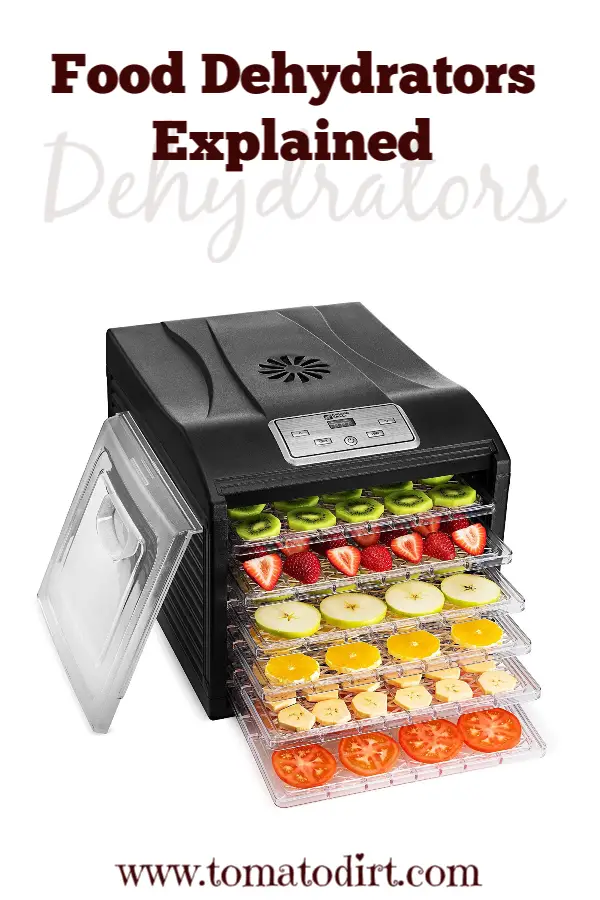
Electric dehydrators (home and commercial) are considered to be appliances. Each has a heating element for drying, a fan and vents for air circulation, and trays to hold food.
Heating element
A dehydrator’s heating element warms the food, which lets water be released.
Fan and vents
The dehydrator’s fan blows the moist air out of the appliance through the vents. Dry air is circulated back in. The exchange of moist air for dry air means food doesn’t re-absorb water.
Trays or shelves
Trays hold the food to be dried. Some units have a finite number of trays. Other models are stackable, meaning you can add more trays as you decide to dry more food.
(View different kinds of food dehydrators.)
Dehydrator designs
Dehydrator designs are classified by two elements: by how they dry tomatoes and how trays are arranged.
Dehydrator designs categorized by how they dry tomatoes
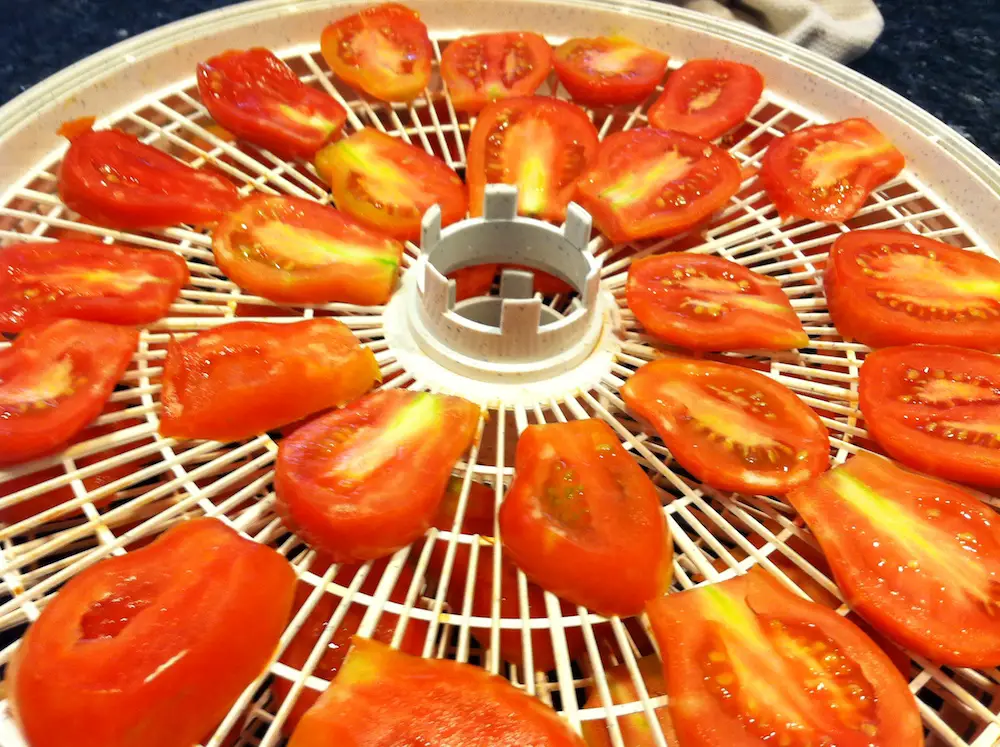


Tomatoes are dried by fans blowing the heated air across the fruit
Horizontal air movement. Some food dehydrators position the heat source and fan at the back of the shelves instead of beneath them. Hot air blows across the shelves, eliminating the need for tray rotation. The food on each tray dries evenly.
Vertical air movement. These food dehydrators have their heat source and fan positioned at the top or bottom of the unit and move hot air vertically – up or down through the dehydrator. Those with the heating/fan unit at the bottom dry food more evenly than those with the unit at the top, since hot air rises through the food. On the other hand, vertical types with the heating/fan unit at the top are easier to clean. That’s because tomato juice drips on bottom heaters, making them harder to clean. Consider placing dehydrator sheets on the lowest shelf to keep unit clean. While more portable and flexible, these dehydrators dry tomatoes unevenly. In general, fruit closer to the heating element and fan dries more quickly. If you choose a vertical model, be sure to rotate trays during drying time.
Convection drying. Convection food dehydrators use no fans at all. Heat rises through the trays. Convection drying eliminates the possibility of contaminating foods with dirt that fans can suck into a dehydrator. Convection heating is quiet and less use of electricity. However, convection dehydrators take twice as long to dry bulky foods like tomatoes. The longer the drying time (especially during periods of high humidity) reduces the dried tomatoes’ flavor and keeping quality.
Dehydrator designs categorized by trays
Another way home-food dehydrators are categorized is by their trays. Some models are designed with stackable trays. Others are constructed as a box with removable shelves.
Stackable trays. One advantage of stackable trays is flexibility: you can re-size your dehydrator to fit your needs. If you dry smaller amounts of food, buy fewer trays. If you need more tray space, expand your dehydrator with more trays. But stackable trays come with a caveat. Most dehydrators with stackable trays have vertical air movement, since heating and ventilation elements must be placed at the top or bottom of the unit in order to allow you to add and subtract trays as needed. Tomatoes on the trays closest to the heat element and fan dry much faster than those at the top of the stack. Heat is unevenly distributed. As tomatoes dry, you must be careful to rotate trays.
Removable shelves. Box-style dehydrators with removable shelves usually have the fan in the rear (horizontal air movement). Tomatoes dry evenly. These units are a fixed size.
Check out these different food dehydrators.
More on dehydrating tomatoes and canning tomatoes
Dehydrating tomatoes in a dehydrator: the most reliable method ...
Drying tomatoes FAQs: frequently asked questions...
Making Sun-Dried Tomatoes: a primer ...
Canning Tomatoes: a primer ...
Get more tips on our Drying Tomatoes Pinterest board.
Return from Food Dehydrators Explained to Tomato Dirt home
As an Amazon Associate and Rakuten Advertising affiliate I earn from qualifying purchases.
SHARE THIS PAGE:
FREE! 10 Must-Know Tomato Growing Tips: 20-page guide
Get yours here:

New! Comments
Have your say about what you just read! Leave a comment in the box below.