
FREE: 10 Must-Know Tomato Growing Tips Get The Guide
Read our affiliate disclosure here.
How To Protect Outdoor Pots in Winter
(Without Lugging
Everything Inside)
Since 2010, Tomato Dirt has garnered 4.8+ million views, making it the web’s leading online source for growing tomatoes in the home garden. Award-winning writer and Tomato Dirt owner Kathy Widenhouse has helped thousands of home gardeners grow healthier tomatoes. Be one of them when you get Tomato Dirt’s Growing Guide here.
Updated 3.24.26
When the temperatures start dropping, most home gardeners focus on saving their plants. But the pots themselves need love, too. Freezing weather, ice, snow, and wild temperature swings can all be hard on containers, especially clay, ceramic, and terracotta.
You need to know how to protect outdoor pots in winter from cracking. Or at the very least, how to winterize garden containers and planters … how to wrap and protect outdoor pots before freezing temperatures take over … how to store empty outdoor pots indoors over winter …
The good news? You don’t need fancy supplies. With a few simple steps, you can keep your outdoor pots from cracking, crumbling, or turning to mush by spring.
Let’s walk through what actually works and what’s worth skipping. First …
Before you leave ...

Get your free copy of "10 Must-Know Tomato Growing Tips." This 20-page guide is filled with tips you need to know to have a successful tomato crop, whether you’re a beginning or experienced gardener.
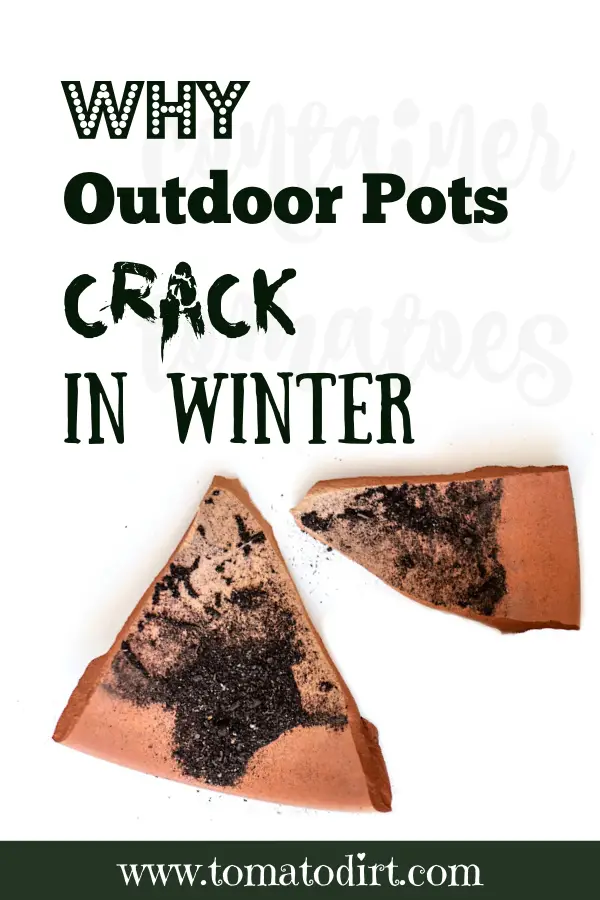
If you’ve ever gone outside in March and found a pot split clean down the side, here’s what happened.
- Water seeped into the pot’s pores or the soil.
- The water froze, then expanded.
- That expansion put pressure on the pot walls, and … c-r-a-c-k.
What materials for outdoor containers survive freezing weather – and which cannot? This freeze–thaw cycle is especially rough on porous materials like:
- Terracotta
- Ceramic
- Unglazed clay
- Cheap concrete
Plastic and resin containers tend to survive winter better, but they can still become brittle in extreme cold.
Should you empty soil from your outdoor pots before
winter?
If you’ve got pots made of ceramic, terra cotta, or concrete, then empty them to prevent cracking. Plastic and wood containers are more frost-resistant and don't need to be emptied in the fall.
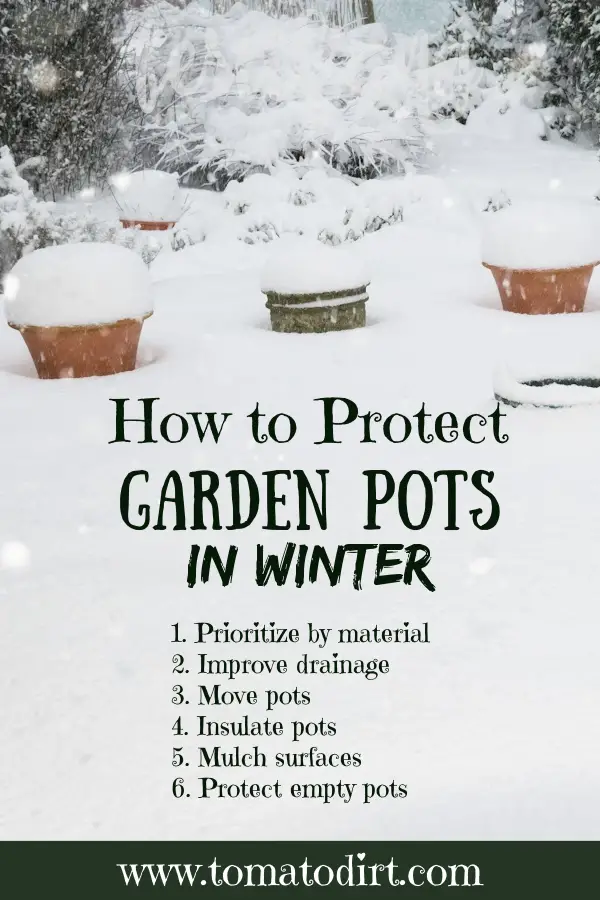
How to protect outdoor pots in winter
Step 1: Decide which pots need the most protection
Not every pot needs the same level of care. Here’s your quick triage guide so you prioritize your time before the first hard freeze hits.
High-risk pots (protect these):
- Terracotta
- Unglazed clay
- Pots that stay wet
- Containers sitting directly on cold ground or concrete
- Pots with plants that hate soggy winter roots
Low-risk pots (less to worry about):
- Resin, fiberglass, plastic
- Real frost-proof or freeze-proof planters
- Wooden containers (they expand/contract well)
Step 2: Improve drainage (your #1 defense)
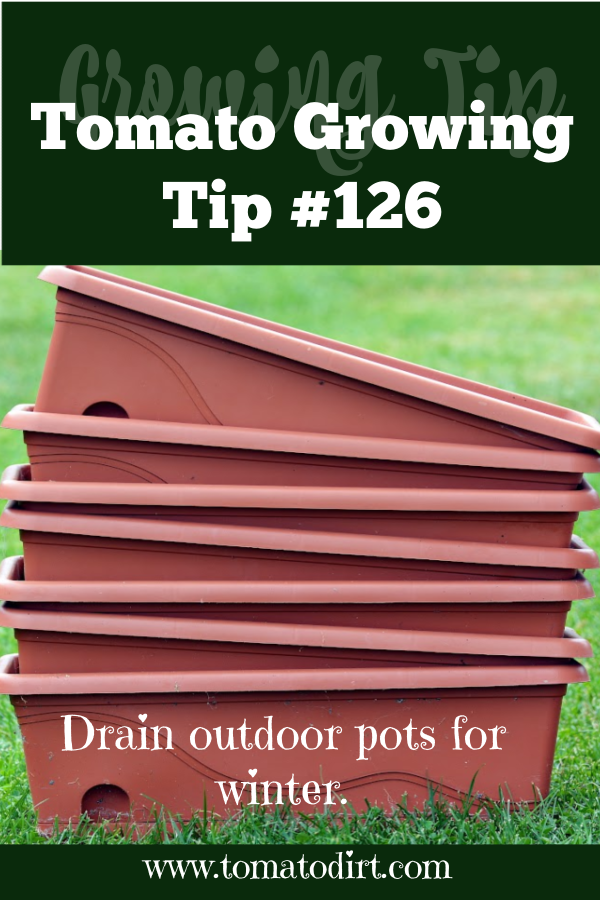
Even the best insulation won’t save a pot that stays waterlogged. The best way to protect outdoor plant pots in winter? Drain them.
- Check drainage holes. Make sure they're not clogged with roots or old soil.
- Raise pots off the ground. Use pot feet, bricks, stones, or even old wine corks to create airflow.
- Stop using saucers outdoors. They trap water and freeze into solid ice blocks.
If the soil drains well, the pot dries faster—and dry pots rarely crack.


Step 3: Move pots to a better spot (small shifts matter)
You don’t always have to drag pots into the garage or garden shed. Sometimes a micro-move is enough. Even a small temperature boost or reduced exposure can make a big difference. Relocate pots …
- Along a south-facing wall. Its absorbed heat will extend to your garden containers.
- Under a porch roof or overhang. It’s protected. And your garden pots will be on the receiving end of less ice and snow.
- Next to the house (the ground stays warmer there).
- A spot shielded from the wind. Less exposure, less chance of cracking.
Step 4: Wrap or insulate the pot
Tuck in your pots by giving them a winter coat. Here are easy insulation options that work:
- Bubble wrap (surprisingly effective)
- Burlap + leaves
- Frost cloth
- Old moving blankets
- Straw
- Foam pipe insulation around the sides
If you have grouped pots, pull them together and wrap them all in one big layer. Grouping helps trap warmth.
Step 5: Mulch the soil surface
Mulch isn’t just for summer. A thick winter layer helps the soil in the pot retain warmth. Plus, mulch reduces repeated thawing and refreezing.
Great winter mulches include shredded leaves, pine needles, straw, and wood chips. Added bonus: some of the mulch will break down over the winter and improve your container soil
Step 6: Protect empty pots, too
If you have unoccupied containers sitting around during winter, protect those too.
Here’s how:
- Empty out the soil completely.
- Wash the pot and let it dry thoroughly. Water cracks pots faster than anything.
- Stack and store your empty pots in a garage, shed, basement, or even just under a porch roof.
- If you leave empty containers outdoors, flip them upside down and raise them off the ground by setting them on bricks, logs, or pressure-treated wood.
A dry, empty pot rarely breaks.
Extra tips for pots with plants
If you keep plants in their pots outdoors through winter, remember:
- Don’t overwater. Roots stay wetter in cold weather.
- Stop fertilizing. Plants don’t want food in winter. They’re not growing – just surviving.
- Check pots after storms. Dump out ice or water that has collected on top.
- Consider double-potting. Slip the plant pot inside a larger one with insulation (leaves, mulch, or newspaper) between layers. This keeps roots warmer and protects the pot at the same time.
Yes, your outdoor pots CAN survive winter
You can protect outdoor pots in winter with few complications A little better drainage, a bit of insulation, and some smart placement will get almost any container safely through the cold months. Your spring self will thank you when your favorite planters are still intact, ready for another growing season.
More Tips for Winterizing Your Garden
How to Winterize Your Garden: It's More Than Just Fall Clean Up ...
How To Improve Your Garden Soil Over Winter ...
How to Take End of Season Notes about Your Tomato Garden ...
3 Mistakes to Avoid When You Prepare Garden for Winter ...
How to grow winter tomatoes: 3 options ...
Top 10 Tips for Growing Winter Tomatoes ...
The Easiest Tomatoes To Grow In Pots ...
Get more tips on our Garden Clean Up Pinterest board...
Return from How To Protect Outdoor Pots In Winter to Tomato Dirt home
As an Amazon Associate and Rakuten Advertising affiliate I earn from qualifying purchases.
SHARE THIS PAGE:
