
Tomato Diseases: How to Identify and Treat Walnut Wilt
Since 2010, Tomato Dirt has garnered 4.8+ million views, making it the web’s leading online source for growing tomatoes in the home garden. Award-winning writer and Tomato Dirt owner Kathy Widenhouse has helped thousands of home gardeners grow healthier tomatoes. Be one of them when you get Tomato Dirt’s Growing Guide here.
Updated 6.16.24
Walnut wilt is a disorder caused by the uptake of the chemical, juglone, which is toxic to tomatoes.
Before you leave ...
Get your free copy of "10 Must-Know Tomato Growing Tips." This 20-page guide is filled with tips you need to know to have a successful tomato crop, whether you’re a beginning or experienced gardener.
Juglone is produced by several tree species, including black walnut, English walnut, Persian walnut, butternut, hickory, and pecan. Black walnut trees, in particular, are infamous for affecting nearby plants – hence the disorder’s name.
Juglone is formed in the leaves, fruit hulls, inner bark, and roots of the walnut tree and other members of the walnut family. With rain, it leaches from nuts, leaves, and bark and readily released into the soil. Uptake in tomatoes occurs when tomato roots make contact with the tree roots.
Juglone’s toxicity to tomatoes directly depends on how close tomato plants are to walnut trees. Those within a tree’s root spread (two to three times the circumference of its branches) are more severely infected. They wilt and die quickly. Those further away wilt more slowly.
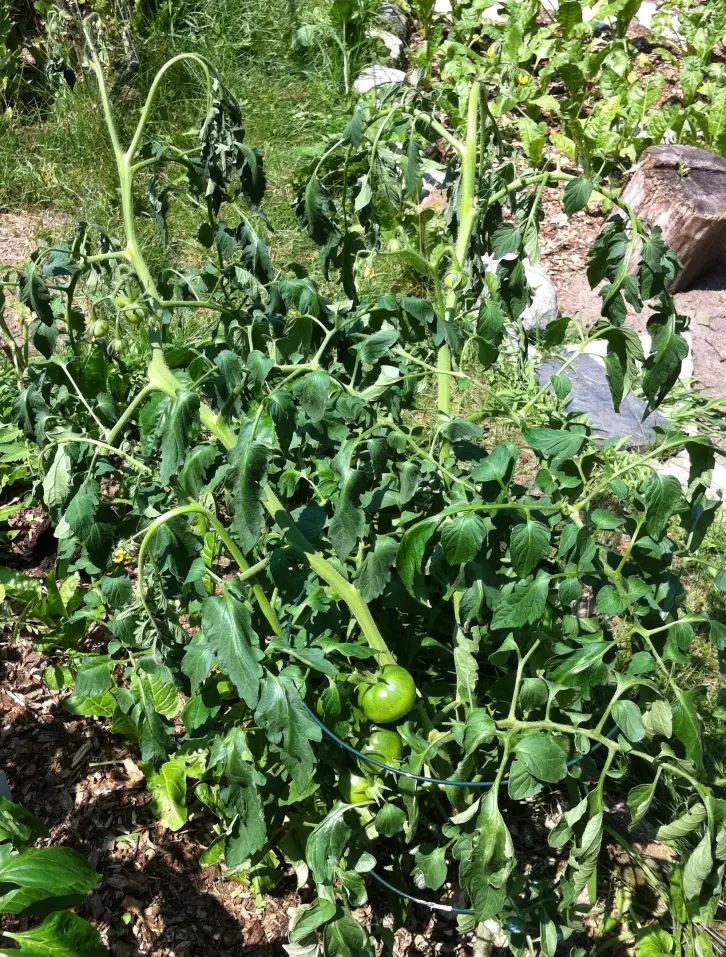

What does the wilt look like?
Symptoms closely resemble those of fusarium wilt and verticillium wilt, including yellowing and browning leaves, leaf drop, and stunted growth.
In addition, stems turn brown or streak.
Tomatoes growing next to a walnut tree abruptly wilt and die.
Tomato plants growing a short distance away may not die, but become flaccid and stunted.
When does walnut wilt affect plants?
Early to mid-summer.
How do I distinguish walnut wilt from other wilts?
While walnut wilt mimics fusarium wilt, verticillium wilt , and bacterial wilt, the easiest way to identify it is your plant’s proximity to walnut trees.
How do you control and treat it?
- To date, there is no chemical treatment.
- You may be able to save tomato plants if you act quickly. Transplant your plants to containers filled with sterile potting mix and move them to at least 50 feet away from walnut trees.
- Clean up fallen leaves, nuts, and other black walnut tree debris regularly.
- Incorporate compost, rotted manure, composted grass clippings, and cover crops to maintain a high level of organic matter in the soil. Microbes will help break down juglone.
- Avoid using compost that contains black walnut debris.
How do you prevent it?
- Avoid planting tomatoes within the spread of a walnut tree’s root system (two to three times the circumference of its branches) or plant them at least 50 feet away.
- Don’t plant tomatoes for at least two years in locations where these trees may have grown before. Juglone can remain in the soil several years after a tree has been cut down.
- Or … remove walnut trees.
Extra facts to know
Walnut wilt also affects apples, asparagus, azaleas, blackberries, blueberries, chrysanthemums, mountain laurel, lilacs, peonies, potatoes, potentilla, and rhododendron.
Other tomato wilts
How to identify and treat fusarium wilt ...
How to identify and treat verticillium wilt ...
How to identify and treat bacterial wilt ...
How to identify and treat tomato spotted wilt virus ...
Identifying tomato plant diseases: compare 5 kinds of tomato wilt ...
Your Wilting Tomato Plant: Can You Revive It?
Fungicide for Tomatoes: A Primer ...
Other tomato diseases
How to identify and treat gray leaf spot ...
Tomato diseases: identify, treat, and prevent them ...
More about tomato diseases on our Pinterest board ...
Return from Walnut Wilt to Tomato Dirt home
As an Amazon Associate and Rakuten Advertising affiliate I earn from qualifying purchases.
SHARE THIS PAGE:
FREE! 10 Must-Know Tomato Growing Tips: 20-page guide
Get yours here:
New! Comments
Have your say about what you just read! Leave a comment in the box below.