Preparing your soil for planting tomatoes in the home garden
Since 2010, Tomato Dirt has garnered 4.8+ million views, making it the web’s leading online source for growing tomatoes in the home garden. Award-winning writer and Tomato Dirt owner Kathy Widenhouse has helped thousands of home gardeners grow healthier tomatoes. Be one of them when you get Tomato Dirt’s Growing Guide here.
Updated 12.18.25
Once you’ve picked the perfect spot for planting tomatoes, spend some time preparing your soil. The dirt is to be their home. You can help make it as welcoming as possible.
Before you leave ...
Get your free copy of "10 Must-Know Tomato Growing Tips." This 20-page guide is filled with tips you need to know to have a successful tomato crop, whether you’re a beginning or experienced gardener.
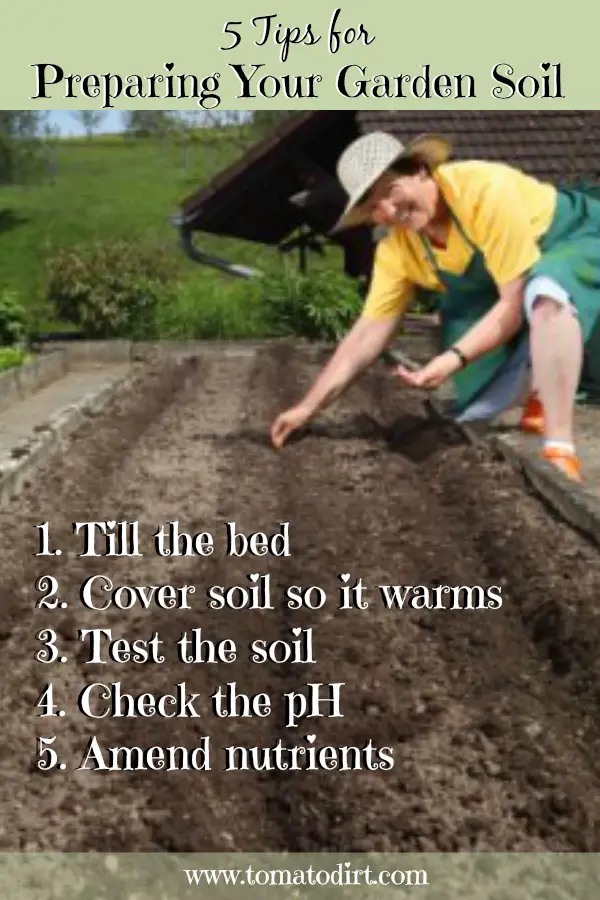
1. Till the bed
Several weeks before planting tomatoes, check the plot you’ve selected. The soil is ready to work when it is dry enough not to clod up when squeezed into a ball and won’t stick to your garden tools.
Begin preparing your soil by cultivating the bed 8-10 inches deep with a garden spade or tiller/cultivator. Remove debris. Break up soil clods. Work in 2-3 inches of compost or other organic matter into the top 6 inches. This is especially important step in preparing your soil for planting tomatoes whether you have rich, black loam or terrible dirt.
2. Cover soil so it warms

Tomatoes like warm soil. Even if air temperatures start to heat up in the spring, it takes the dirt awhile to catch up. You can help prevent transplant shock by covering your tomato plot with sheets of black plastic, which absorbs heat from the sun and accelerates the warming process.
Purchase rolls of plastic at home improvement stores or the local nursery. Then, a couple of weeks before planting tomatoes, get started preparing the soil temperature-wise. Position the black plastic in your garden plot and secure it with rocks, bricks, buckets, or other sturdy anchor. Remove the plastic when you place your tomato plants in the garden, unless you choose to use it as a weed deterrent around the newly planted seedlings.
3. Test your soil
You also need to prepare your soil by checking its nutrient and chemical contents. Take a simple soil test of your soil to know how to amend it. Purchase an inexpensive soil test kit online or at a garden center. Or contact your local extension office and ask about local soil testing services.
4. Check the soil’s pH
Soil testing will tell you the soil’s pH. You can use a simple pH test kit to determine the pH in your tomato patch. If you're planting a large number of tomatoes, then test several areas across the planting area. A neutral pH level is 7.0. Numbers lower than 7.0 indicate acidic soil – the lower the number, the more acidic the soil. Numbers higher than 7.0 indicate alkaline soil – the higher the number, the more alkaline the soil.
Tomatoes grow best in slightly acidic soil with a pH level between 6.0 and 7.0 – optimum is between 6.5 and 7.0. If your soil’s pH isn’t within that range, make proper adjustments. To lower your soil’s pH, work sulfur into the soil. To raise your soil’s pH, work lime into the soil. An appropriate pH is an important component to preparing the soil for planting tomatoes.
5. Amend nutrients
Check soil test results for an even balance between nitrogen, phosphorus, and potassium, all necessary for strong tomato production. Evaluating nutrients will go a long way in preparing your soil because you will know what you need to add.
Nitrogen
Nitrogen helps your tomatoes maintain healthy, green leaves. Yellowed older leaves and slowed growth indicate nitrogen deficiency. But when you apply too much nitrogen before fruit is set, stems become quite large, leaves are deep green and soft, and there are few if any flowers. Tomatoes need about 1-3⁄4 pounds of nitrogen per 500 square feet. Incorporate nitrogen into soil just before planting.
Good organic fertilizer sources of nitrogen:
- alfalfa meal
- blood meal
- compost
- feather meal
- fish meal
- legumes
- leaf mold
Good inorganic nitrogen sources:
- ammonium nitrate
- ammonium sulfate
- anhydrous ammonia
- calcium nitrate
- potassium nitrate
- sodium nitrate
- urea
Phosphorus
Phosphorus helps your tomatoes develop strong root systems, build disease resistance, and cultivate fruit and seed formation. Slow, stunted growth and reddening stems and foliage indicate a phosphorus deficiency. Incorporate phosphorus-containing fertilizers into the soil before planting, rather than sprinkling them on the surface.
Good organic fertilizer sources of phosphorus
- bone meal
- compost
Good inorganic phosphorus sources
- rock phosphate
- super phosphate
Potassium
Potassium helps promote growth and disease resistance in your tomato plants. Weak plants and slow growth indicate a potassium deficiency. In more severe cases, leaf edges will brown. An easy way to amend the soil is to add wood ash, which is 5% potassium. Best rate is about 10-15 pounds to a 300 square foot bed. Work in wood ash in the fall or winter.
Good organic fertilizer sources of potassium
- wood ash
- granite dust (also called rock potash) – slow-releasing leaf mold
Good inorganic potassium sources
- potassium sulfate
- rock sand
Compost
Compost is broken-down organic matter. It’s not particularly high in nutrients but it’s a fantastic way to improve your soil. Compost improves soil structure, increases its cultivability, aids in nutrient retention, reduces compaction, attracts earthworms, increases microbes, and protects plants from disease. Adding compost is the singular most important step you can take to preparing your soil for planting tomatoes. You can save money and make your own compost when you start your own compost pile at any time of the year.
More on Preparing Your Garden and Planting Tomatoes
How To Start a Vegetable Garden: 10 Tips For Beginner Gardeners ...
What Type of Vegetable Garden Is Best for You?
10 Ways to Get the Most From Your Garden Space ...
Use a garden journal to grow healthier crops – and to grow as a gardener ...
18 Tips for Planning a Vegetable Garden (Even If It’s Winter) ...
Spring Garden Clean Up: Get Your Garden Ready for the Season...
3 Ways to Prepare Your Garden for Spring ...
How to buy tomato seedlings: a new gardener's guide ...
7 Very Cheap Garden Fence Ideas ...
How to Take a Soil Test in Your Tomato Garden ...
How to plan a garden layout for growing vegetables and tomatoes ...
Preparing Soil for Tomatoes: Frequently Asked Questions ...
Pick the best home garden spot for growing tomato plants
More tips for preparing your soil on our Pinterest board ...
Planting tomatoes: top tips to help your new crop succeed ...
How to buy tomato plants ...
How to harden off tomato plants to prepare them for the home garden
Tomato transplanting mistakes to avoid when setting out plants ...
Starting a Raised Bed Vegetable Garden FAQs ...
3 types of planting in rows for your vegetable garden ...
Tomato worms - cutworms: keep them away with ...
Watering tomatoes when planting and just afterwards ...
How and when to mulch tomatoes
Protecting young tomato plants from frost and freezing ...
Planting tomato plants: Frequently Asked Questions (FAQs) ...
Planting tomatoes on our Pinterest board ...
Return from Preparing Your Soil for Tomatoes to Tomato Dirt home
As an Amazon Associate and Rakuten Advertising affiliate I earn from qualifying purchases.
SHARE THIS PAGE:
FREE! 10 Must-Know Tomato Growing Tips: 20-page guide
Get yours here: