

Canning Tomatoes FAQs: Frequently Asked Questions
Since 2010, Tomato Dirt has garnered 4.8+ million views, making it the web’s leading online source for growing tomatoes in the home garden. Award-winning writer and Tomato Dirt owner Kathy Widenhouse has helped thousands of home gardeners grow healthier tomatoes. Be one of them when you get Tomato Dirt’s Growing Guide here.
Updated 8.5.24
Tomato Dirt answers your canning tomatoes FAQs (frequently asked questions).
Q. Which tomato varieties are the best for canning?
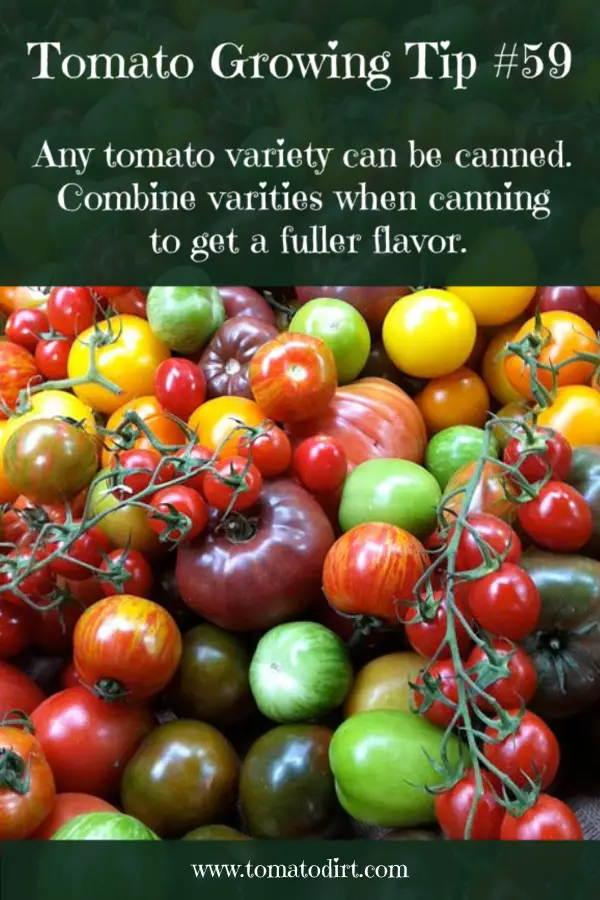
A. Almost any variety can be canned. The best varieties are those with little pulp, few seeds, meaty centers, and thick flesh. Experienced gardeners cite Bellstar, Druzba, Jubilee, Lynnwood, New Yorker, Porter, Rutgers, and Tropic among their favorites. One tip: combine varieties when canning for a richer flavor.
Before you leave ...

Get your free copy of "10 Must-Know Tomato Growing Tips." This 20-page guide is filled with tips you need to know to have a successful tomato crop, whether you’re a beginning or experienced gardener.

Q. What equipment do I need to can tomatoes?
- Water bath canner or pressure canner, inside rack, and jar tongs
- Glass canning jars
- Canning lids with rings
- Large spoon
- Sharp knife
- Cutting board
- Ladle
- Wide-mouthed funnel, measuring cup or mug
- Measuring spoon
- Food processor
- Cooling rack
- Fresh tomatoes
- Salt
- Lemon juice (if using a water bath canner)
Q. What do I need to know about preparing tomatoes for canning?
- You can preserve tomatoes whole, chopped, or as juice.
- Place prepared tomatoes in a large, heavy pot. Bring them slowly to a boil before ladling them into sterilized jars.
- Add ½-1 teaspoon salt per quart to tomatoes for taste.
- If you’re using a water bath canner, add lemon juice to increase acidity and inactivate bacteria.
Q. Must I always remove tomato skins before processing?
No. You can chop tomatoes, cook them, and can them to use in sauces, chili, and soups. You can also chop tomatoes, cook them, and pour them through a colander to remove pulp, skin, and seeds to make tomato juice.
Q. Should I use a water bath canner or a pressure canner to process tomatoes?
A. Tomatoes can be processed safely either way, but follow specifics carefully. Tomatoes face two potential dangers when canned at home: bacteria and enzymes that harbor molds and yeasts.
The boiling water bath method is safe because boiling water (212ºF) inactivates enzymes. When acid (in the form of lemon juice) is added to fruit, inactivating many bacteria, tomatoes processed in a water bath canner are safely preserved.
A pressure canner heats to a temperature of 240ºF for safe tomato processing, both inactivating enzymes and destroying bacteria. Added lemon juice isn’t necessary in pressure canner processing because of the higher temperatures.
Q. Can I use a regular pressure cooker to pressure can tomatoes?
A. A regular pressure cooker is not recommended. We recommend a pressure canner.
Q. What kind of jars should I use for canning?
A. Choose canning jars like Mason jars and Ball jars which are specifically manufactured for home canning. Commercial jars, such as for mayonnaise or pickles, are not made with heavy glass and are not heat-treated. Their mouths may not be the appropriate size or shape for sealing canning lids. These types of jars are not safe for home canning.
Q. How long does it take to process tomatoes using a traditional hot water bath canner?
| Type | Size | Time |
|---|---|---|
| Whole tomatoes | pint | 35 minutes |
| Whole tomatoes | quart | 45 minutes |
| Chopped tomatoes | quart | 45 minutes |
| Pureed tomatoes | pint | 30 minutes |
| Tomato juice | pint | 35 minutes |
| Tomato juice | quart | 35 minutes |
| Tomato paste | pint | 45 minutes |
Q. What canned tomato yield can I expect from fresh tomatoes?
| Amount | Yield |
|---|---|
| Fresh tomatoes to yield 1 quart canned | 2 ½ - 3 pounds |
| Weight of 1 bushel fresh tomatoes | 50-60 pounds |
| Canned yield of 1 bushel tomatoes | 14-22 quarts |
Q. What do I need to know about canning tomatoes whole?
- Select fresh, firm, unblemished tomatoes, medium size.
- To remove tomato skin, with a knife, cut an X on the bottom of the tomato, just deep enough to penetrate the skin. Drop tomato into boiling water. Blanch for 20-30 seconds.
- Use a slotted spoon to remove tomato from boiling water. Immerse tomato in ice water. Use knife to remove tomato core. Skin will slip off.
- Core tomatoes.
- Leave tomatoes whole or quarter them.
- Remove seeds if desired.
- Place prepared tomatoes in heavy pot and bring them to a boil before ladling into jars.
Q. What do I need to know about canning chopped tomatoes?
- Tomatoes needn’t be perfect. Use a sharp knife to core tomatoes and cut out bruises, cracks, and other blemishes.
- Tomato skins needn’t be removed. Quarter tomatoes, place them in the food processor, and chop in momentary spurts until they are desired consistency. Avoid whipping tomatoes, which will add air and create foam.
More on canning tomatoes
Canning tomatoes: a primer ...
Tomato canners: which to use for canning tomatoes ...
How to choose a hot water bath canner for tomatoes ...
Canning supplies you need to can tomatoes ...
How to can tomatoes the easy way ...
Should I freeze or can my tomatoes? Pros and cons of each ...
How to Store Sliced Tomatoes ...
How to prepare tomatoes to use in cooking ...
How to Store Tomatoes: A Gardener’s Guide ...
Preserving Tomatoes: Should I can, dry, or freeze them?
Get more tips on our Canning Tomatoes Pinterest board...
Return from Canning Tomatoes FAQs to Tomato Dirt home
As an Amazon Associate and Rakuten Advertising affiliate I earn from qualifying purchases.
SHARE THIS PAGE:
FREE! 10 Must-Know Tomato Growing Tips: 20-page guide
Get yours here:

New! Comments
Have your say about what you just read! Leave a comment in the box below.