
Tomato Planting in Pots
Since 2010, Tomato Dirt has garnered 4.6+ million views, making it the web’s leading online source for growing tomatoes in the home garden. Award-winning writer and Tomato Dirt owner Kathy Widenhouse has helped thousands of home gardeners grow healthier tomatoes. Be one of them when you get Tomato Dirt’s Growing Guide here.
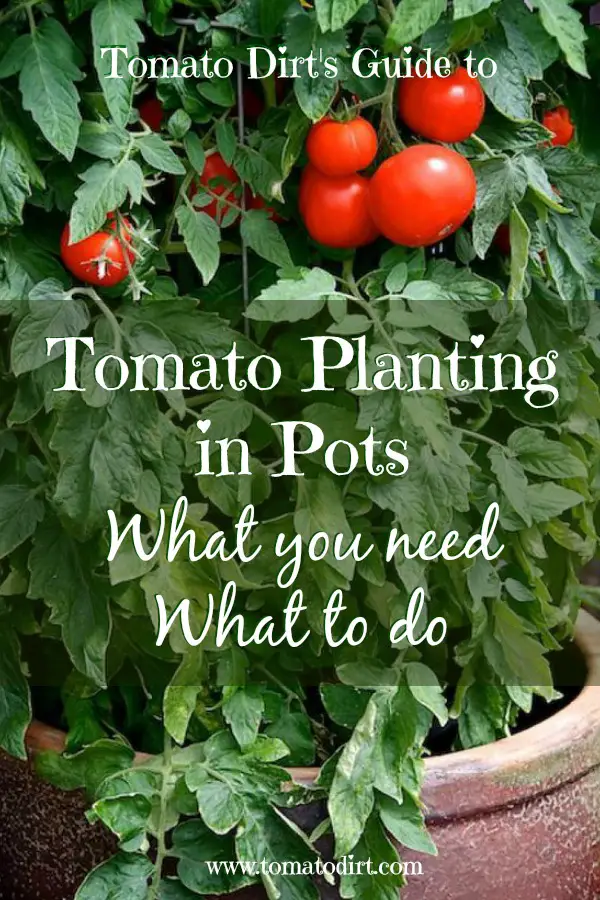
Tomato planting in pots is not hard! You can grow tomatoes in pots on your patio, deck, sidewalk, or balcony. You can save money when you do it yourself. (And you get fresh tomatoes.)
Before you leave ...
Get your free copy of "10 Must-Know Tomato Growing Tips." This 20-page guide is filled with tips you need to know to have a successful tomato crop, whether you’re a beginning or experienced gardener.
What You Need to Plant Tomatoes in Pots
1. Container (check out a good selection of tomato pots)
2. Potting mix
3. Water
4. Trowel
5. Drainage material for pot
7. Mulch
8. Tomato seedling (find out how to buy tomato plants or grow tomatoes from seed)
Once you have materials assembled, planting tomatoes in pots takes just a few minutes.
Tomato Planting in Pots: What To Do
1. Water tomato seedlings thoroughly in their nursery containers. (Find out best tomato varieties for both large containers and small containers).
2. Prepare potting mix. (Read more about best potting mixes for growing tomatoes in containers.) Pour mix into a bucket or wheelbarrow and moisten thoroughly.
3. Place about 1” drainage material at the bottom of your container. Common drainage materials are sand, gravel and broken clay pot shards. Organically-minded gardeners have had success with corn cobs as drainage material. Other gardeners have successfully used shredded or balled newspaper or even Styrofoam peanuts as drainage materials in bottoms of containers.
4. Fill container three-quarters full with moistened soil. Throw in a handful of tomato fertilizer and mix it into the soil.
5. Remove seedling from nursery container. If the seedling has a strong root system or is root bound, you may need to squeeze sides of container to release the roots. Since you’ve moistened the plant, the soil and roots should pull away from container sides easily. If the root system is not as well developed, handle the root ball gently.
6. Loosen the roots. Gently spread apart matted roots at the base of the root ball. This will allow the plant to acclimate more quickly to the pot and spread its root system to fill the container.
7. Dig or create a small hole or depression in the center of the soil. Place the plant so the top of the root ball is just 1” below the container’s upper rim. It’s OK to bury part of the seedling’s stem – it will form roots underneath the soil and allow the plant to adapt to the pot quickly, especially in northern climates. In southern, humid climates, bury the stem less deeply as tomato plants tend to develop wilt more easily in humidity.
8. Plant just one tomato seedling per pot. Tomatoes have strong root systems. If they begin running out of space too soon, they’ll start flowering too early and then produce smaller fruit than optimum. When planting tomatoes in pots, give them room so they can max out their production.
9. Stake plant. Gently insert an appropriate-sized stake or cage next to the plant (except for basket tomatoes, which don’t need staking), about 2-3” from the base of the plant. Be careful to avoid puncturing the root ball with the stake or cage spikes. By introducing the stake or cage now rather when the plant is more fully grown, you’ll avoid disturbing the tomato’s root system later when it fills the container. (Check out different tomato cages to find the right ones for you and your garden)
10. Add extra soil to fill in around the hole and up to about 1” below the container rim. Press the soil firmly around the base of the plant.
11. Spread a light layer of mulch over container soil surface to reduce evaporation.
12. Water the container with a slow, gentle drip. Continue to water until there’s seepage from the drainage holes. Soil will settle during watering. If settling is significant, add a light layer of mulch to even out the surface. If possible, use a deck or drip irrigation kit for container gardening to ensure regular watering for your container plant.
13. Place the container in a protected location for a day or two to help the plant acclimate it its new home.
14. Set the pot in a place where it will get full sun and protection from wind. Check the soil daily during the first two weeks, while the tomato is becoming established. Keep your tomato evenly moist! ( Read more about watering tomatoes in pots.)
Keep records of tomato planting in pots, including the varieties you chose and the dates you planted them. That information will help you get off to a great start next season!
Video: Growing tomatoes in pots - how to plant tomatoes in containers
More about Growing Tomatoes in Containers
Tips to get started with growing tomatoes in pots ...
How to choose containers for growing tomatoes in pots
Review: Self-watering tomato planter: Tomato Success Kit ...
How to grow tomatoes in pots: 14 tips ...
Tomato bags are sturdy, grow healthy tomatoes ...
Do Container Tomatoes Need Staking?
What potting mix should I use for growing tomatoes in pots or containers?
Choosing tomato varieties for large containers ...
Best tomato varieties for small containers ...
Tips for growing cherry tomatoes in containers ...
Tomato fertilizer to use for container tomatoes ...
Watering tomatoes in containers, pots, baskets...
Tomato pests that attack tomatoes in containers ...
Better Boys in containers: fruit is small, what should I do?
Growing cherry tomatoes in containers or pots ...
How to grow hanging tomatoes ...
Return from Tomato Planting in Pots to Tomato Dirt home
As an Amazon Associate and Rakuten Advertising affiliate I earn from qualifying purchases.
SHARE THIS PAGE:
FREE! 10 Must-Know Tomato Growing Tips: 20-page guide
Get yours here:


New! Comments
Have your say about what you just read! Leave a comment in the box below.